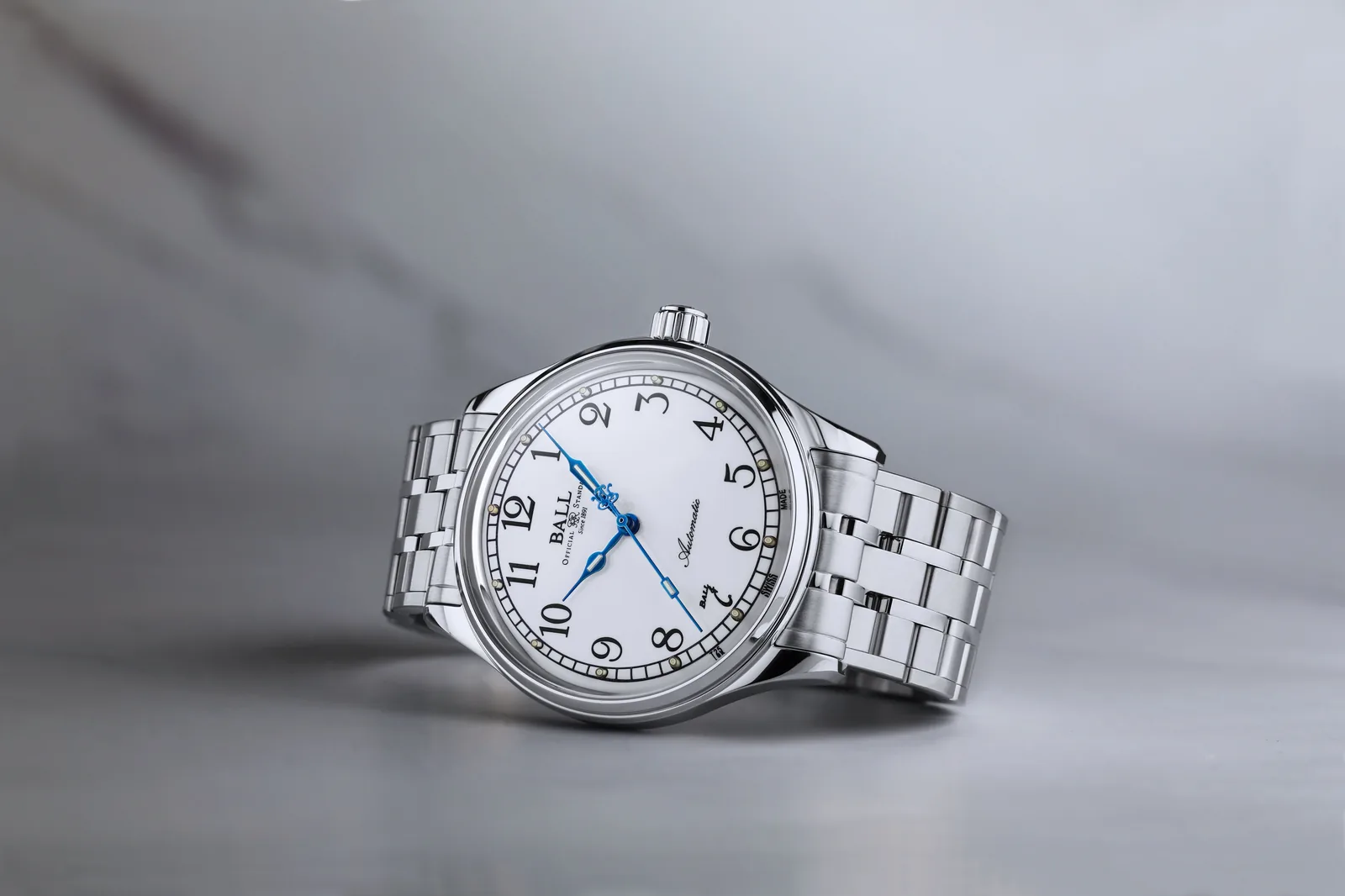

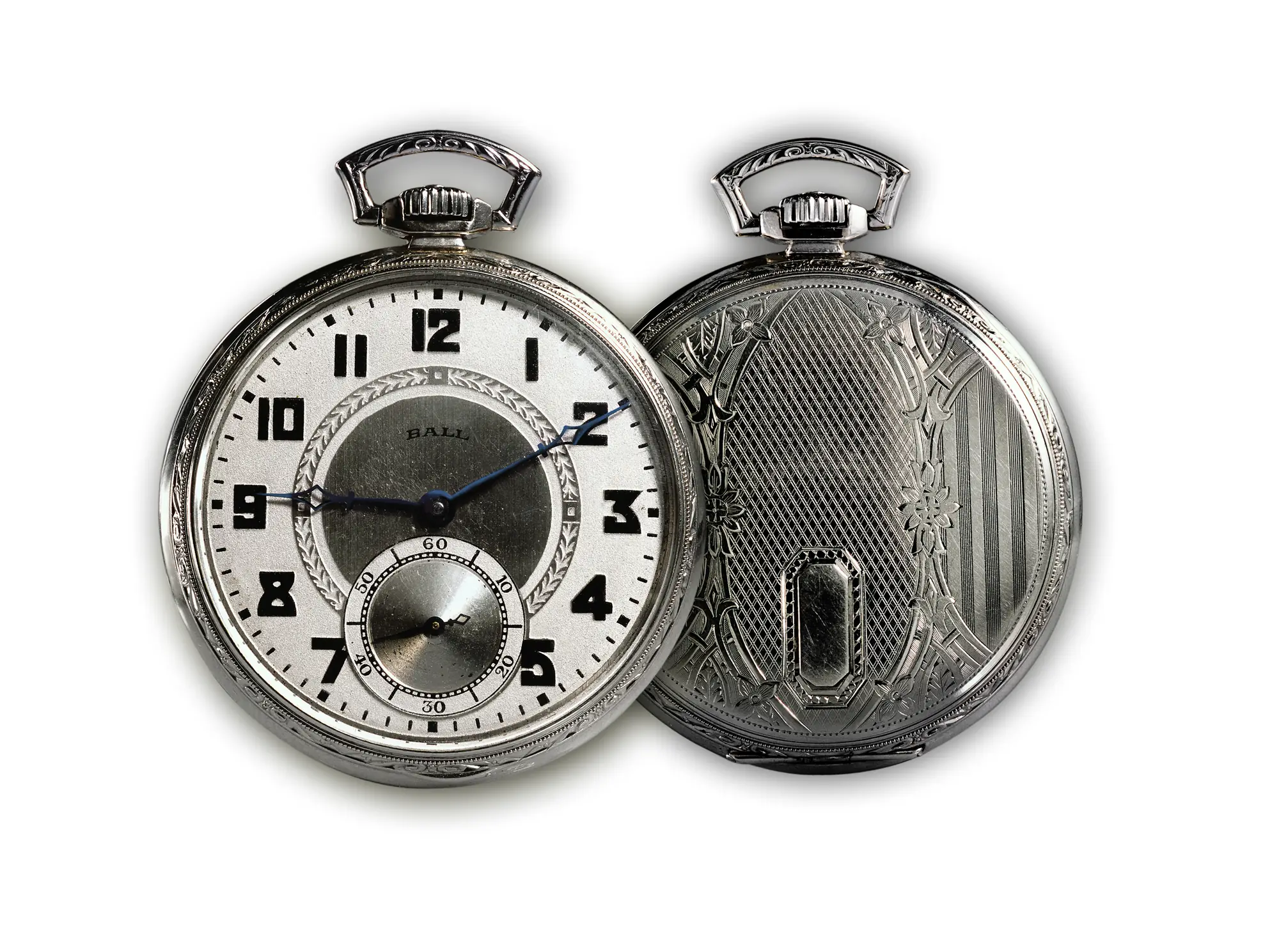
Born from timekeeping on America's railroads, the brand introduces an automatic watch inspired by its pocket watches, with micro gas tubes that light up the dial at night.
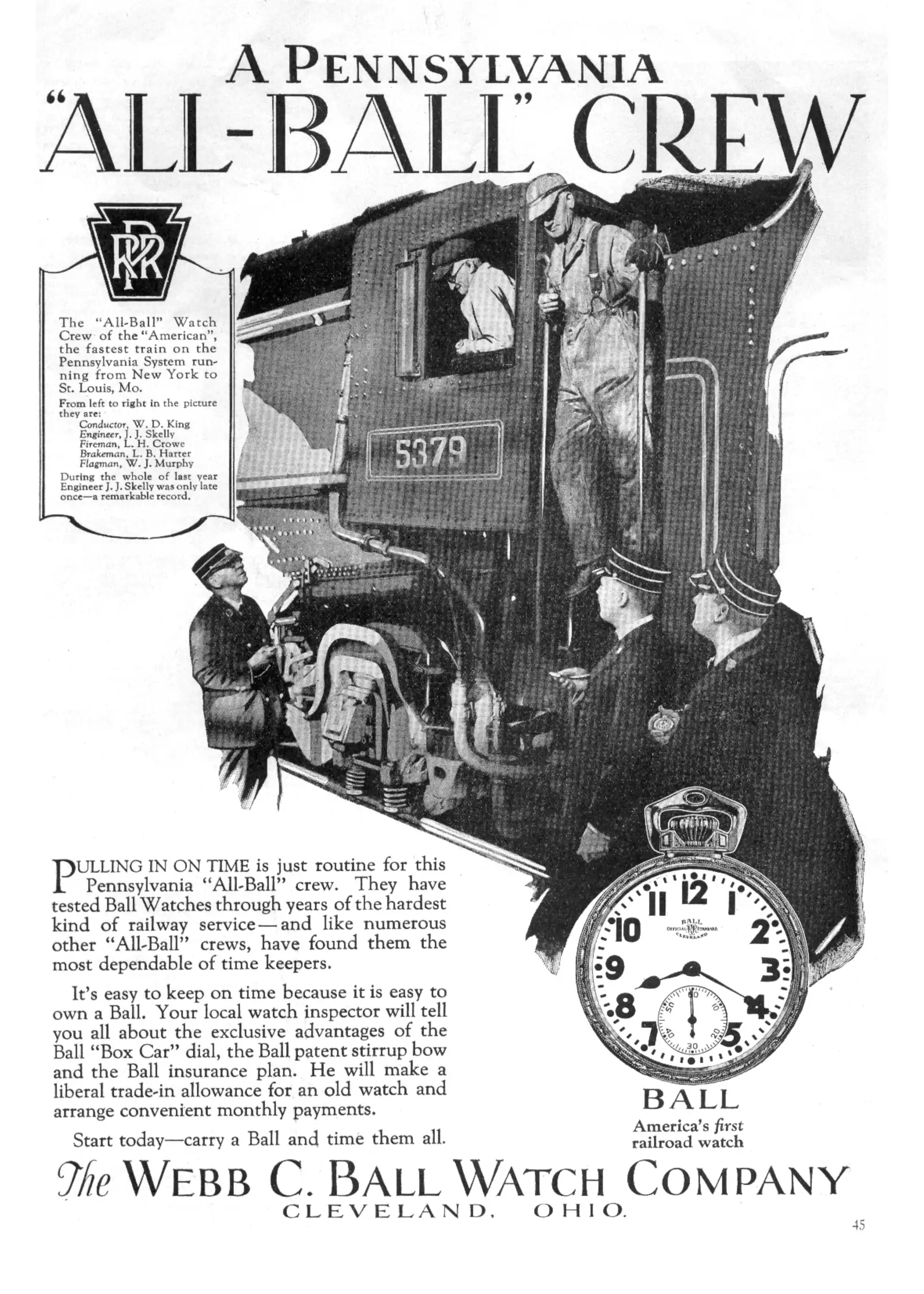
Ball Watch Company traces its origins to 1891. In April that year, a train collision in Kipton, Ohio, led the Lake Shore and Michigan Southern Railroad to ask Webster Clay Ball to set up a system for inspecting its employees' watches. According to the brand, the service he organised, the BALL Time Service, grew to more than 1,800 inspectors and covered more than 75% of the country's railroad lines. In the system's first year, the brand adds, deaths in accidents on the Lake Shore lines fell significantly.
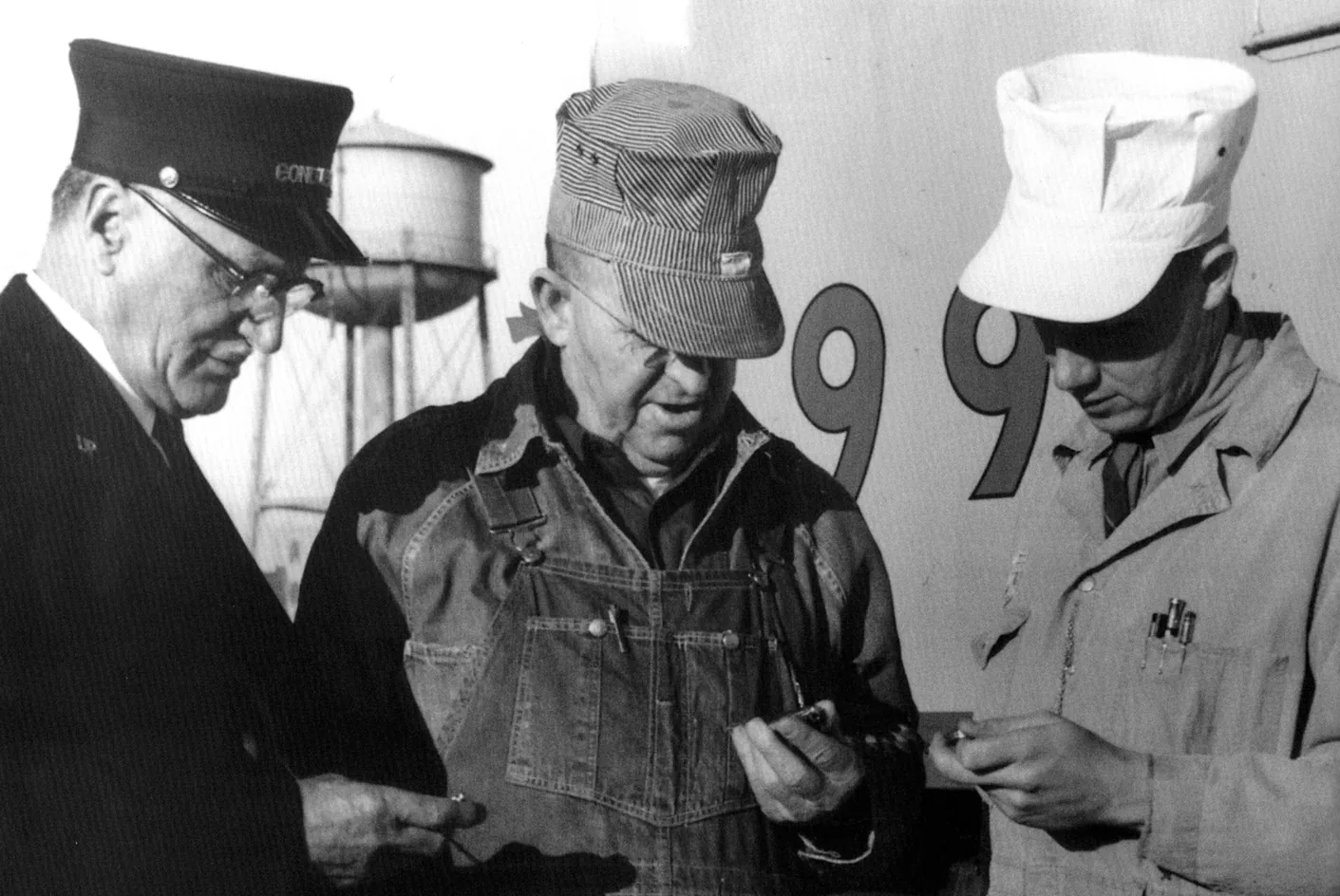
For its 135th anniversary, Ball has introduced the Trainmaster Standard Time, inspired by the pocket watches carried by railroad workers. The name recalls the standard time that American railroad companies adopted in 1883, when they divided the country into four time zones. Until then, each city set its own time by the position of the sun. The new system replaced more than 70 different official local times.
Technical Specs
| References | NM3288D-S9J-WH and NM3288D-LL9J-WH |
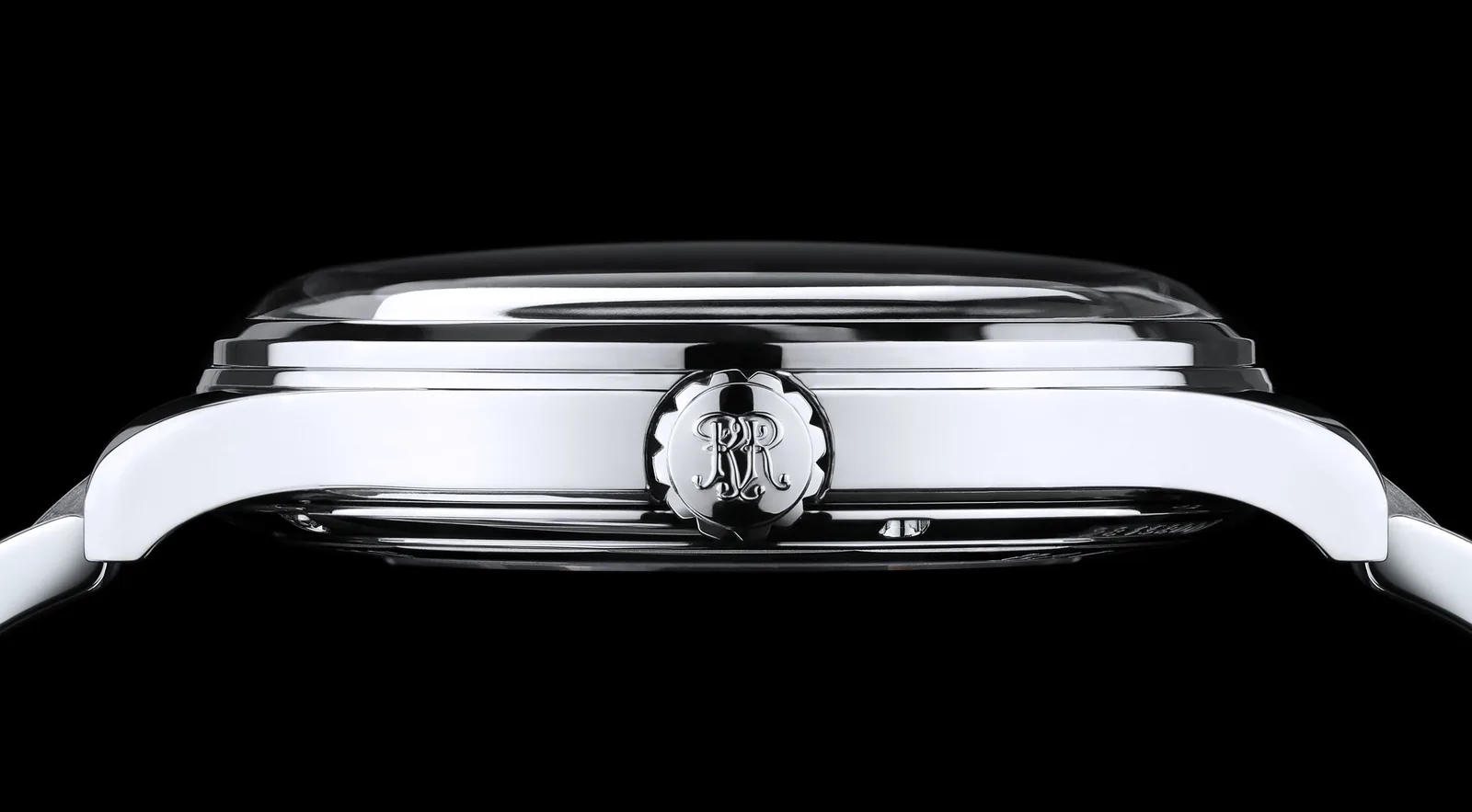
| Case | Stainless steel; 40 mm in diameter and 10.3 mm thick; push-in crown; sapphire crystal caseback |
| Crystal | Domed sapphire with anti-reflective treatment |
| Water resistance | 30 m |
| Resistance | Shocks of up to 5,000 G; magnetic fields of 4,800 A/m |
| Dial | White enamel with Arabic numerals; railroad-track minute scale with Super-LumiNova; the 7 formed by the words BALL & Co. |
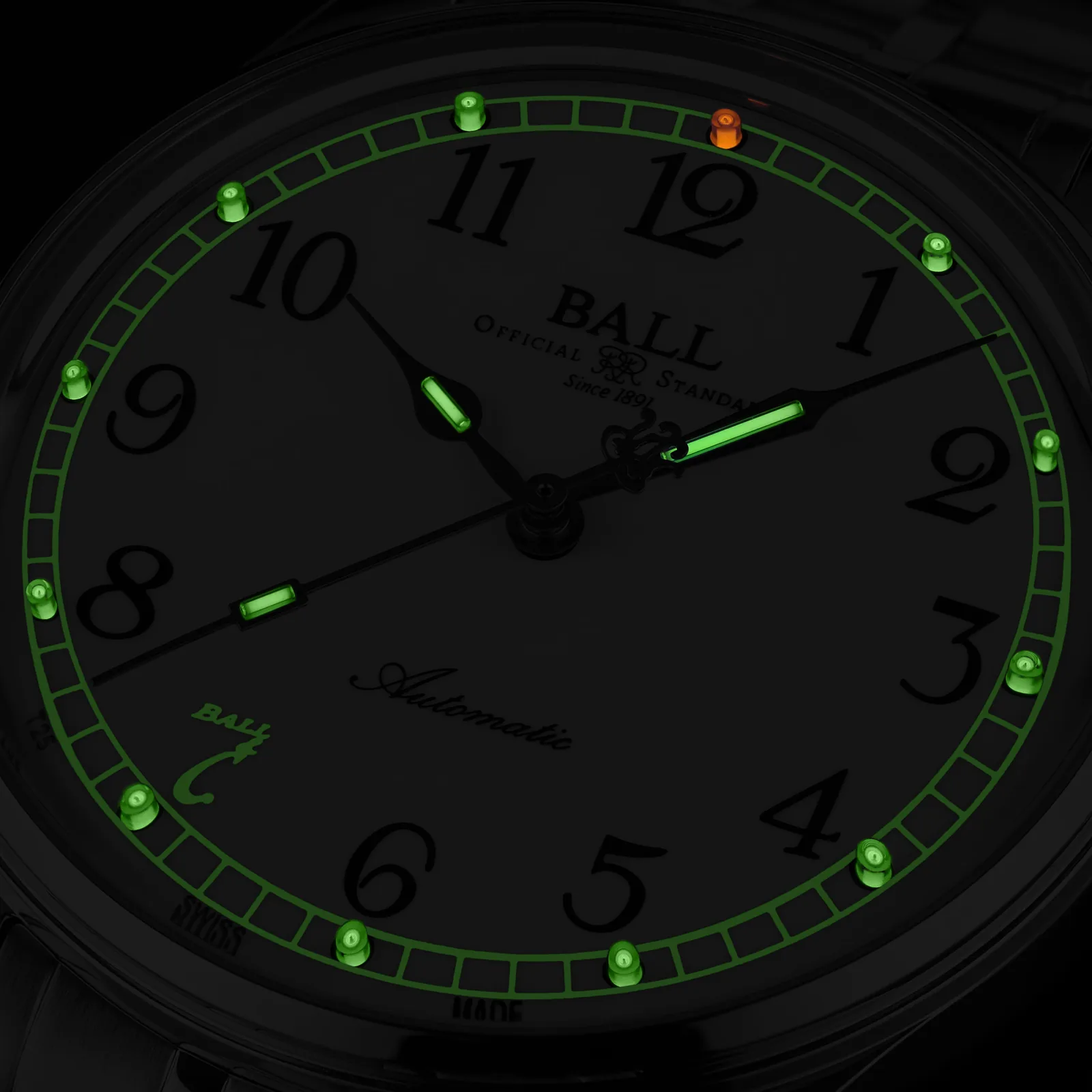
| Illumination | 15 micro gas tubes on the hour, minute and seconds hands and on the dial |
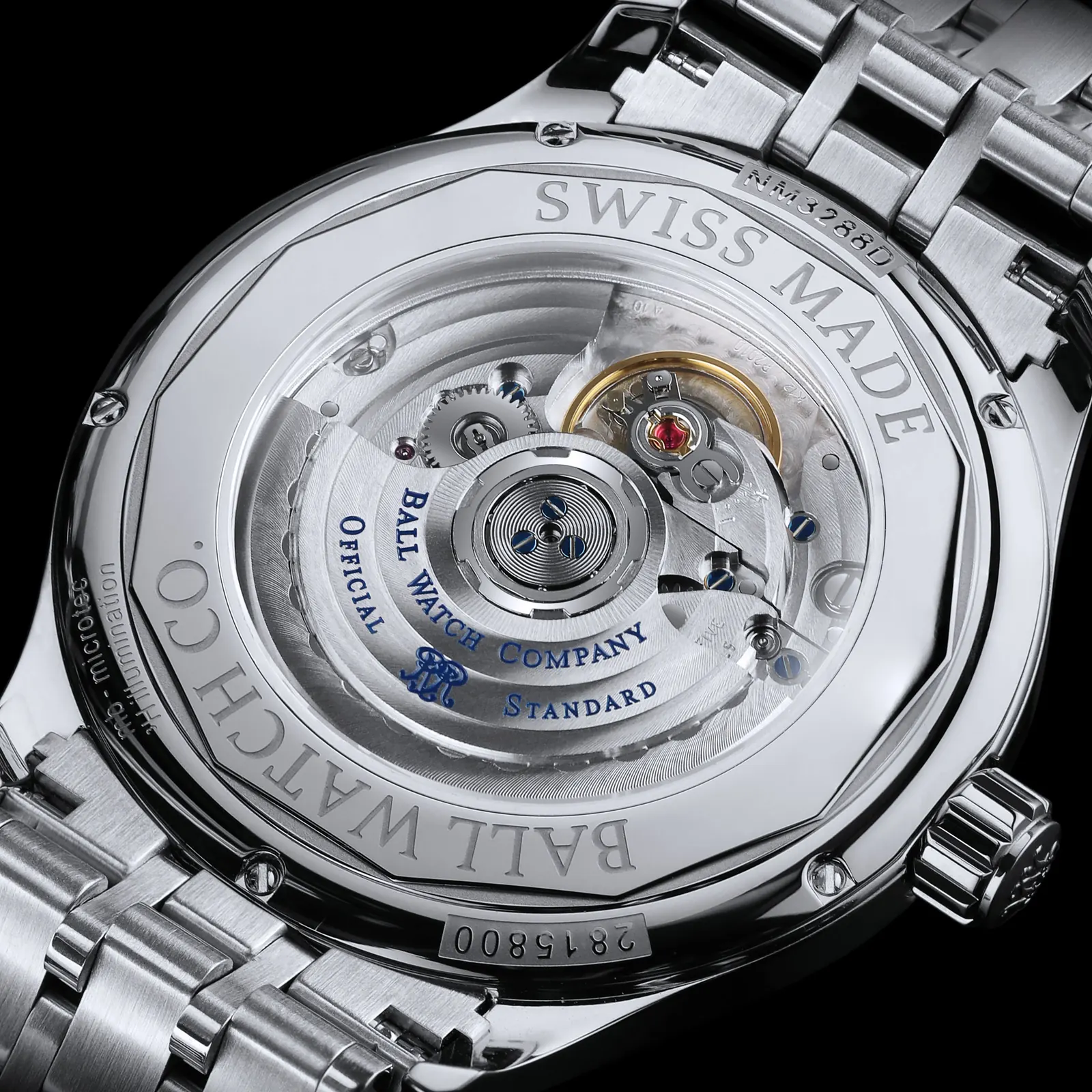
| Caliber | BALL RR1101, automatic; 28,800 vibrations per hour (4 Hz); power reserve of about 42 hours; hours, minutes and central seconds |
| Bracelet or strap | 904L stainless steel bracelet with folding clasp, or crocodile leather strap with pin buckle or folding clasp |
| Price | US$1,949 (recommended retail price); on sale from November 2026 |
A pocket-watch dial
The white enamel dial borrows the typography of its Arabic numerals and the shape of its hands from Ball's first pocket watches. Around the edge, the minute scale reproduces the pattern of a railroad track, and the 7 is formed by the words BALL & Co.
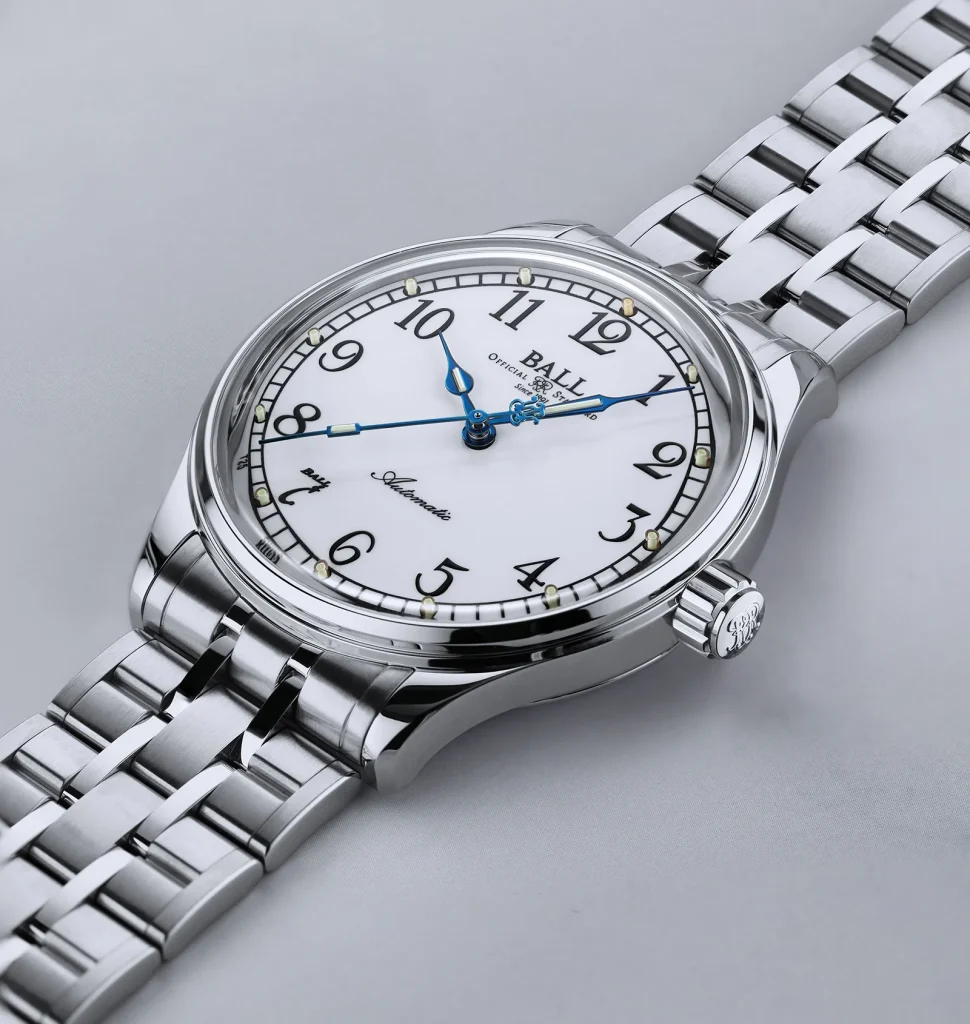
Ball says the wide dial and its restrained graphics make the time easy to read. Ball offers the watch on a crocodile leather strap or a steel bracelet. It withstands shocks of up to 5,000 G and magnetic fields of 4,800 A/m, and with a push-in crown and 30 m of water resistance it is suited to rain and splashes.
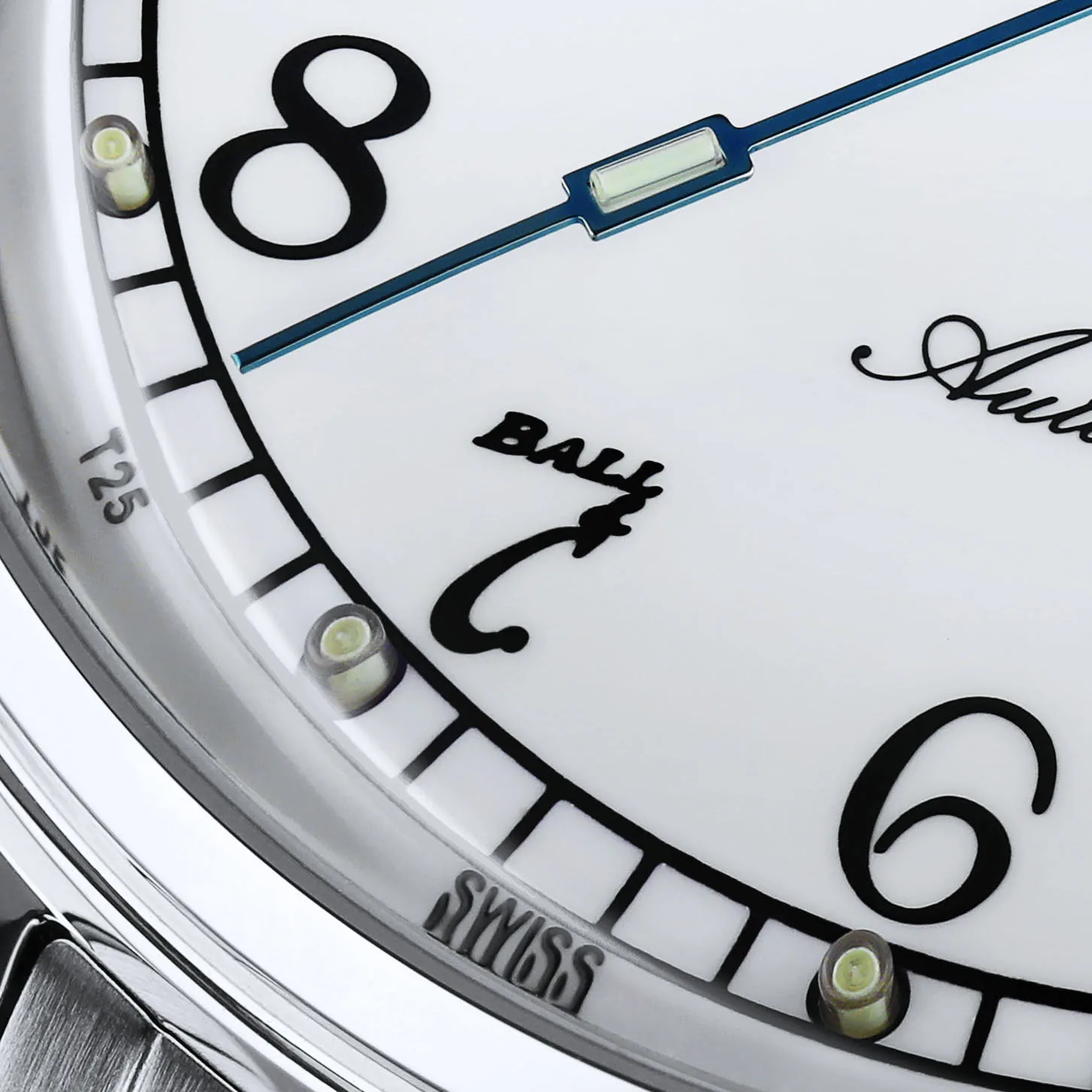
Micro gas tubes and the RR1101 calibre
The 15 micro gas tubes, set in the hands and on the dial, glow continuously without first being exposed to light. Ball rates them as up to 100 times brighter than a conventional luminous coating. Super-LumiNova, a pigment that charges with light and fades over the hours, is used on this watch only for the minute scale and the 7.
The BALL RR1101 calibre, visible through the sapphire caseback, is automatic, runs at 4 Hz and has a power reserve of about 42 hours.
Price and stores in Mexico and Spain
The Trainmaster Standard Time has been on sale since November, at a recommended price of US$1,949. The brand's store locator lists points of sale in Mexican cities such as Mexico City, Zapopan, Querétaro, Puebla, León, Cancún and Toluca, and in Madrid, Seville, Granada, Valladolid and Barakaldo in Spain. Watches bought from Ball's authorised dealers carry a four-year international warranty, and those bought from its online store a two-year warranty.
The legacy of Webster Clay Ball
According to the brand, Webster Clay Ball standardised components and procedures so that watches met the Official Railroad Standards. In 1973, Ball adds, the Swiss Official Chronometer Testing Institute (COSC) took those standards as the basis for unifying the criteria it still uses to certify mechanical chronometers.
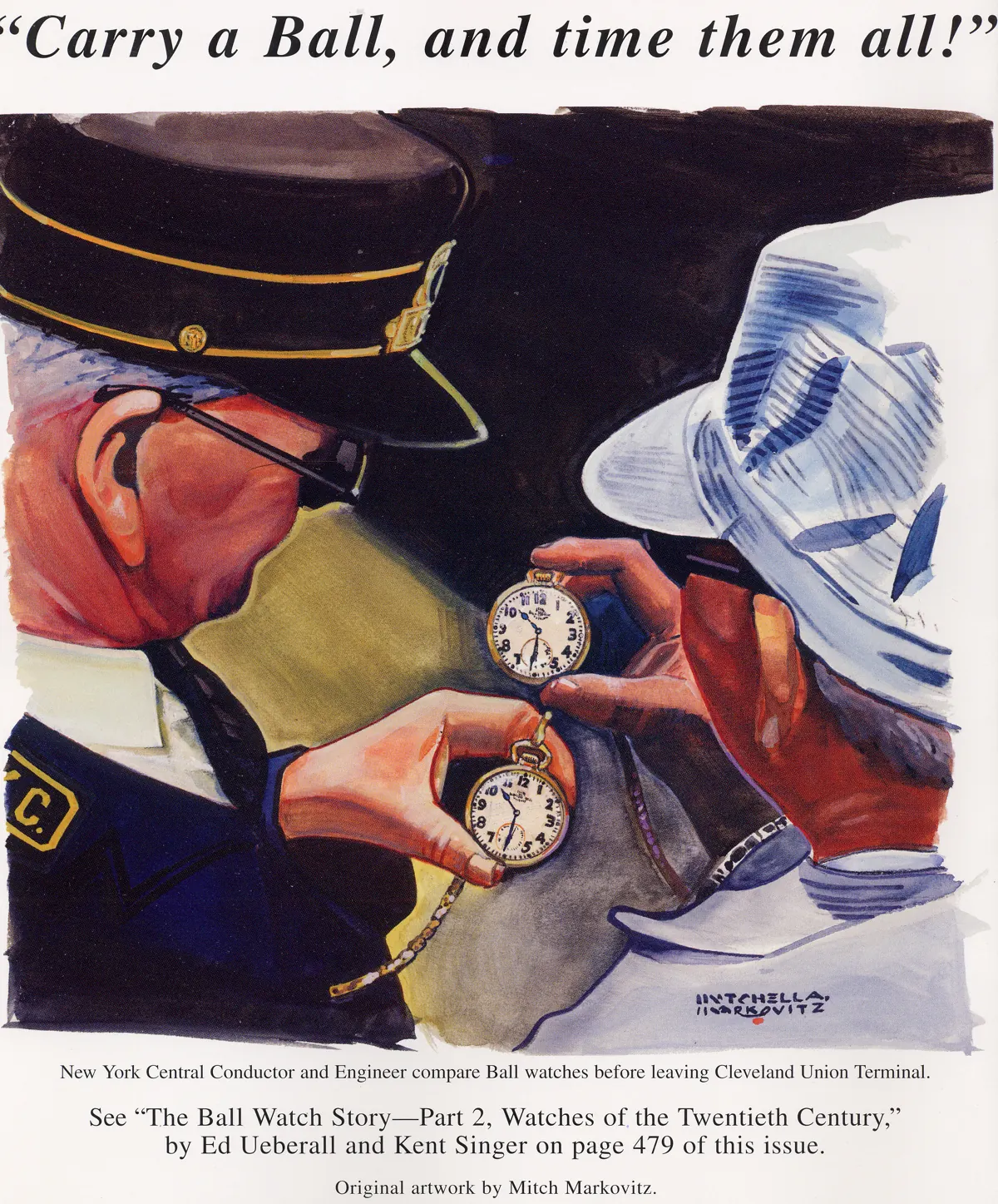
The brand also says that, under Webster Clay Ball's inspection system, trains became so punctual that people set their watches by them, and that this is the origin of the expression “on the ball”.