
The most common version tracks the Moon with a 59-tooth disc, and its rounding adds up to a one-day gap in a little over two and a half years.
A moon phase shows on the dial where the Moon is in its cycle, which runs from one new moon, when the Moon cannot be seen in the sky, through the full moon to the next new moon. To do so, the watch has to solve an arithmetic problem, because the lunar cycle does not last a whole number of days and the most common mechanism reproduces it with one step every 24 hours. How each caliber handles that difference determines how long the moon on the dial stays in step with the one in the sky.
A 59-tooth disc
That cycle, known as the synodic month, lasts 29.53 days on average, or 29 days, 12 hours and 44 minutes, according to NASA.
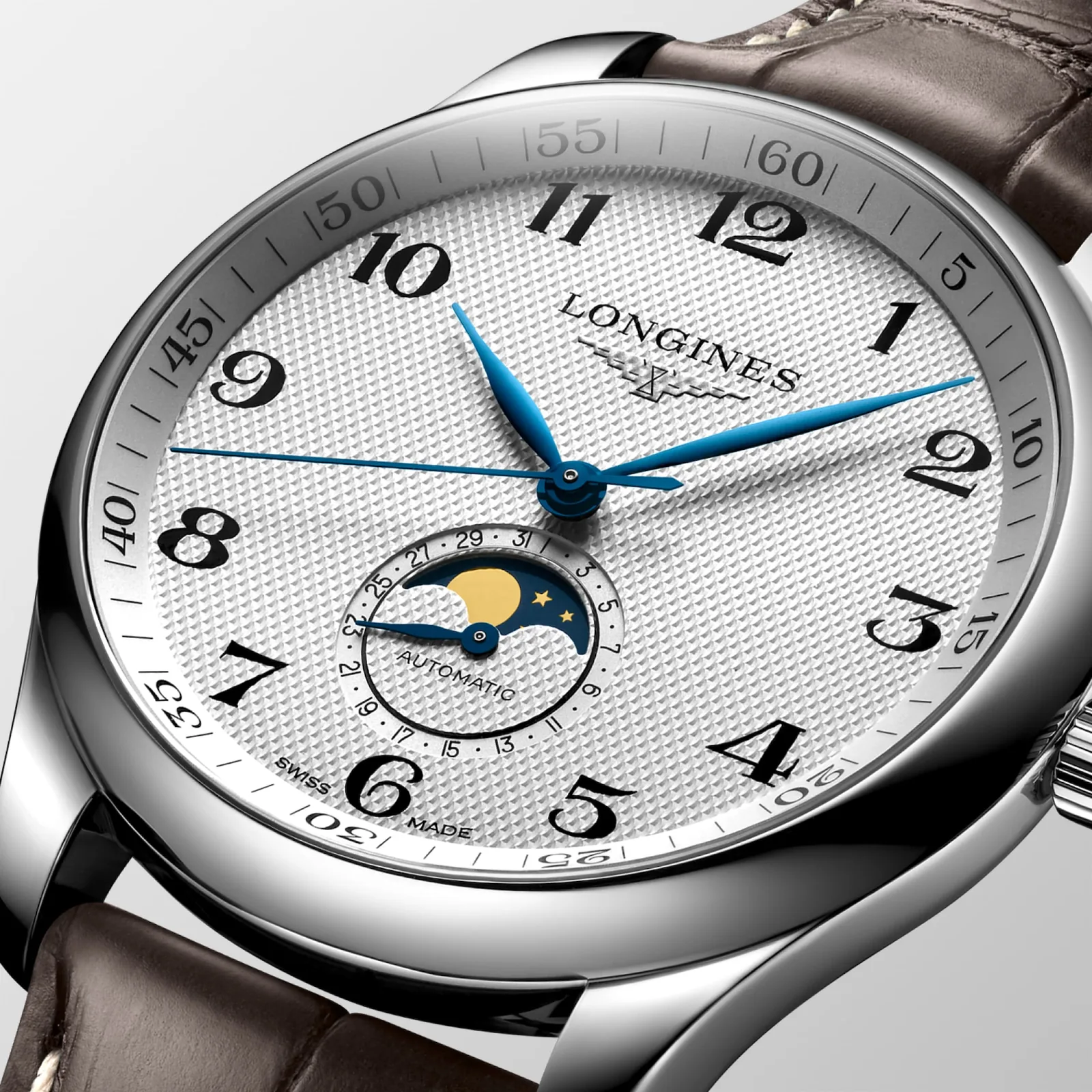
In the most common version of the complication, the moon seen on the dial is one of two identical moons set opposite each other on a disc with 59 teeth around its edge. Once a day, the movement pushes the disc forward by one tooth. Half a turn of the disc takes 29.5 days, the time one moon needs to cross the aperture from side to side; then the second moon starts to appear and the cycle begins again.
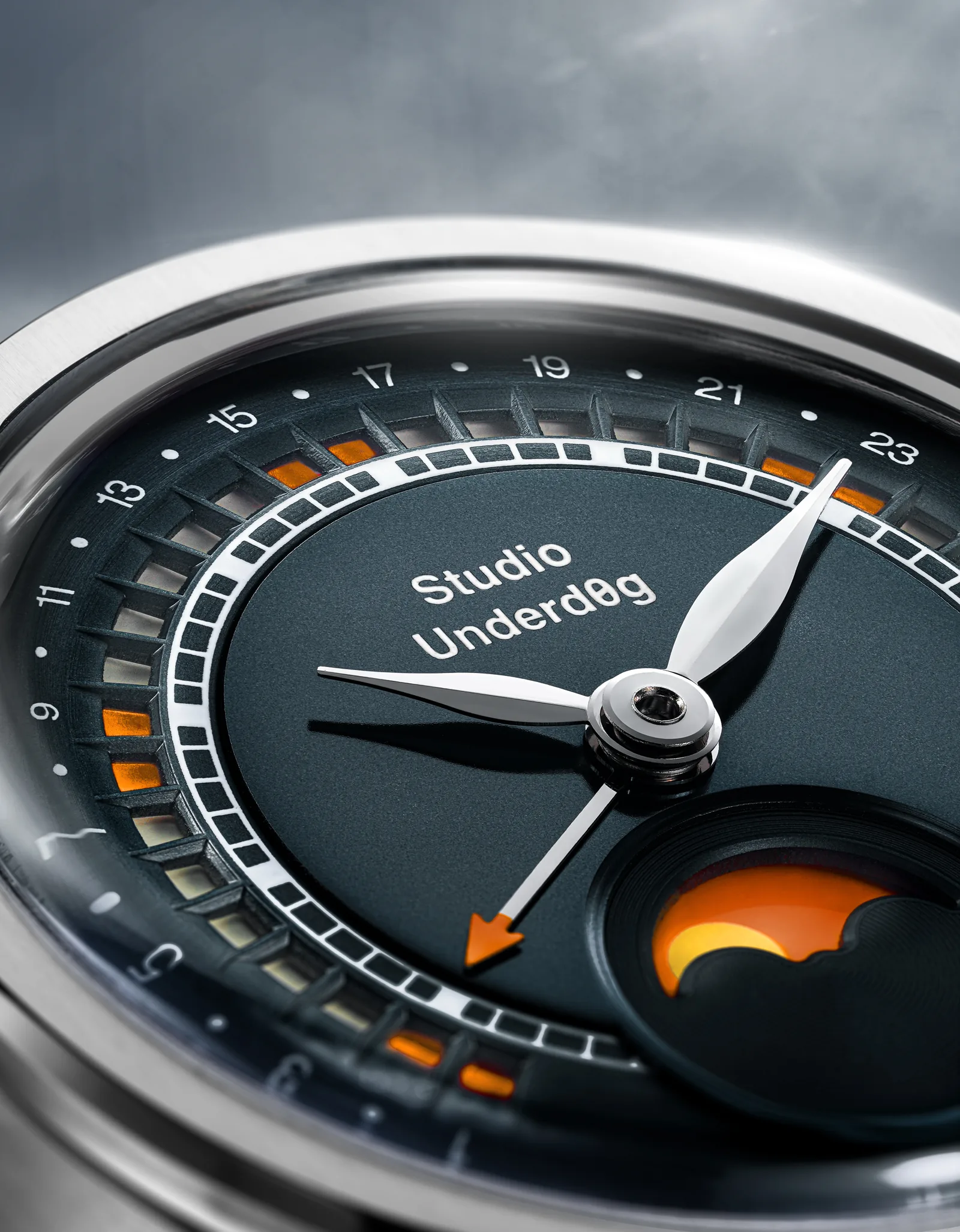
Those 29.5 days are about 44 minutes shorter than the synodic month. Because the disc completes its cycle before the Moon does, the display gradually runs ahead, and after roughly two years and seven months the gap adds up to a full day. A 365-day calendar has a similar issue: the solar year is almost six hours longer, and without the extra day added in leap years, dates would slowly drift away from the seasons. A 59-tooth moon phase has no equivalent mechanism, so that day has to be corrected by hand.
Other moon phase mechanisms narrow the gap with a different gear train, such as one built around a 135-tooth wheel. According to calculations published by Watchfinder and Quill & Pad, that arrangement takes about 122 years to drift by one day.
Models and prices
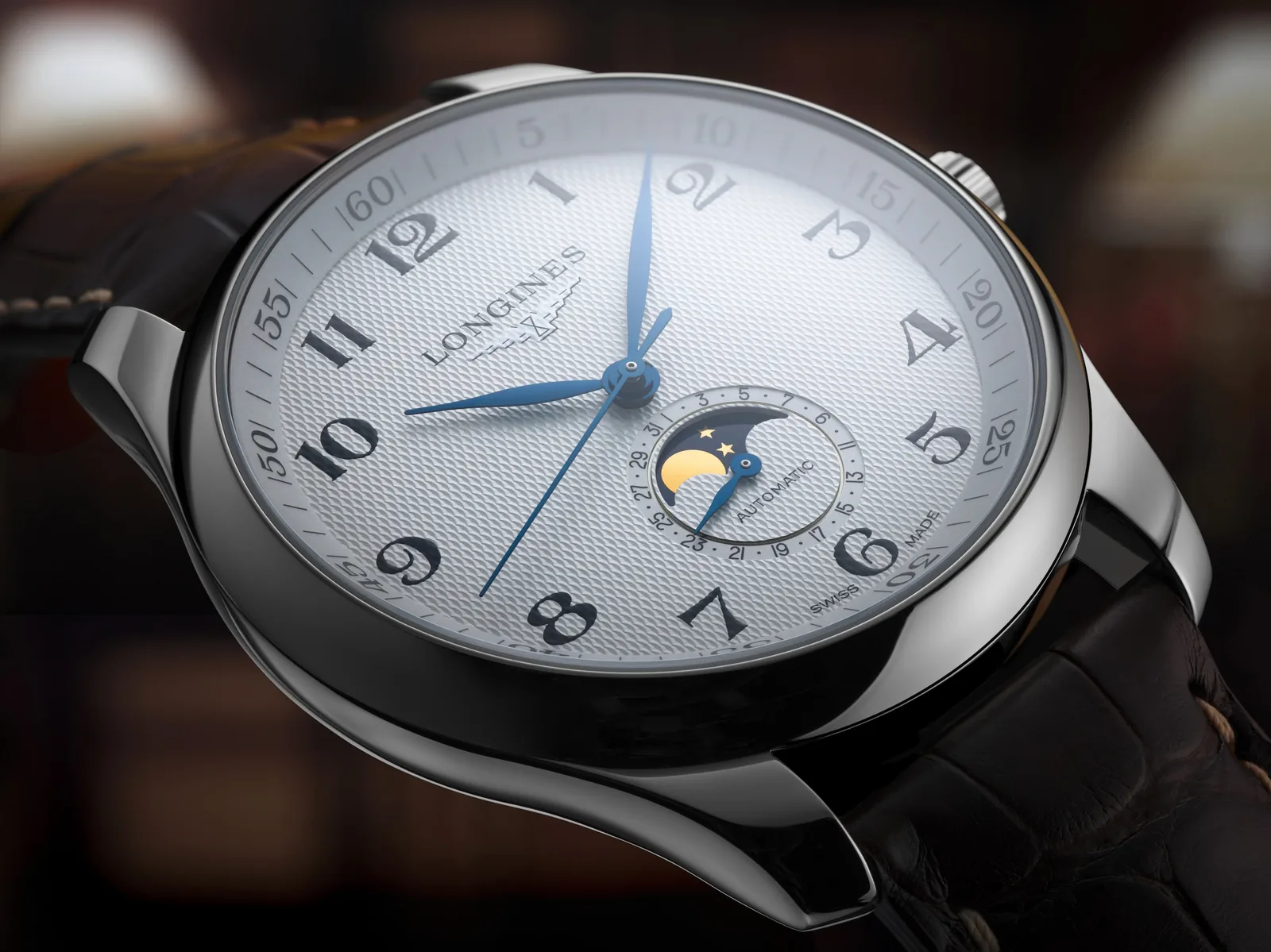
On its Mexican website, Longines lists the Master Collection Moonphase, a steel automatic watch that shows the date with a hand and the moon phase in an aperture. The 40 mm version costs 59,800 pesos and the 42 mm version 69,800.
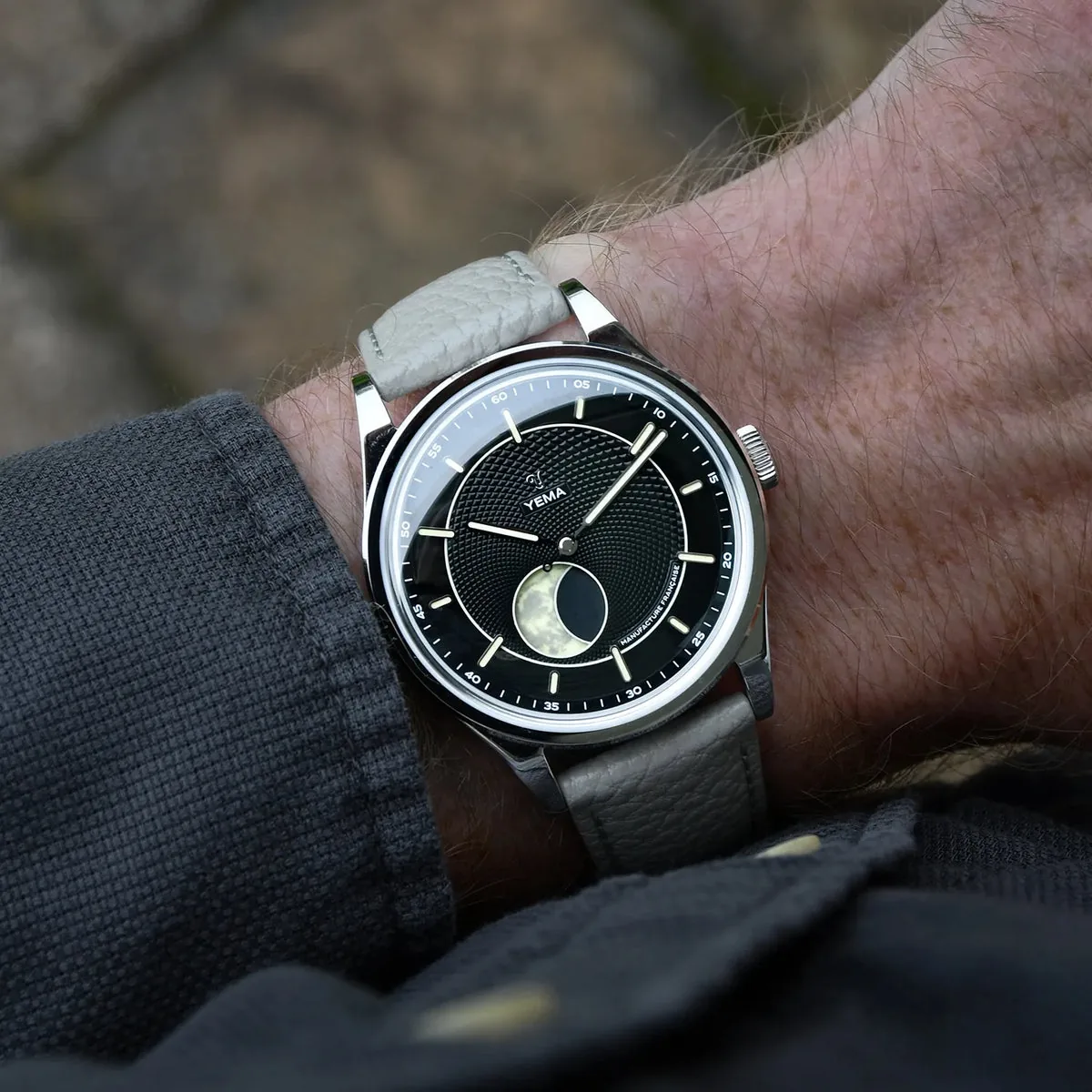
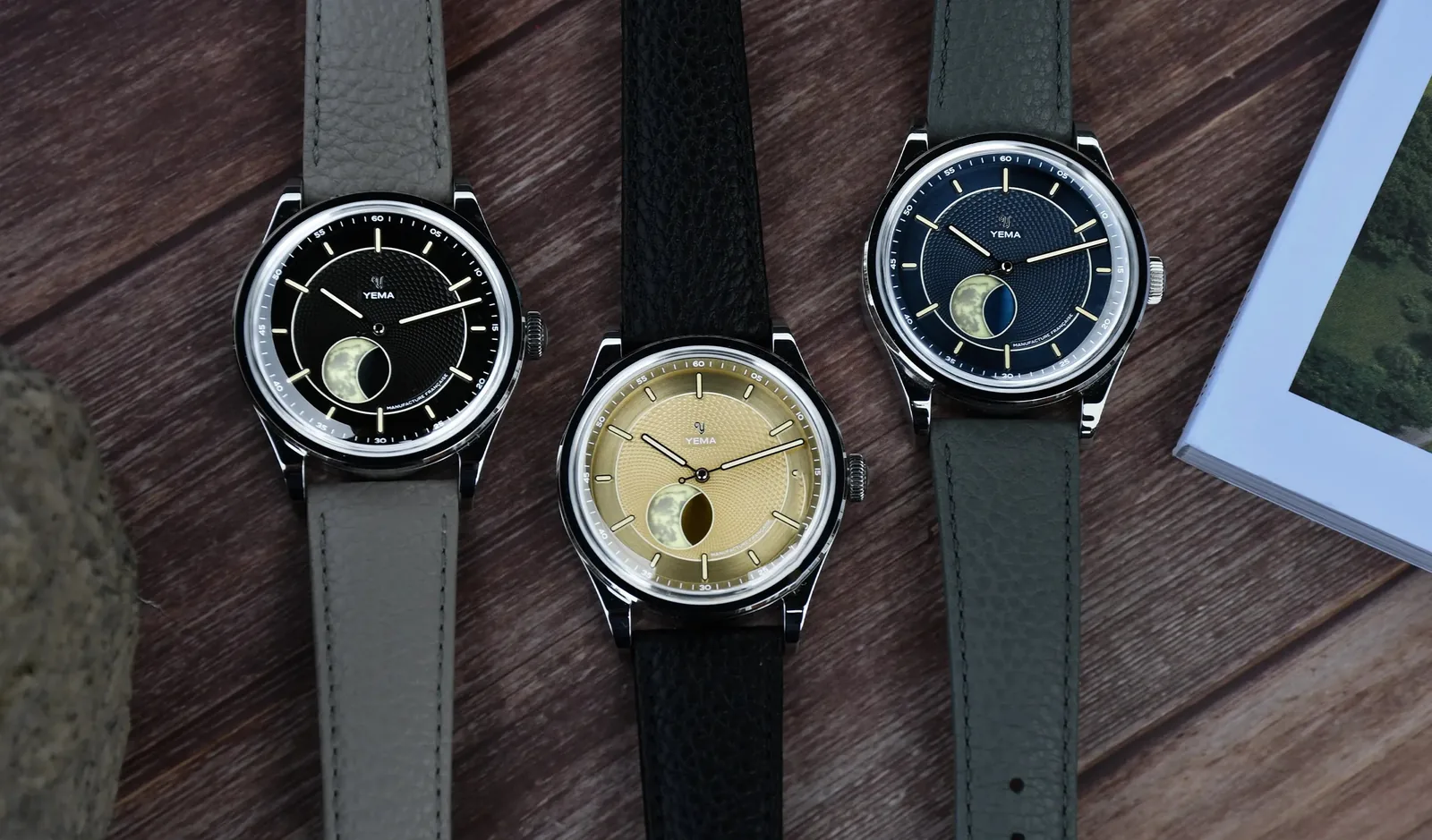
Since November, Yema's online store, which ships to Mexico with prices in US dollars, has carried the Senans Grande Lune, the brand's first moon phase watch. On this watch the moon itself does not move and is made of luminescent material, and a rotating part covers and uncovers it as the phase changes. On a leather strap it costs 2,790 dollars, or 2,470 euros in Spain.
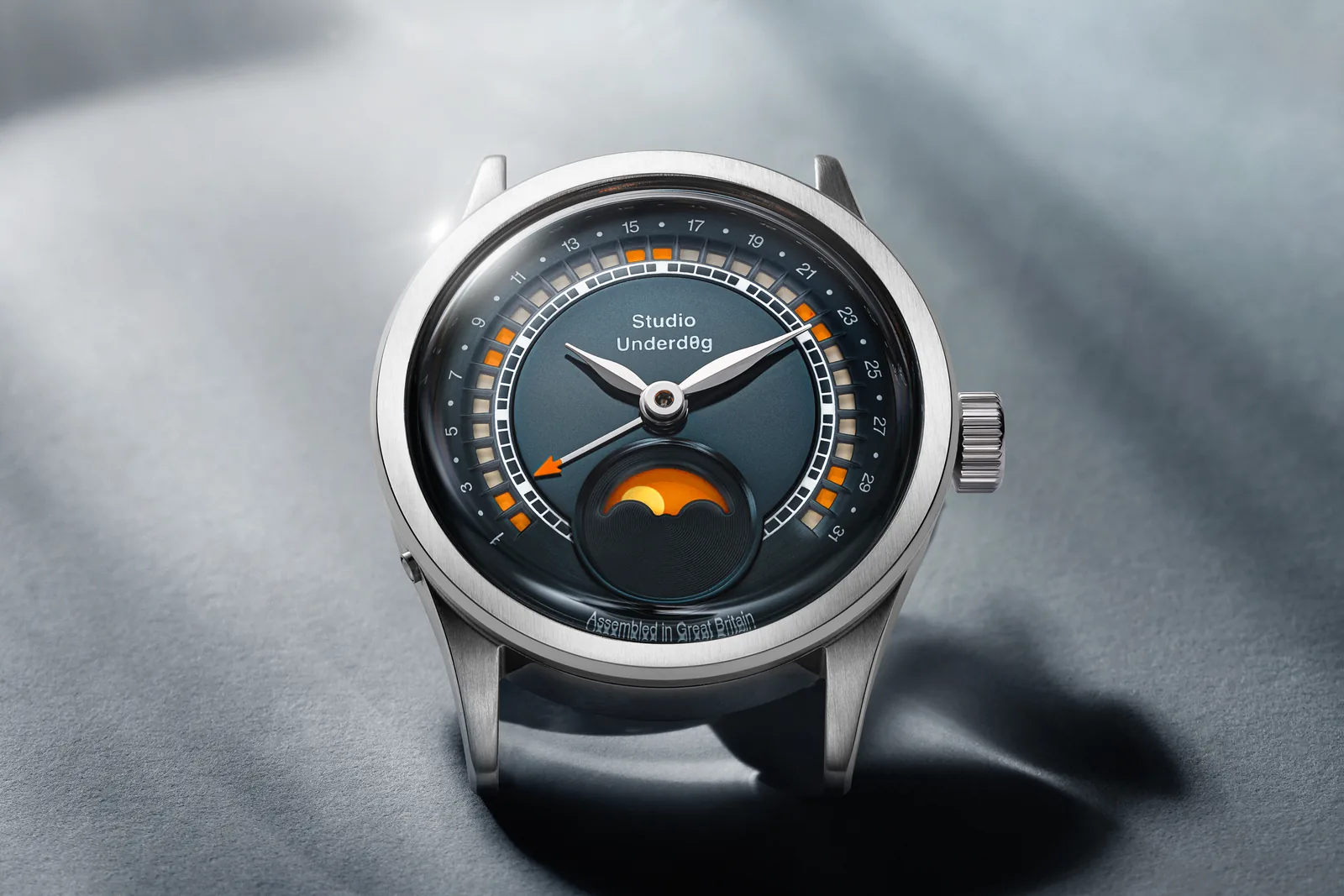
The 04SERIES by Studio Underd0g, priced at 1,100 dollars or 800 euros, pairs the moon phase with a retrograde date. For Mexico, the brand's online store shows prices in pounds, and the buyer pays the import duties of the destination country.
When not to correct it
As with the date, the moon changes position during a period of the day that depends on the caliber, and the moon phase should not be corrected while that change is under way. In the guide to its hand-wound F8A6 caliber, Orient asks owners not to set the moon phase while the hands are between 9 and 3, because the display changes during that period and the correction may not register. In the manual for its L707 caliber, Longines states that the moon phase should not be corrected between 3 pm and 6 pm, because the correction function is inactive during that time.
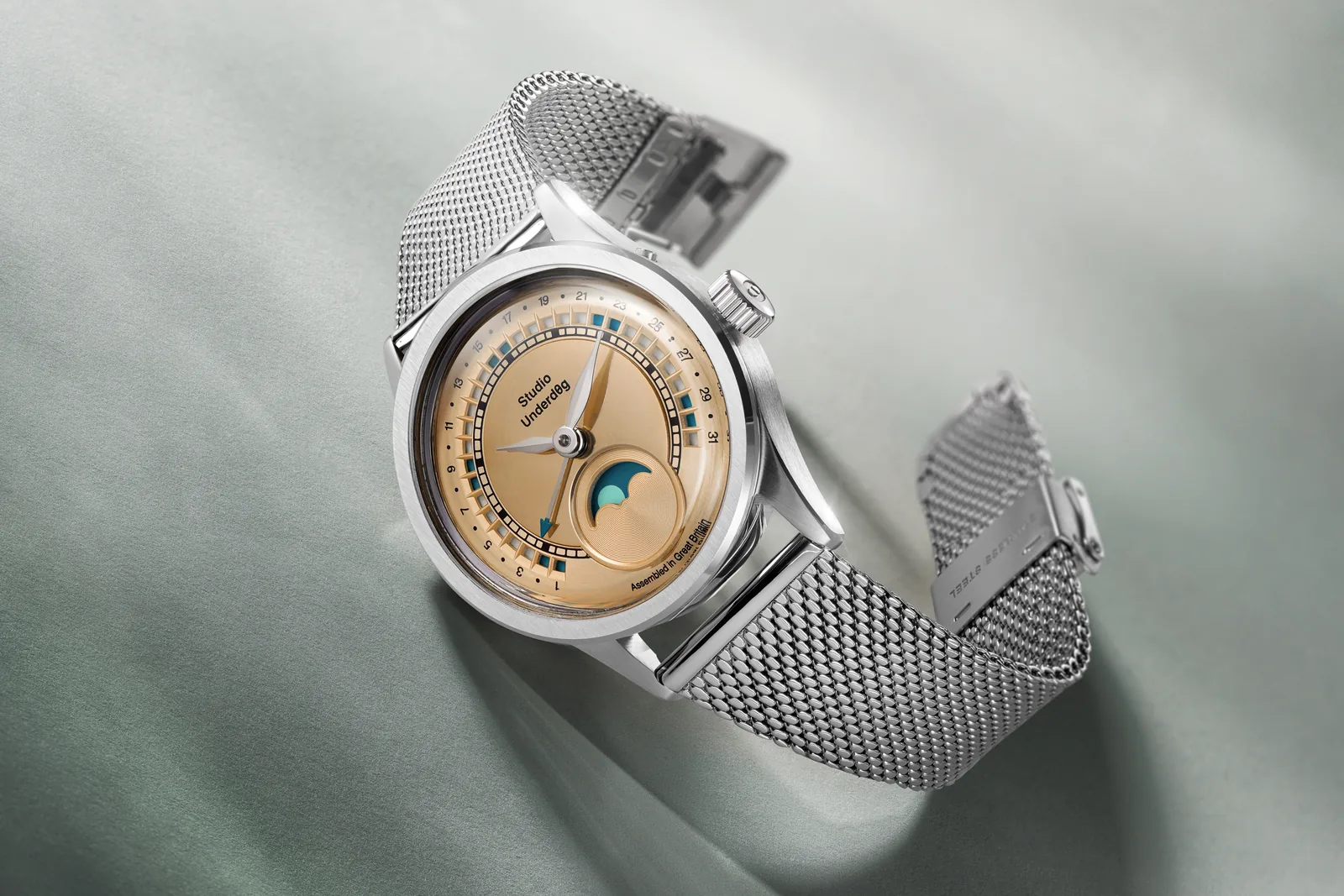
On the Master Collection Moonphase, the moon phase is corrected with the crown, and the manual for its L899 caliber describes the method: bring the full moon to the center of the aperture, then advance it one step for each day that has passed since the last full moon, whose date is listed in lunar calendars. On the 04SERIES, the correction is made with a pusher at 8 o'clock. ORELO has gathered the hours during which the date should not be changed, caliber by caliber, in How to set the date on a mechanical watch without damaging the calendar.