
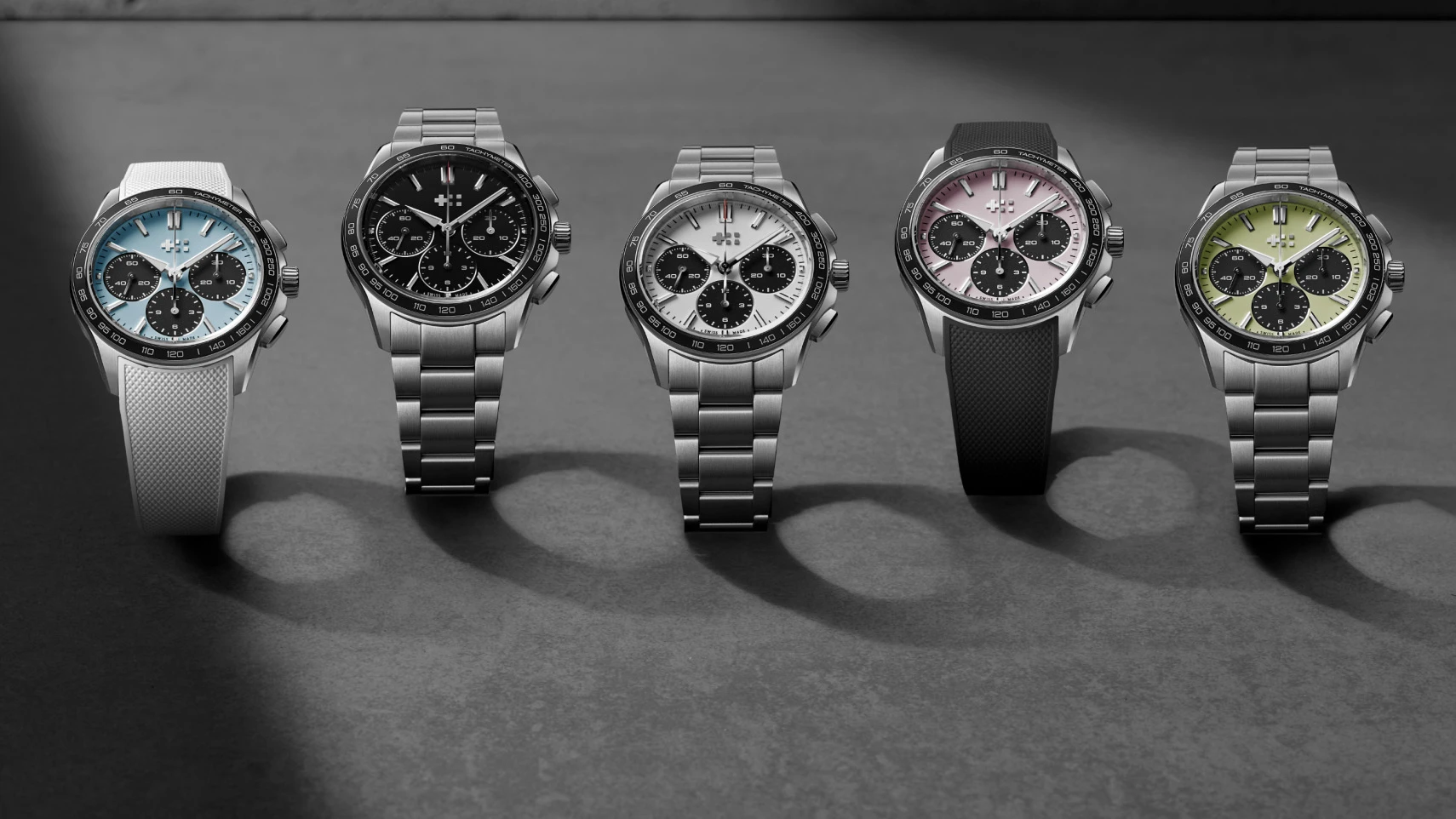

The British brand's first mechanical chronograph since 2020 arrives with a Sellita calibre and matches the price of two Swatch Group watches that share a movement with each other.
Christopher Ward sells online from Maidenhead, west of London, with no distributors and no retail middlemen, and mechanical chronographs had been absent from its catalogue for years: the last one arrived in 2020, after which the company concentrated on three-hand automatics, GMTs and the Bel Canto, its chiming watch. The C63 Sealander Chronograph, introduced on 17 September, brings the complication back and enters a price band already occupied in Mexico and Spain by two Swatch Group watches.
The quartz PRX Chronograph ORELO covered on Tuesday costs USD 525. The three mechanical chronographs compared here cost around USD 2,600, and all three run a movement from the same family.
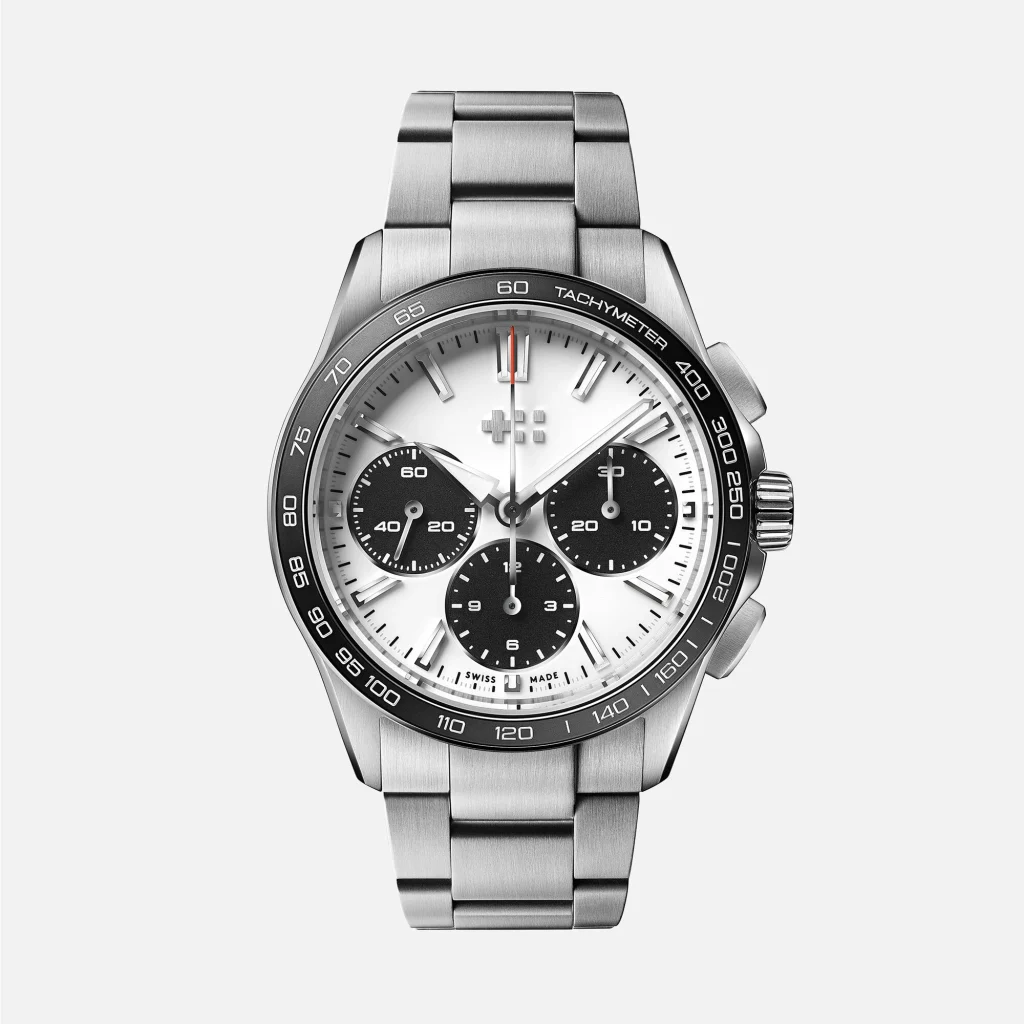
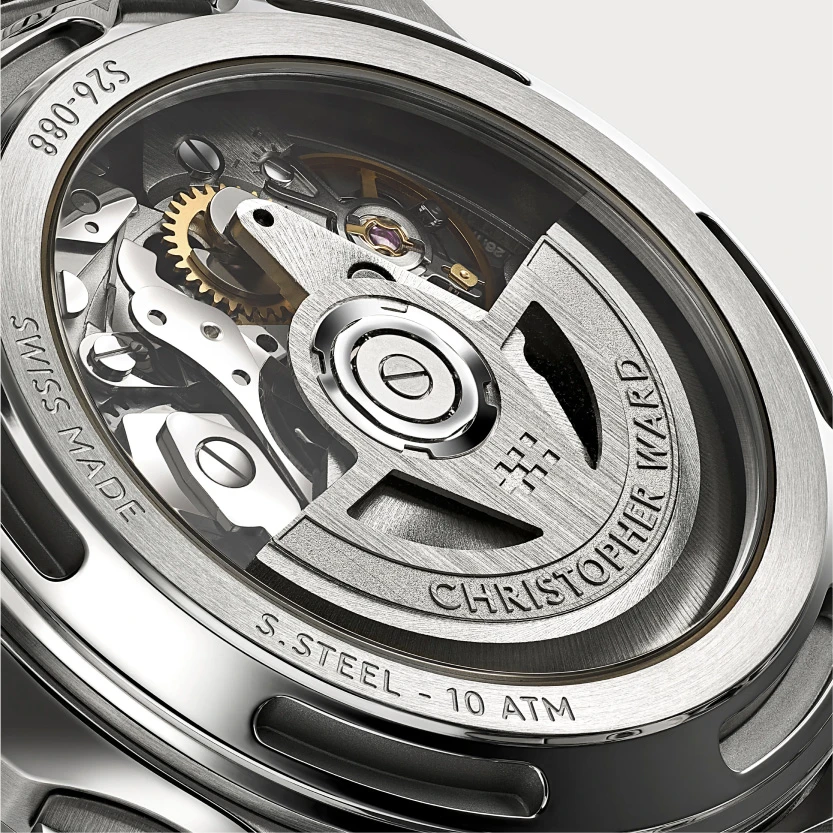
The Christopher Ward C63 Sealander Chronograph
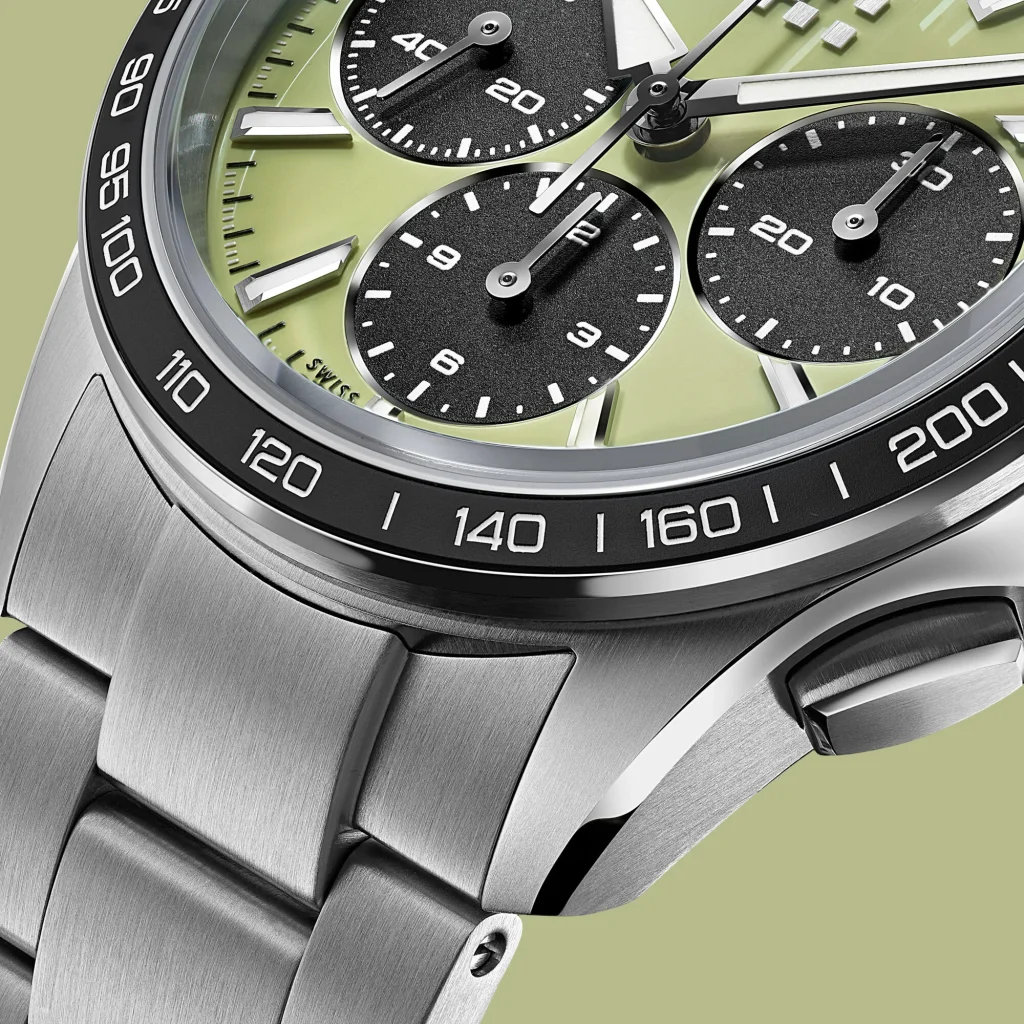
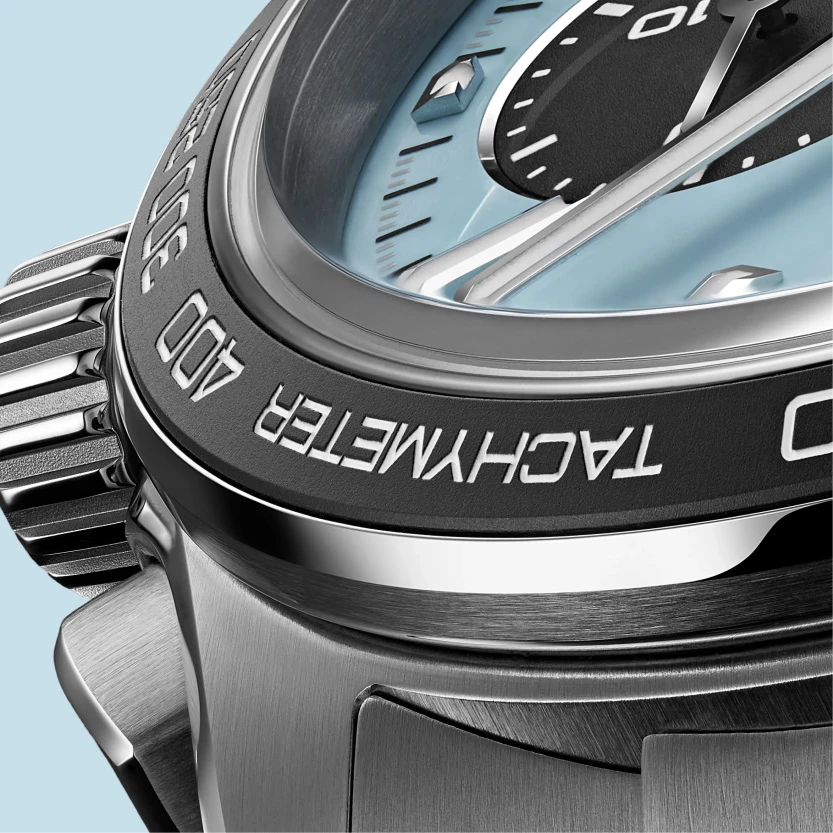
The Light-catcher case measures 41mm across, 13.9mm thick and 48mm lug to lug, with 22mm lugs, a tapered screw-down crown, anti-reflective sapphire crystal and 100m of water resistance. The bezel is fixed, in sandblasted ceramic, with a tachymeter scale, and the brand lists 84 grams for the case alone and 174 with the bracelet. Inside sits the Elaboré-grade Sellita SW510, with 27 jewels, 4Hz, a 62-hour power reserve and a timing tolerance Christopher Ward publishes as minus five to plus twelve seconds per day. The counters follow the symmetrical 3-6-9 layout, with thirty minutes at 3, twelve hours at 6 and running seconds at 9.
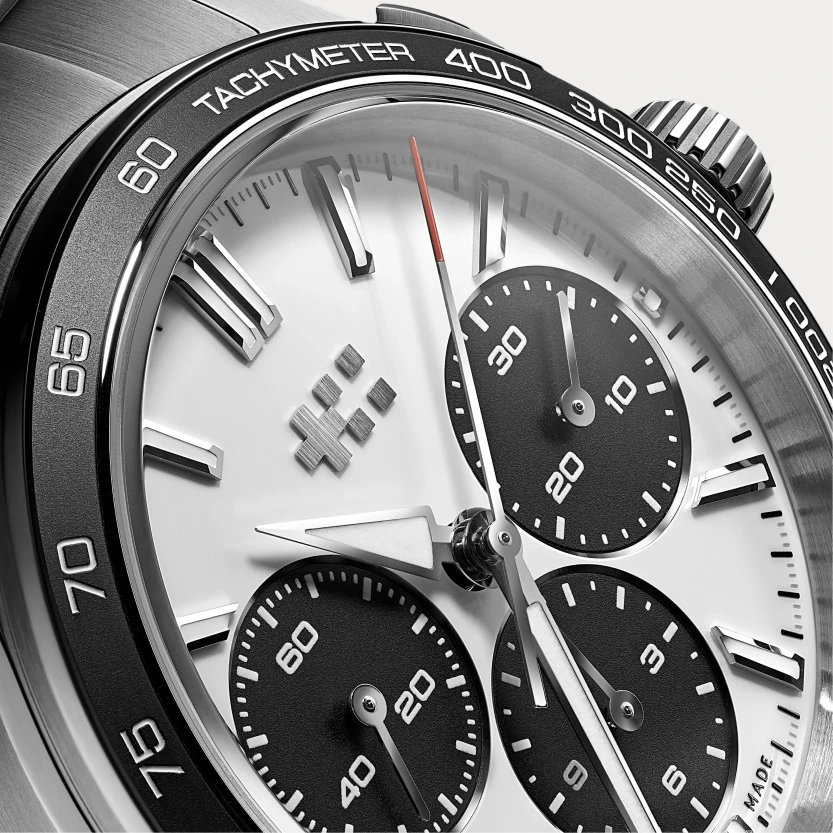
Case finishing and the iLink bracelet, whose links come out without tools and whose clasp carries a micro-adjustment, are better than this price usually buys. The height, which Christopher Ward presents as the slimmest profile among its chronographs, is still tall for a 41mm watch. It costs USD 2,625 on integrated rubber and USD 2,765 on the bracelet, in five colours: black, white, pistachio, sky blue and pink.
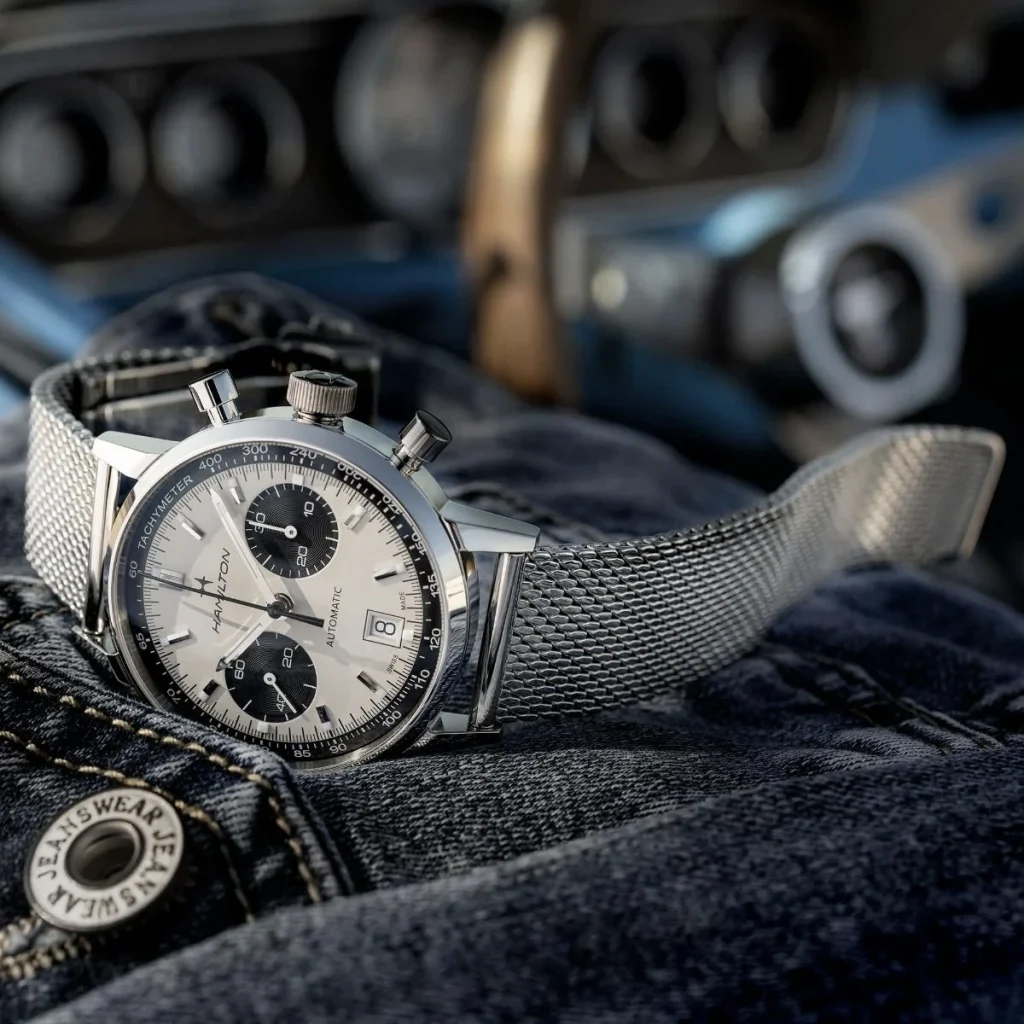
The Hamilton Intra-Matic Auto Chrono
A reworking of the 1968 Chronograph A, it measures 40mm, with sapphire crystal, 100m of water resistance and a panda dial. It runs the H-31 calibre, which Hamilton develops from the Valjoux 7753 with 27 jewels, 4Hz and a power reserve raised to 60 hours from the base movement's 42. Hamilton's product page does not publish a timing tolerance for the H-31, so that figure stays out of the comparison. It costs USD 2,595 on a strap and USD 2,625 on the bracelet, the same amount as the Christopher Ward on rubber.
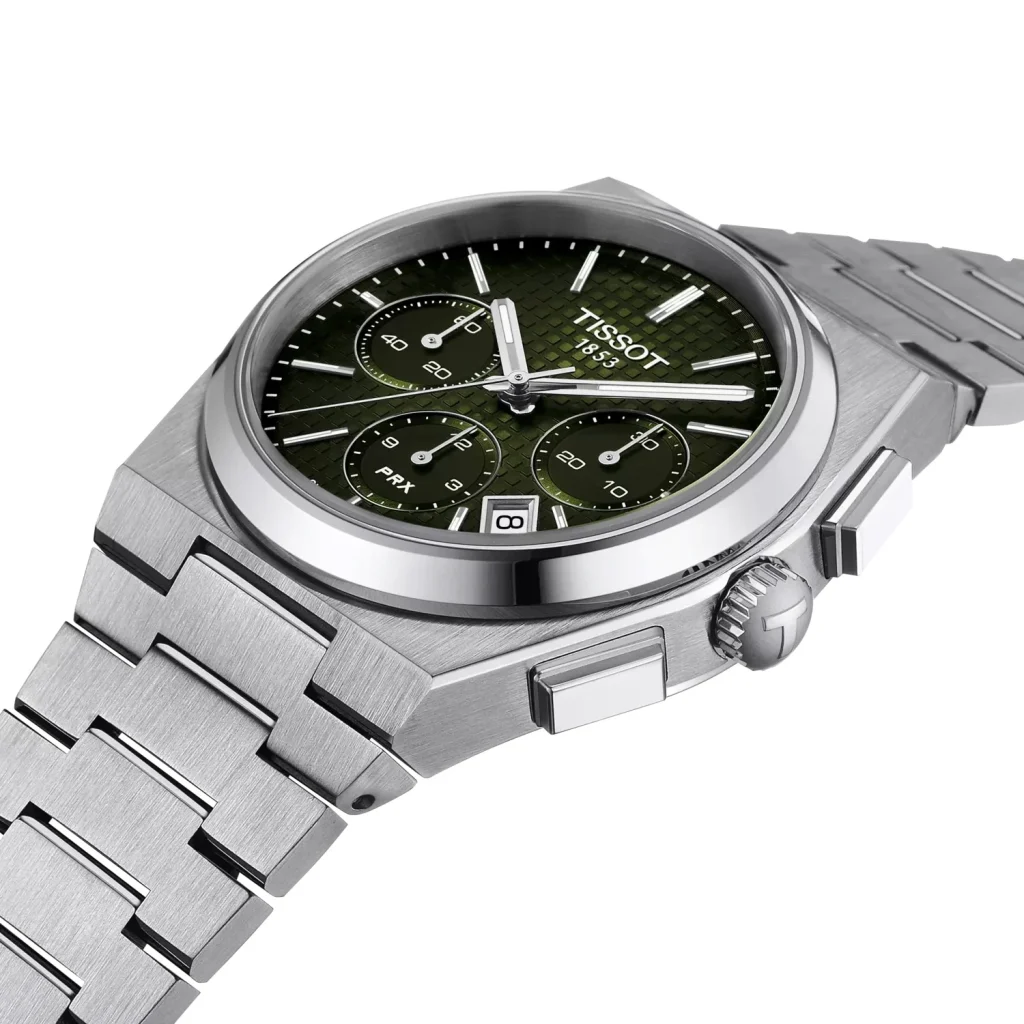
The Tissot PRX Chronograph Automatic
It measures 42mm by 14.54mm, with an integrated bracelet that forms part of the case, a sapphire caseback and the Valjoux A05.H31, which is the same movement Hamilton calls the H-31. Its price, USD 2,150, is the lowest of the three. It is also the thickest, and the bracelet is part of the case, so strap options are limited to what Tissot makes for that reference.
Three calibres, one lineage
The Valjoux 7750 appeared in 1974, and its chronograph mechanism is cam-actuated. The cam is a stepped component that rotates and pushes the chronograph parts as the pusher goes down; it is cheaper to produce and to adjust than a column wheel, and it gives the finger a drier resistance. The 7753 is the variant with counters in the 3-6-9 layout, and from it come Tissot's A05.H31 and Hamilton's H-31. The SW510 is Sellita's version of that same architecture. All three watches here carry three versions of the same 1974 design.
Buying all three from Latin America and Spain
Hamilton and Tissot publish list prices in their Mexican online stores: the Intra-Matic Auto Chrono starts at MXN 52,390 and the PRX Chronograph automatic sits at MXN 43,550. Both brands have Swatch Group authorised service in Mexico, Colombia, Argentina and Spain. Christopher Ward sells direct, with free DHL shipping worldwide except for a list of excluded countries that includes none of those four, sixty-day returns and a five-year movement guarantee. Servicing happens at its Maidenhead workshop, with an estimated eight weeks from quote payment and up to twelve if the piece goes to its Swiss atelier; the brand recommends a service every three to four years and asks that repairs not be carried out by third parties. The Christopher Ward store operates in dollars, euros, pounds and six other currencies, none of them Latin American, so buying from the region is done in dollars and import taxes fall to the buyer.
The ORELO choice
The local list price and the authorized workshops in Mexico, Colombia, Argentina and Spain tip the comparison towards the Hamilton Intra-Matic Auto Chrono, which also costs the same as the Christopher Ward on rubber. For the buyer who puts case finishing ahead of everything else, the Christopher Ward is the one: the polish on its flanks and the adjustment on its bracelet are better than either rival's. For the buyer who wants the same movement as the Hamilton at the lowest price, the Tissot sits almost five hundred dollars below.

[…] a un cronógrafo mecánico, la ventaja más visible de uno de meca-cuarzo es el precio. En el catálogo de Yema, el Rallygraf […]