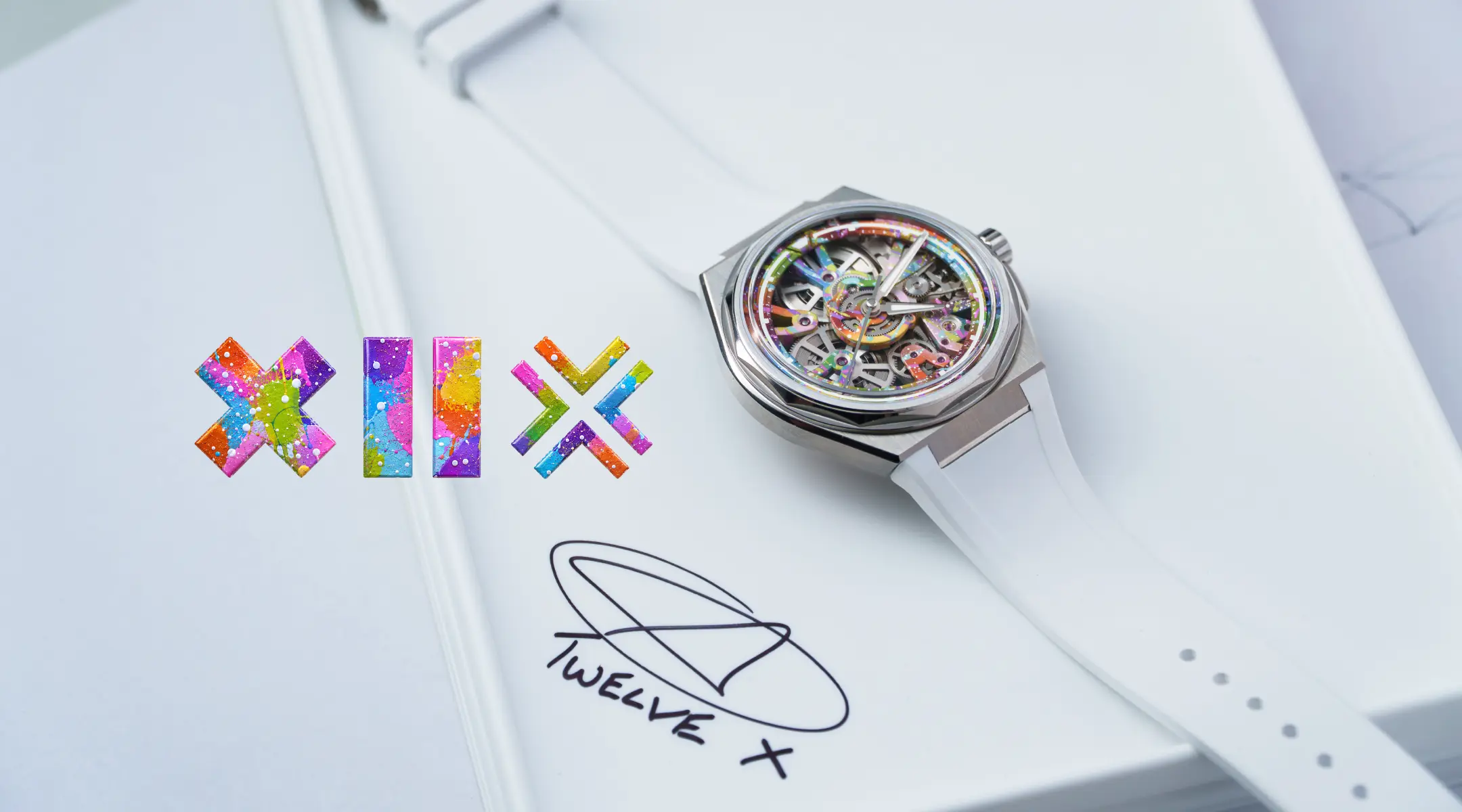

The dial of a watch is, by its very nature, a static canvas. Its flat surface offers the artist a confined space in which each stroke must coexist with indices, hands, and scales without losing its balance. Translating that same idea to a component of the movement presents a completely different challenge.
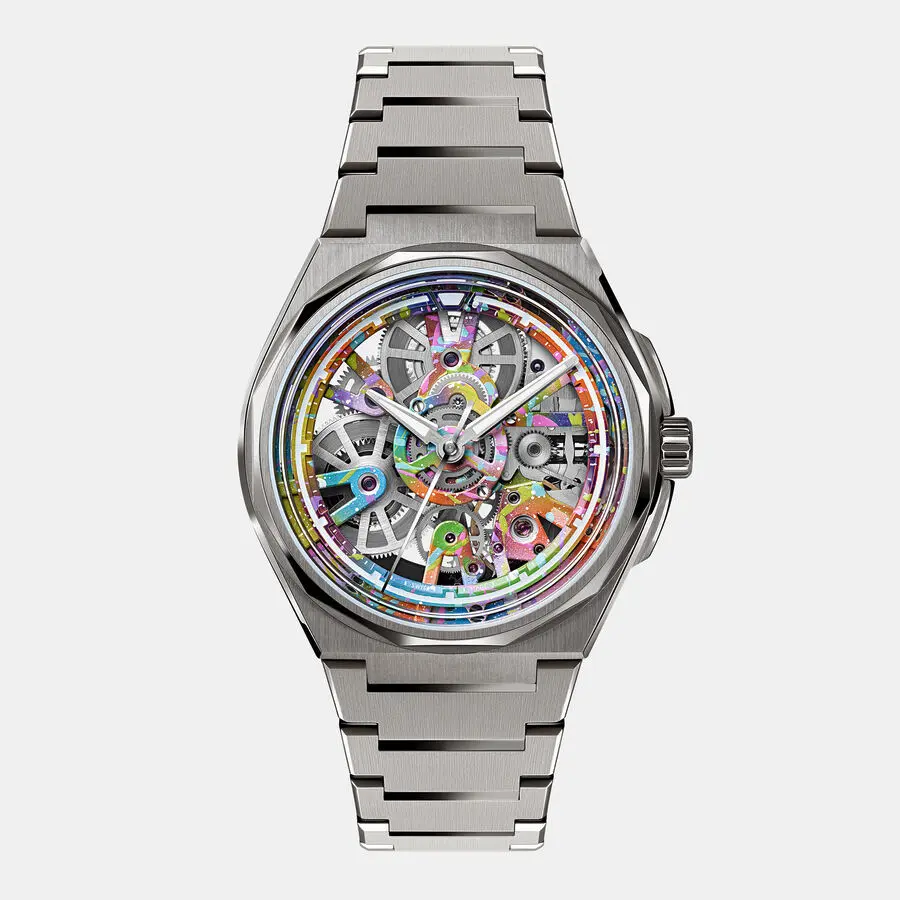
A bridge or a plate of Christopher Ward's Calibre SH21 is not meant merely to be admired; it is part of a living mechanism that will oscillate thousands of times per hour and continue to do so for years. Creating art on such a piece demands more than precision; it requires adapting to an element designed to function rather than be displayed. This was the challenge that The Dial Artist decided to take on in a limited edition of just 150 watches.
Christopher Ward was founded in 2004 as a direct-to-consumer venture: without physical boutiques or intermediary distributors, its approach gained credibility as the brand developed its own movements. The skeletonized Twelve X is now one of its most technically ambitious pieces in permanent production. A watch in which the dial disappears and the Calibre SH21 is completely exposed: mainplate, bridges, escapement, rocker arm—all visible. There is no dial to decorate. The movement is the sole protagonist.
The idea of bringing Chris Alexander onto the project was both logical and risky. Alexander, a British artist known in the watchmaking community as The Dial Artist, had painted on watch dials, but never on the components of a functional movement. The collaboration stemmed from an idea as simple as it was ambitious: if the movement is the true protagonist in the Twelve X, why not also make it the canvas and artistically transform it?
It seems like a natural extension of Alexander's work, but it isn't.
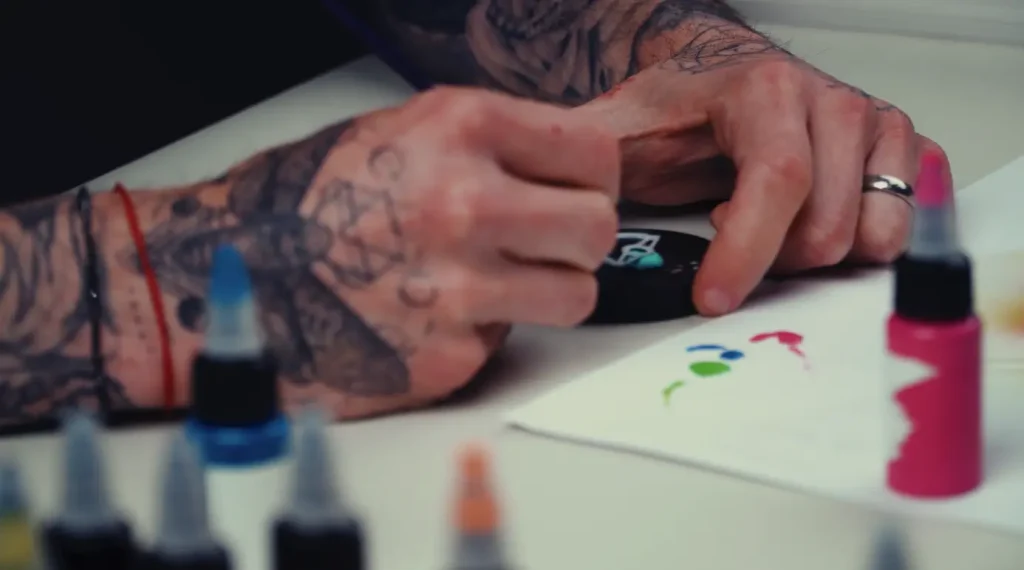
Painting on a dial has its own demands; miniature painting requires years of skill and a manual precision that few people develop, but it has a structural advantage: the dial doesn't move. You can work in controlled conditions and reassemble it afterward. Painting on the components of a movement introduces three problems that painting on a traditional dial doesn't have.
The first challenge is scale. The bridges and plates of the SH21 are precision-machined pieces, crafted down to the micrometer. The space available for pigment application is significantly smaller than on a dial, and the geometry is not conducive to a more forgiving surface.
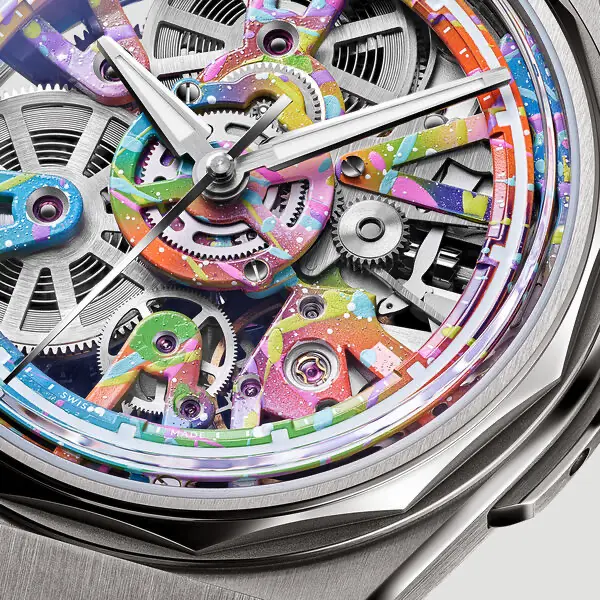
The second challenge is coexisting with existing mechanical finishes. The SH21's components have factory-decorated surfaces —côtes de Genève, perlage, and anglage— which Alexander's work had to respect or integrate without canceling what the brand had already incorporated into these pieces.
The third challenge, and the one that makes this project technically different from any dial work, is durability. The movement functions. It vibrates at 28,800 vibrations per hour. The pigment that Alexander applied to these eight components has to survive that vibration, that mechanical friction, and the passage of time in an unforgiving environment. A mistake in an assembled component cannot be corrected with a brush.
All of this translated into 900 hours of work. Each of the 150 watches underwent a meticulous, one-of-a-kind manual intervention on eight components of the SH21 caliber. The result went on sale on July 10th and quickly sold out. All 150 pieces were gone.
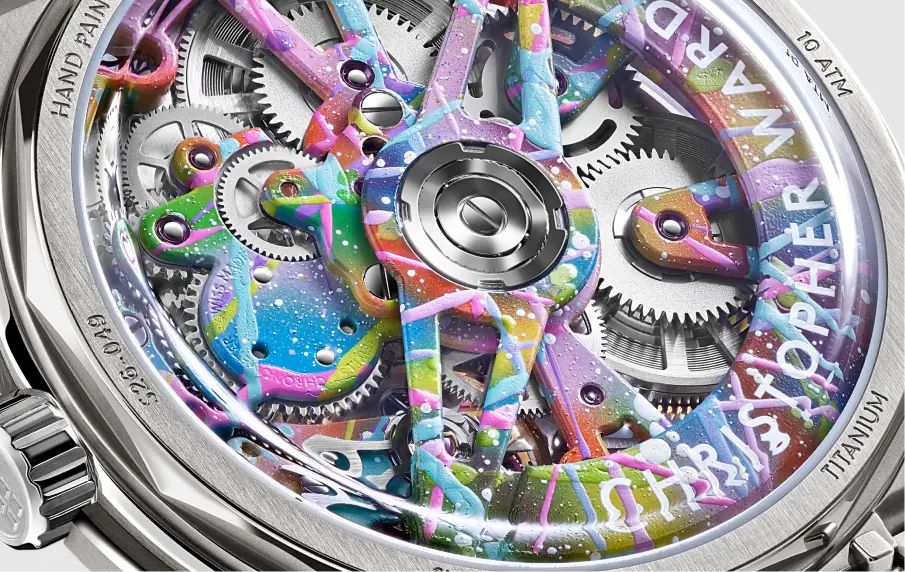
The Twelve Xander was released in two versions: $5,995 with a strap, and $6,515 with a titanium bracelet. Each piece represented an average of six hours of manual work by Alexander on precision components that then had to be assembled and functioned.
When the Twelve Xander went on sale, Christopher Ward followed the same model he uses for all his watches: direct sales through his website, without boutiques or distributors. The 150 pieces sold out on the day of their release. There is no waiting list, and a second production run has not been announced, and all indications are that there never will be. In this case, the scarcity isn't due to a marketing strategy, but a real limitation: it was impossible to produce more watches without multiplying the 900 hours of handcrafted work that Chris Alexander dedicated to the project. For those who didn't manage to acquire one of those 150 pieces, or simply prefer the watch's architecture without the artistic intervention, the original Twelve X remains available in the brand's permanent catalog.
Christopher Ward in LATAM
The Twelve Xander is no longer available for purchase, but the story behind it remains in the brand's permanent catalog. The Twelve X (Ti), the production version of the same skeletonized watch, without Alexander's intervention but with the same fully visible Calibre SH21, costs USD 5,895 with a titanium bracelet and is currently in stock. The SH21 is an in-house automatic movement with COSC certification, a 120-hour power reserve (five days), 26 jewels, and a frequency of 28,800 vibrations per hour. It features a grade 2 titanium case, a grade 5 titanium bezel, and is water-resistant to 100 meters. Christopher Ward offers free worldwide shipping from christopherward.com, including to Mexico, Colombia, Argentina, and Spain, with a 60-day free return policy and a 5-year warranty on the movement. The only additional cost that buyers in Latin America should consider is import duties, which vary according to their country's regulations.
Handcrafted editions often share the same paradox: by the time their story reaches its most compelling point, it's too late to be a part of it. However, what Chris Alexander painted on these eight components wasn't meant to remain static in a display case. Each stroke is part of a movement that will continue to beat, oscillate, and mark time for years to come. Therein lies the true uniqueness of this project. In watchmaking, a work of art cannot sacrifice function for aesthetics; both must coexist. And few pieces demonstrate this as clearly as the Twelve Xander.