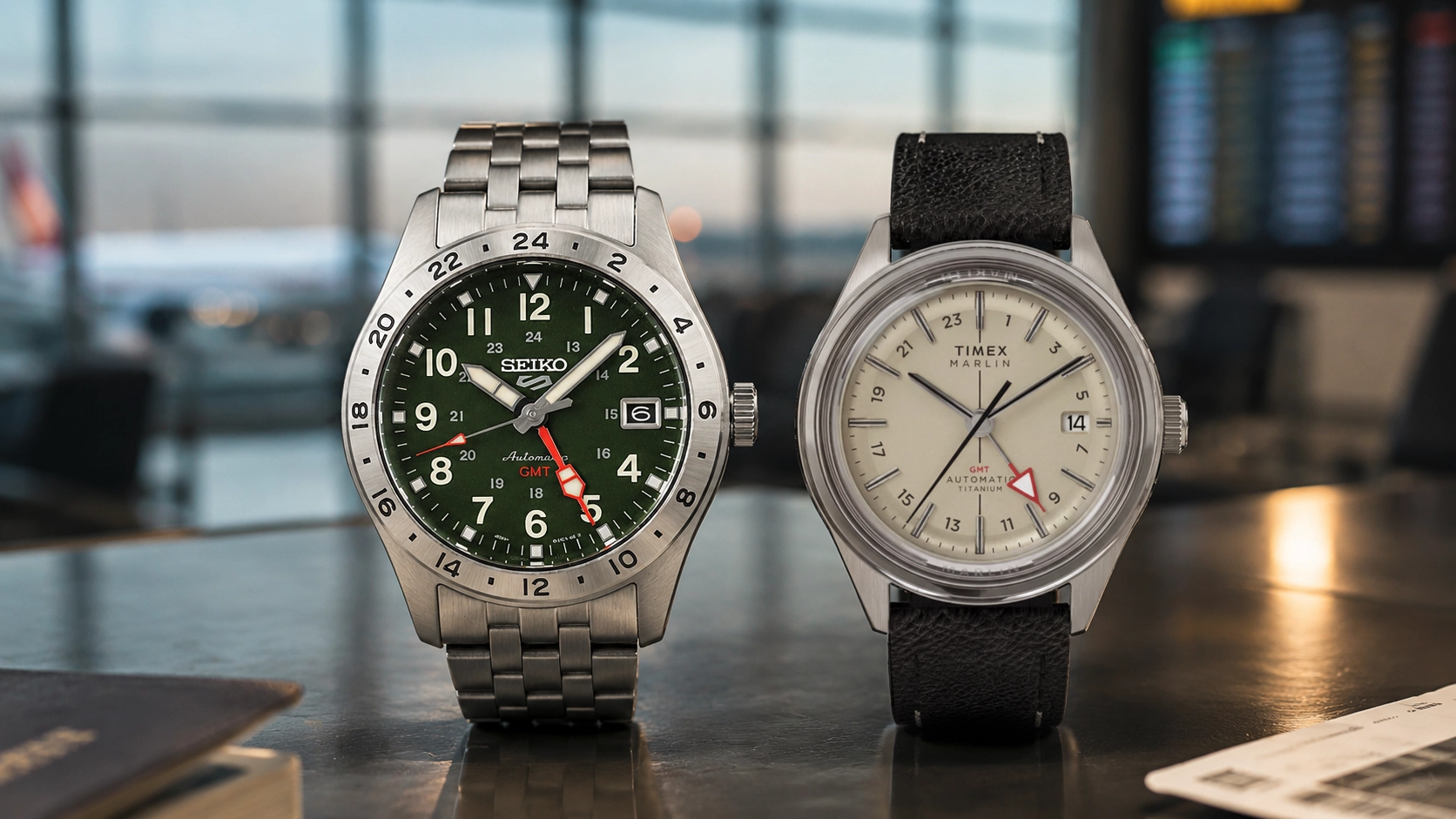

This week the market put two automatic GMTs under $600 USD on the table within $99 of each other: the Seiko 5 Sports Field GMT HBD001 ($450, steel, military aesthetic) and the Timex Marlin Jet Titanium Auto GMT ($549, titanium, vintage American). The direct comparison no English-language publication will run for the LATAM reader: which one has service support, which one you can actually find without flying to Miami, and which one is worth the money.
Pack for a flight next week. You have between $450 and $550 USD for a watch that does one thing well: carry two time zones on your wrist without the mental arithmetic costing you connections. That's the pitch from two watches that came out almost simultaneously this week and target the same budget with completely different arguments.
The Seiko 5 Sports Field GMT HBD001 doesn't pretend to be anything other than what it is: a functional field GMT with the widest service network in its segment across Latin America and a price that needs no apology. The Timex Marlin Jet Titanium Auto GMT arrives with a materials argument — titanium at this price point is unusual — and an aesthetic drawn from American watches of the 1960s without forced nostalgia.
$99 apart. Two different philosophies. And for the reader in Mexico, Colombia, or Argentina, the answer doesn't live in the spec sheet — it lives in what happens after the purchase.
The two candidates
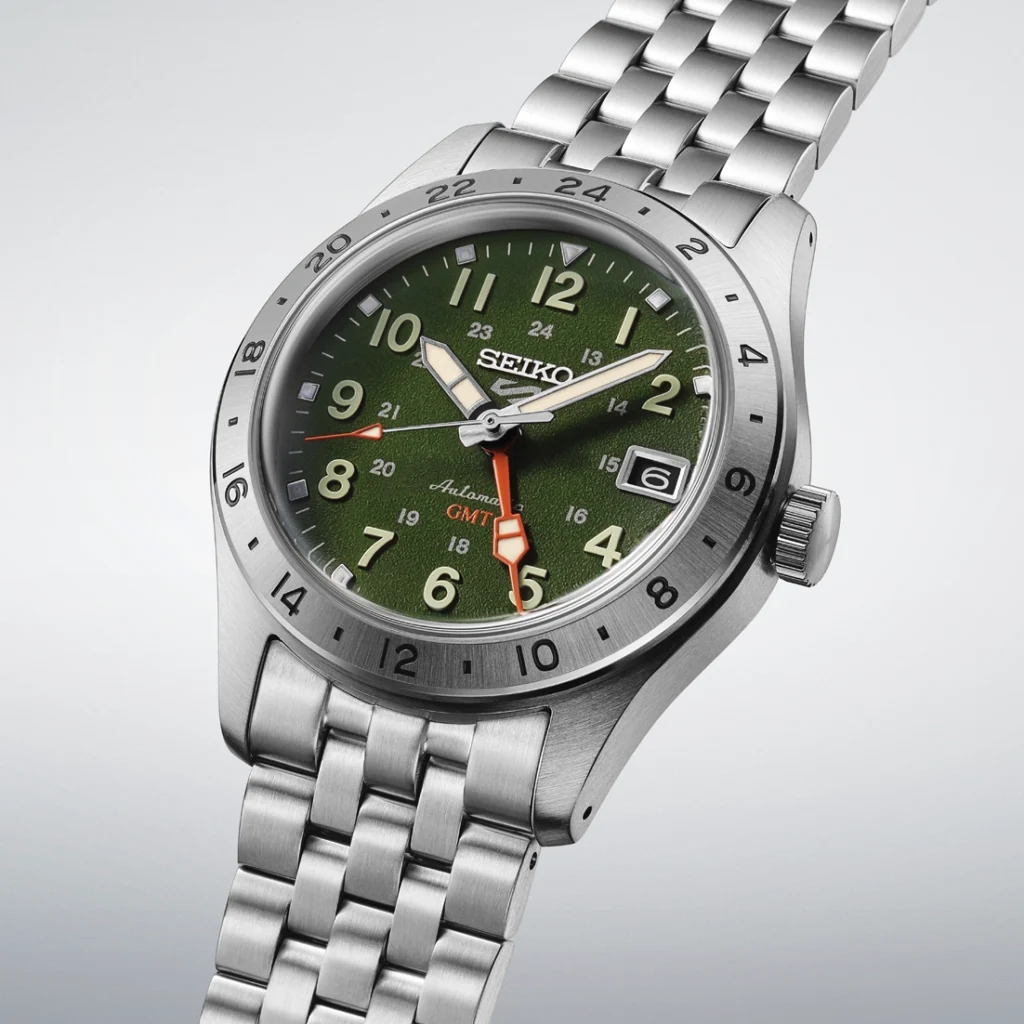
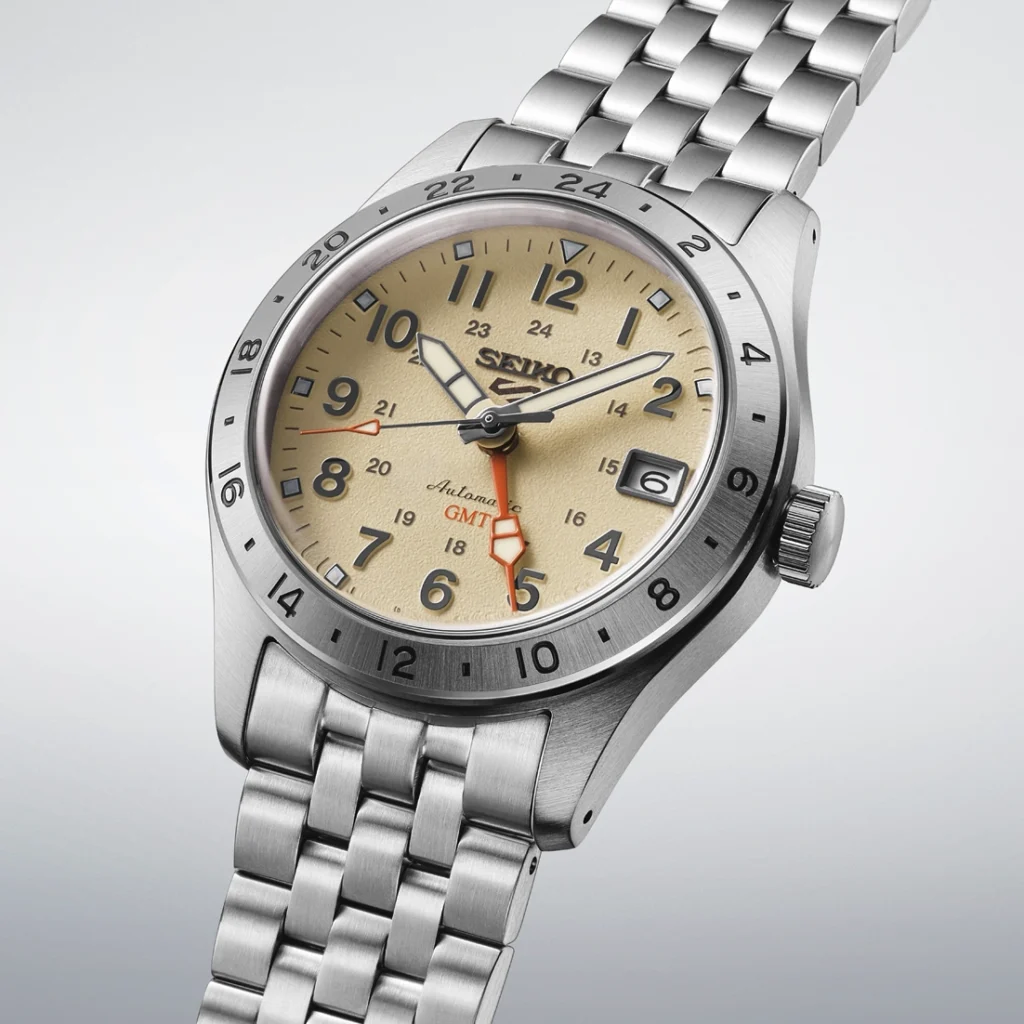
Seiko 5 Sports Field GMT HBD001 — $450 USD
Steel case, dial in "Khaki Drill" (olive green) or "Desert Sand" (ivory), fourth GMT hand with internal 24-hour bezel for tracking a second time zone. The movement is Seiko's in-house automatic from the 5 Sports line — [Note: verify exact caliber number for ref. HBD001 with Seiko distributor or official site before publishing; assumed to correspond to the 4R34 family or equivalent from the 5 Sports GMT platform]. Water resistance rated at 100m [verify against official spec]. Hardlex crystal — Seiko's hardened mineral, more impact-resistant than generic mineral, more scratch-prone than sapphire, perfectly adequate for a watch meant to be worn, not displayed.
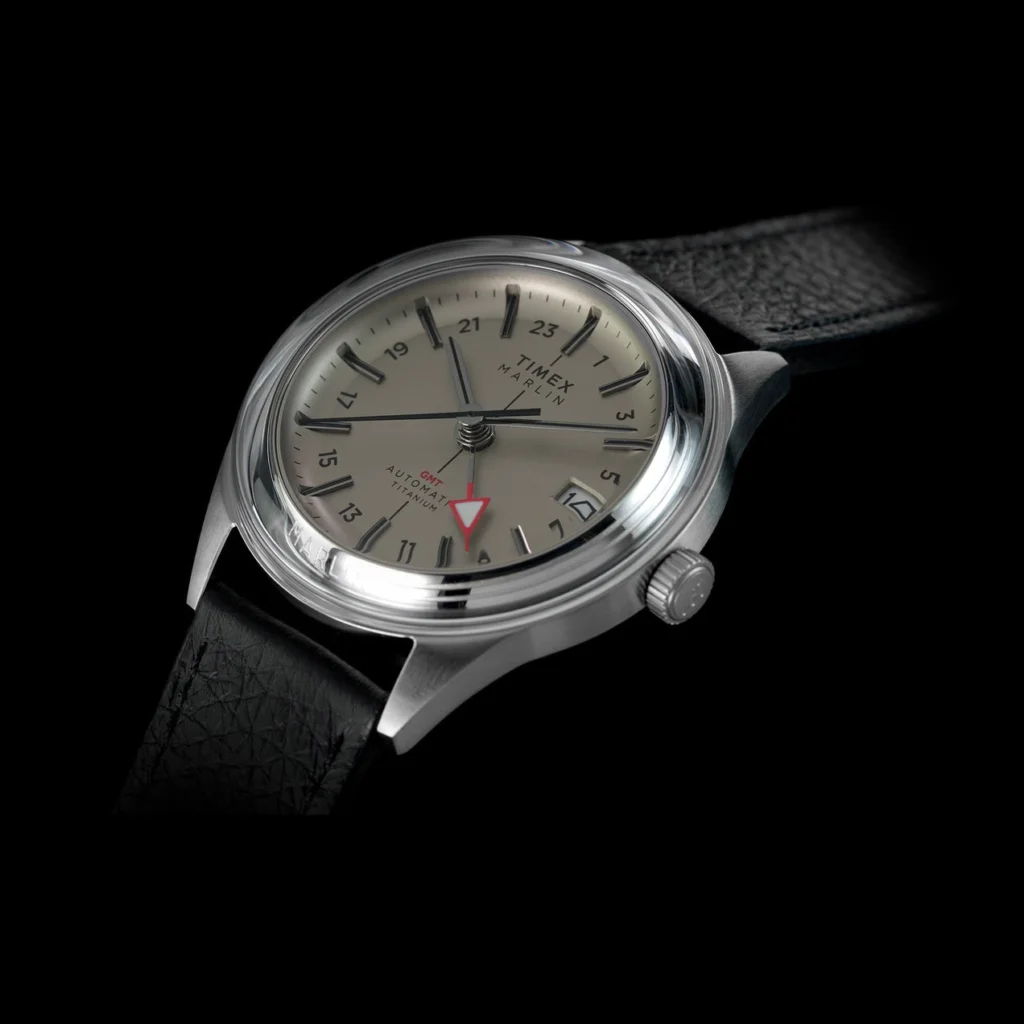
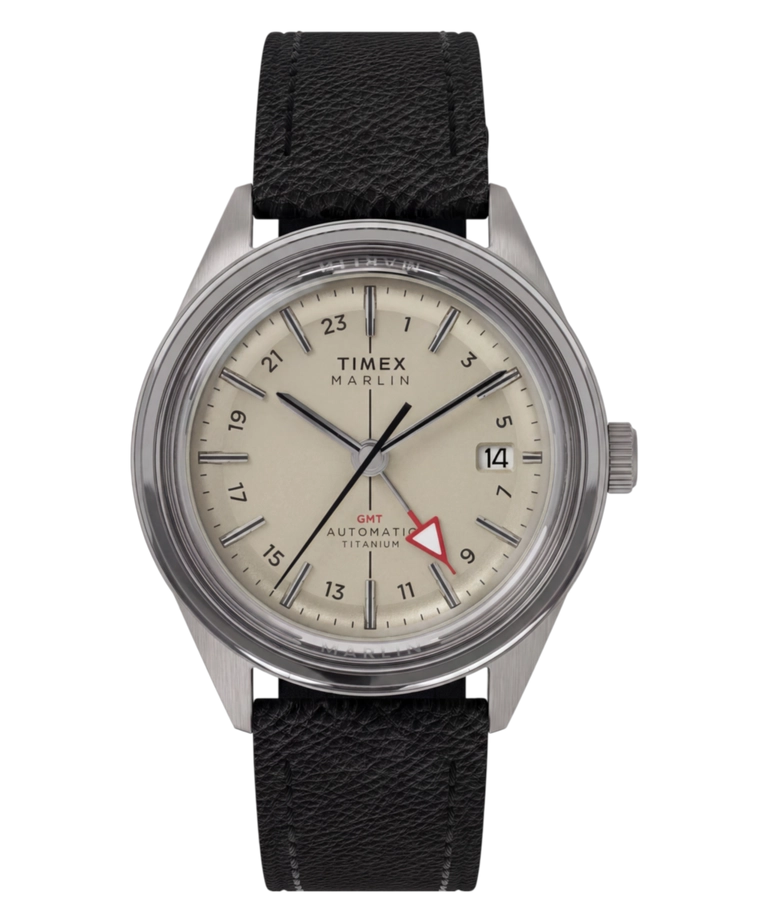
Timex Marlin Jet Titanium Auto GMT — $549 USD
Titanium case, 40mm diameter, TMI NH34A movement — manufactured by Time Module Inc., a Japanese movement producer that builds on Seiko's NH platform for third-party brands. In practice: the same DNA that powers Seiko 5 Sports GMTs, under a different name and built for a different brand. GMT with fourth hand and 24-hour bezel, functionally identical to the Seiko. Hesalite crystal — acrylic, the choice that defines the Marlin Jet's identity. It scratches faster than mineral, polishes out with toothpaste, and won't shatter on the impacts that would fracture mineral glass. A deliberate design decision, not a budget cut.
What each one does well
The Seiko HBD001 wins on pragmatism without compromise. The field aesthetic is honest — it doesn't imitate any specific military watch, doesn't reference the Submariner or the Explorer. It's olive green and functional because that's its actual proposition. The 5 Sports in-house caliber carries a documented reliability record across years of real-world use. And Seiko's distribution and service chain in Latin America means that if the watch needs adjustment, calibration, or service, there are technicians who know the movement, have the parts, and won't charge as if it came from Geneva.
The Timex Marlin Jet wins on something that shouldn't be possible at this price: weight. A titanium case weighs materially less than 316L stainless steel — approximately 40% less in equivalent mass. For the frequent traveler wearing the watch on eight-hour flights or running through airports, that difference on the wrist is real and cumulative. The Hesalite crystal is also the most impact-resistant option in this category. If the watch falls into a bag among chargers and power adapters, the Hesalite won't fracture where mineral glass would.
Where each one overcharges
El Seiko HBD001 no tiene titanio ni cristal de zafiro a $450 USD. No es un reproche —sería absurdo esperarlo a ese precio— pero el comprador que quiere un GMT que no se raye en el uso diario intensivo va a tener que pulir el Hardlex con más frecuencia de lo que imagina, o cambiar al Timex. La estética militar también es un compromiso: si el comprador quiere versatilidad visual —reloj de trabajo y reloj de fin de semana en uno— el verde olivo no coopera igual que un dial más neutro.
The Seiko HBD001 has no titanium and no sapphire crystal at $450 USD. That's not a criticism — expecting either at that price would be absurd — but the buyer who wants a GMT that doesn't show daily wear will find themselves polishing Hardlex more frequently than expected, or switching to the Timex. The military aesthetic is also a commitment: if the buyer wants visual versatility — one watch for work and weekends — the olive green doesn't cooperate the way a more neutral dial would.
The question no one asks: service
For the reader living in Mexico City, Bogotá, or Buenos Aires, there's a variable more important than the crystal: what happens when the watch needs service?
Seiko has an established distribution and service network in Mexico, Colombia, Argentina, and Spain. NH-platform movements are known to independent watchmakers across the region. A Seiko 5 Sports GMT won't spend six months in the shop waiting for parts imported from Switzerland.
Timex's after-sales service network in Latin America is significantly thinner. The physical distribution advantage — department stores in Mexico and Colombia — makes initial purchase straightforward. But post-purchase service is a different picture. An independent watchmaker who knows the NH34A can service the Timex, but there's no guarantee of equivalent availability across the region.
Latin America and Spain Perspective
The Seiko HBD001 distributes through authorized multi-brand dealers and specialist retailers in Mexico, Colombia, Argentina, and Spain. Estimated price in Mexico with taxes and distributor margin: MXN $9,000–$10,500 (approximate — verify with Seiko Mexico distributor before publishing). The 5 Sports line is among Seiko's most accessible in the region; inventory is rarely an issue.
The Timex Marlin Jet Titanium, at the time of writing, it is only available for pre-order on the official Timex website in the US. Although the brand is regularly sold in department stores in Mexico and Colombia, there is no date yet for when it will be available there. Estimated price in Mexico: $11,500–$13,000 MXN. In Argentina and Spain, local prices may vary due to different tariff structures.
Is it worth what it costs?
Direct answer: the Seiko 5 Sports Field GMT HBD001 at $450 USD wins this comparison for the LATAM traveler.
Not because the Timex is a bad watch. But because the $99 difference buys titanium and vintage design — two real arguments — without buying a better movement, a stronger service network, or greater long-term peace of mind in the region. For the buyer who needs a GMT that works, can be serviced if something goes wrong, and requires no special logistics, the Seiko infrastructure in Latin America tips the scale decisively.
The Timex Marlin Jet Titanium wins if the buyer meets three conditions: a noticeably lighter wrist feel matters, the vintage American visual language speaks to their specific taste, and they live in a city with accessible Timex distribution and service. Those are real conditions for some readers, and in that case the verdict flips.
As a general rule for the LATAM traveler without a strong aesthetic preference between the two: $450 USD, steel, Hardlex, and the Seiko network behind it is the lower-friction purchase over the long run. With an automatic watch, the long run is what you're buying.
One question this article opens rather than closes: how long will quality automatic GMTs remain under $600 USD, or will the market keep pushing that ceiling up? This week, both watches prove it's still possible. For the collector buying from Latin America, that's not a minor detail.