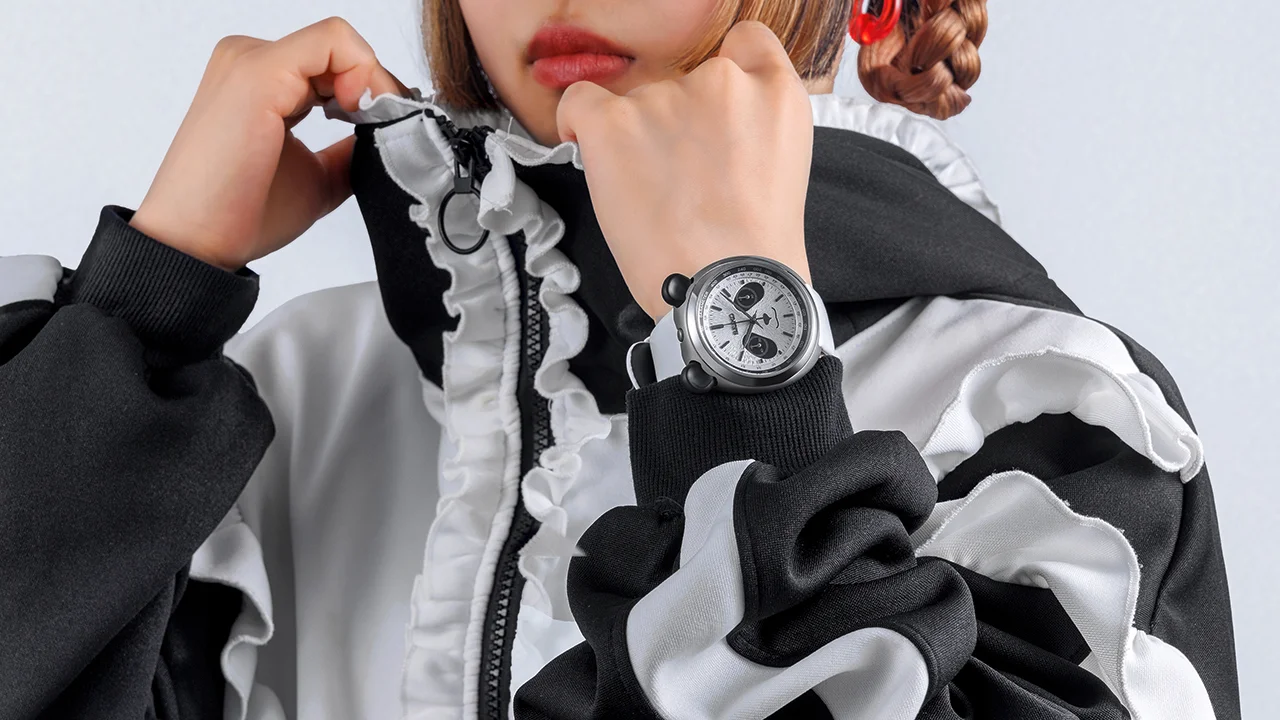

The chronograph that Seiko designer Kiyotaka Sakai showed in Tokyo in 2024 as a watch for panda lovers arrives as two limited-edition quartz references.
Seiko introduced the Power Design Project in 2001 as an in-house initiative that encourages its designers to imagine watches outside their day-to-day collection work. The project was paused in 2009 and returned in 2022 with an annual exhibition in Tokyo. The 2024 edition, the Incredibly Specialized Watch Exhibition, was held at Seiko Seed, the brand's space in Harajuku, and showed seven designs. One of them was a chronograph for panda lovers by Kiyotaka Sakai, a Seiko staff designer.
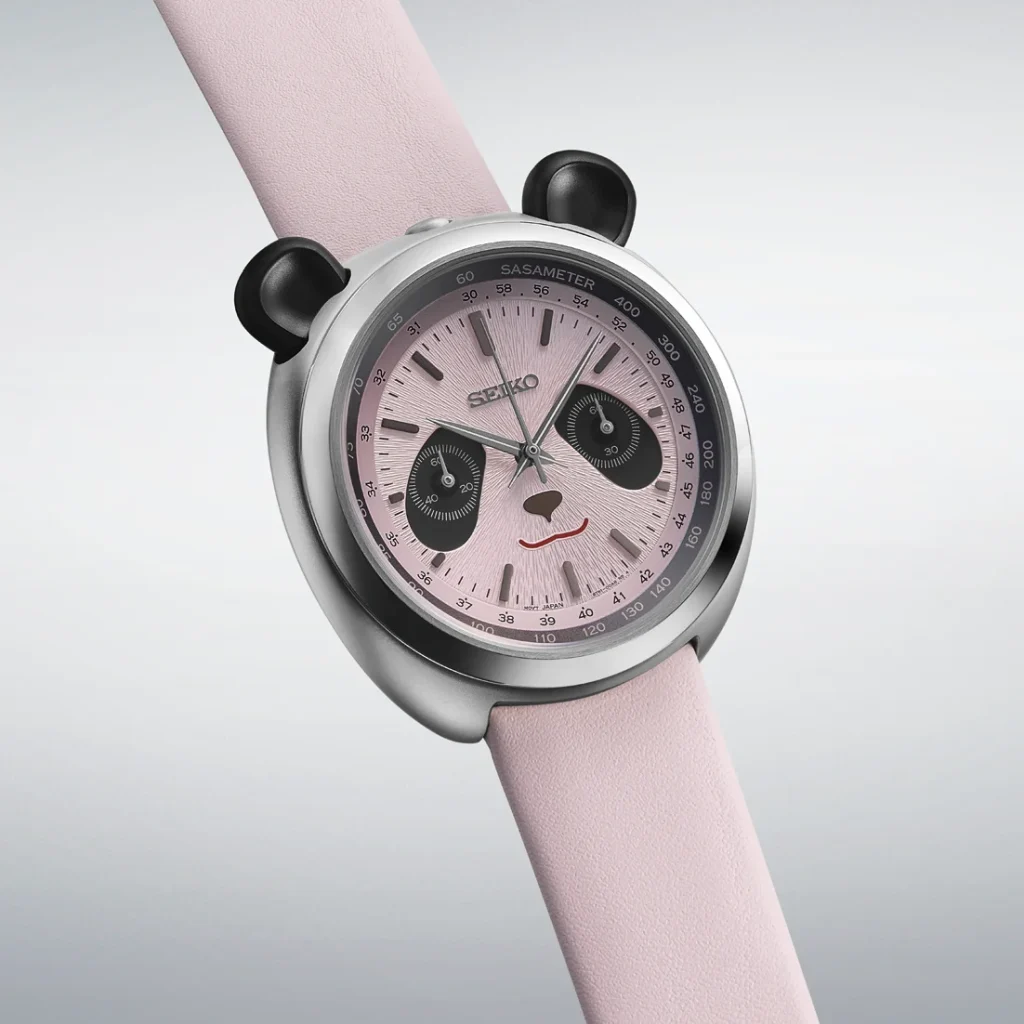
According to Seiko, that watch proved particularly popular, which is why the company decided to make it. It is the project's second commercial release, after Collection 1, which in December 2025 reinterpreted the Tissé, a women's watch from 1984. It comes as two limited editions: the HHK001 in black and white, and the HHK002 in pink, inspired by a newborn panda cub.
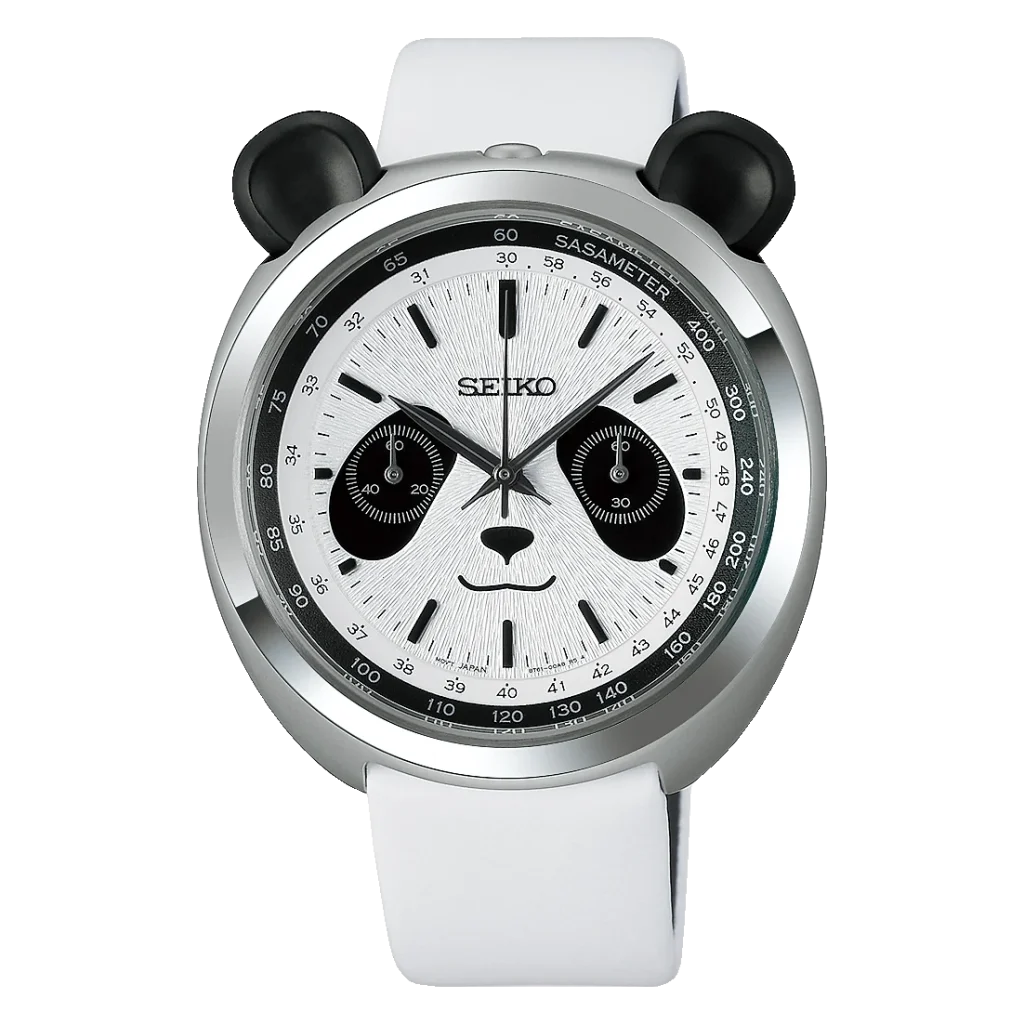
Technical Specs
| References | HHK001 (white dial with black subdials, 3,000 pieces) and HHK002 (pink dial, 2,000 pieces) |
| Case | Stainless steel; 43 mm diameter, 14.6 mm thick, 44.1 mm lug-to-lug, 20 mm lug width |
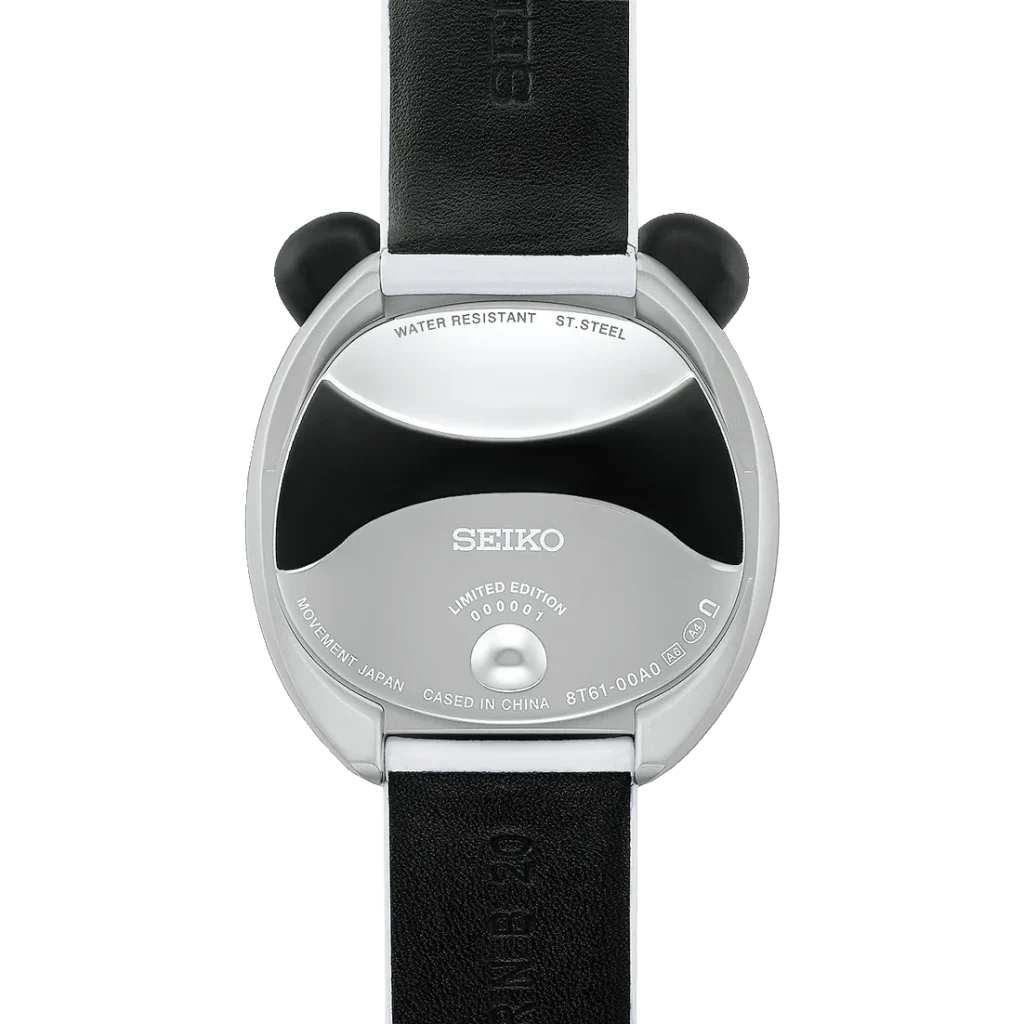
| Crystal and back | Hardlex crystal; caseback with relief plate and Limited Edition inscription |
| Water resistance | 3 bar (splash resistant) |
| Dial | Texture suggesting panda fur, eye-shaped subdials, SASAMETER scale and bamboo-leaf hands |
| Caliber | Seiko 8T61, quartz; accuracy ±15 seconds per month; battery life about three years; magnetic resistance 4,800 A/m |
| Functions | Hours, minutes and small seconds; chronograph up to 60 minutes in 1/5-second increments; tachymeter scale |
| Strap | Cowhide leather with suede-like sections |
| Price and availability | USD 540; EUR 650 on Seiko's official Spanish site; from November 2026 at Seiko boutiques and selected retailers |
A panda on the dial
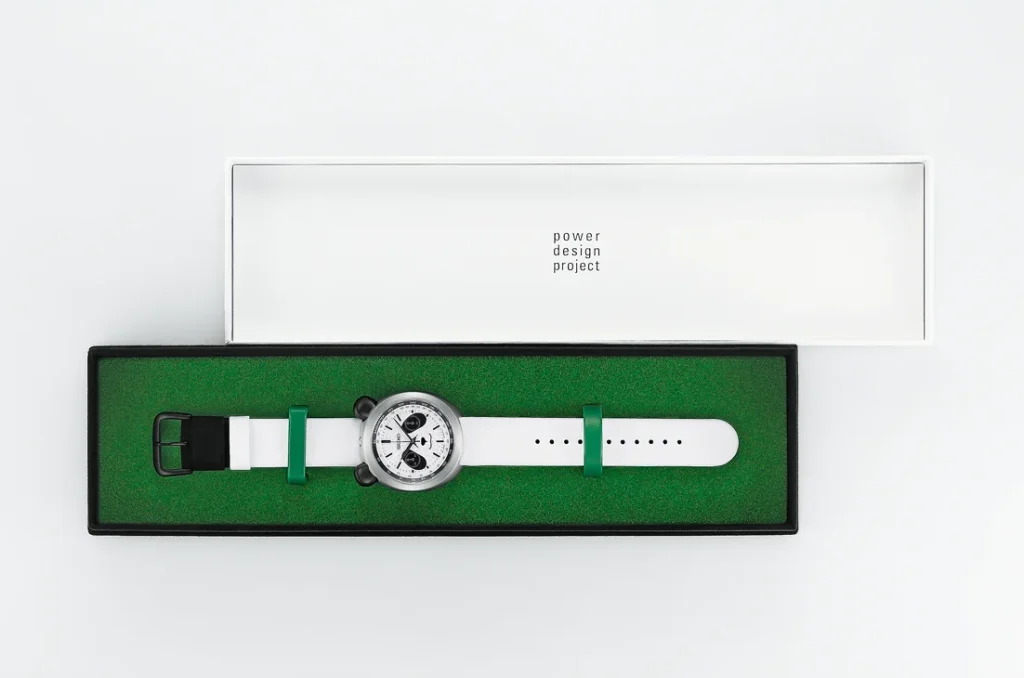
In watch collecting, a panda chronograph has a light dial with dark subdials, and Sakai took the name literally, designing the dial as the animal's face. The two subdials take the shape of the black patches around a panda's eyes, with the gentle, drooping expression Seiko describes, and the dial surface carries a texture meant to suggest fur. The chronograph pushers stand in for the ears.
The tachymeter scale, used to calculate speed from a timed interval, is called SASAMETER here, after sasa, the Japanese word for the dwarf bamboo that pandas eat, and the hands are shaped like bamboo leaves. On the back, a relief plate shows the panda's back, with Limited Edition marked above the tail. The leather strap includes sections of a suede-like material that, according to Seiko, give it a brushed texture.
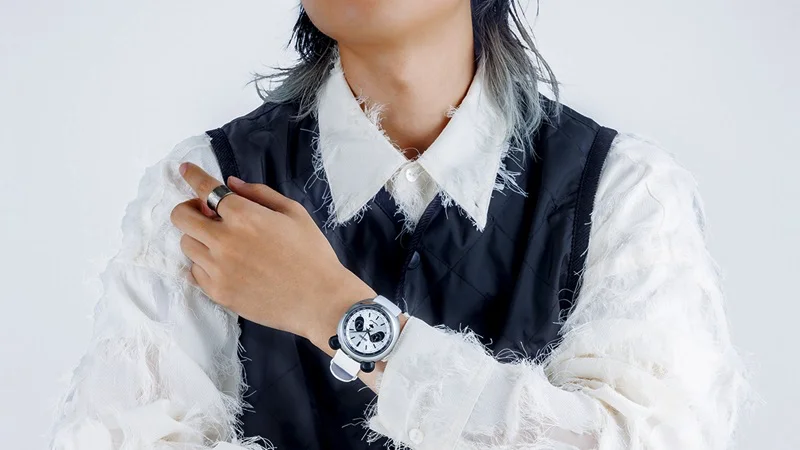
The steel case measures 43 mm across and 14.6 mm thick, with a lug-to-lug length of 44.1 mm, only about a millimeter more than the diameter. The lugs barely extend past the case, so the watch stays compact from end to end.
The 8T61 quartz caliber
Inside is the 8T61, a Seiko quartz chronograph caliber that times up to 60 minutes in fifth-of-a-second increments. It is rated to ±15 seconds per month, the battery lasts about three years, and the watch resists magnetic fields of 4,800 A/m, the figure the international ISO 764 standard uses as its reference for magnetic-resistant watches.
For a watch chosen for its design, quartz has practical advantages: it can sit in a drawer for weeks and still show the right time when it comes out, and routine care usually comes down to a battery change. The crystal is Hardlex, Seiko's hardened mineral glass. Water resistance is 3 bar, which Seiko classifies as splash resistant, so the watch is suited to rain or hand washing.
Price and arrival in stores
Seiko prices each reference at $540 in the United States, and its official Spanish site lists them at €650. Both arrive in November at Seiko boutiques and selected retailers worldwide. As of mid-October, Seiko's Mexican site does not yet list the model or a local price, and the brand has not said which stores in Latin America will receive pieces. Because production is limited and shared across all markets, buyers in Mexico, Colombia, Argentina or Chile can ask Seiko's authorized retailers in their country whether they will receive any.
A panda from the exhibition floor
In the HHK001 and HHK002, each feature of the panda corresponds to part of the chronograph: the subdials form the eyes, the pushers act as ears and the tachymeter scale takes its name from the bamboo the animal eats. Sakai carried the panda all the way to the caseback plate and built it on the layout of a classic panda chronograph, with all of its functions.
Since 2022, the work of the Power Design Project's designers had mostly been seen at the annual exhibitions in Tokyo, and Sakai's panda reaches stores in November, with 5,000 pieces across the two versions.