
The chronograph loses two millimetres of diameter and more than one of height, swaps applied indexes for Arabic numerals, and arrives with a 60-piece edition sold only in Spain.
Formula 1 had not raced in Madrid since 21 June 1981, when Gilles Villeneuve crossed the line at Jarama with four cars on his gearbox and 1.24 seconds covering first to fifth. Forty-five years later the championship returns to the Spanish capital, this time on a street circuit built around the IFEMA exhibition grounds, with TAG Heuer as title partner of the race and official timekeeper of the series.
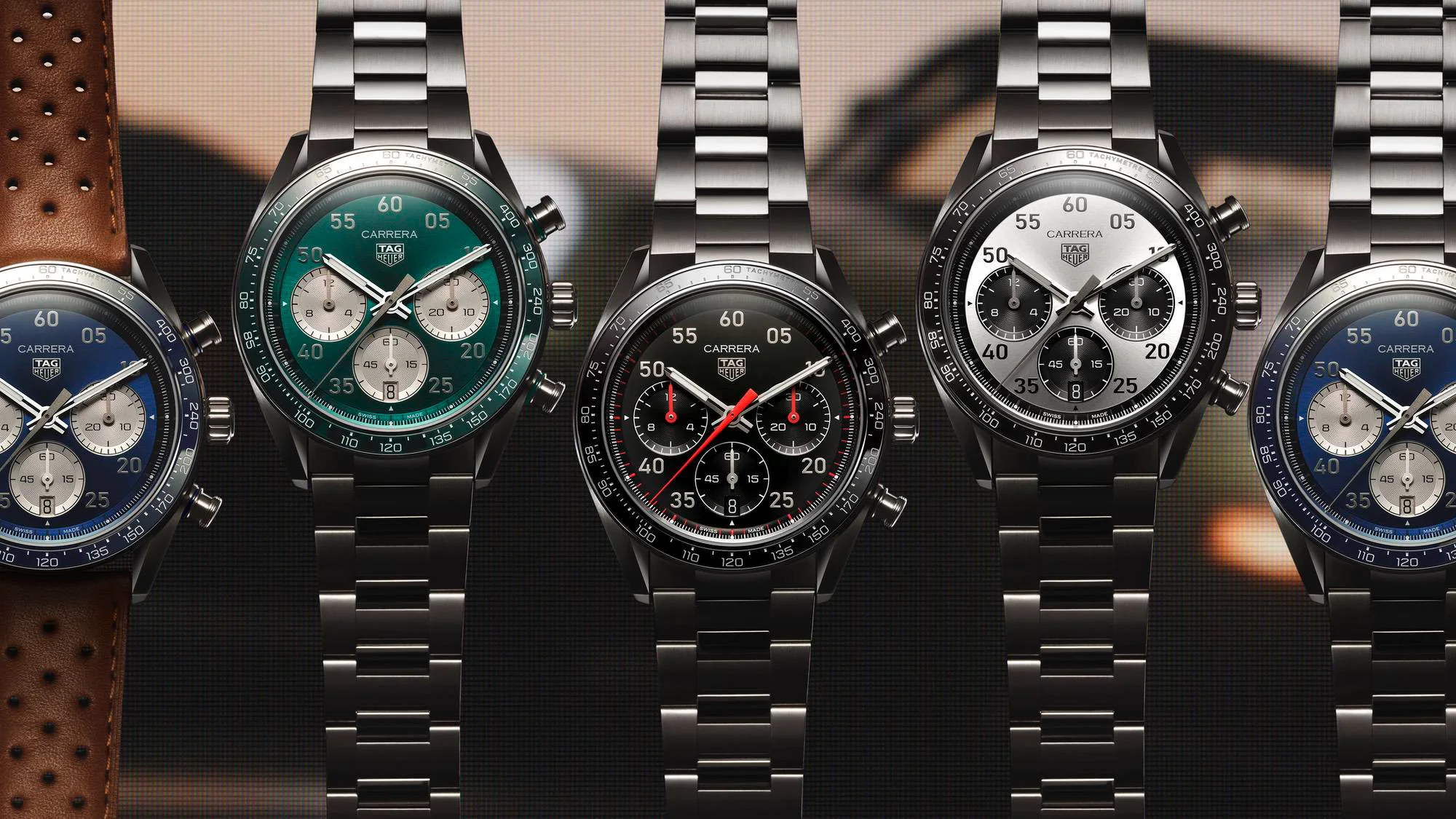
On 7 September, four days before the race weekend opened, the brand introduced a new generation of the Carrera Chronograph Sport: five references replacing the 2020 range. The following day it gathered the Spanish press at painter Manu Campa's Madrid studio to show a sixth piece that will not be sold outside Spain.
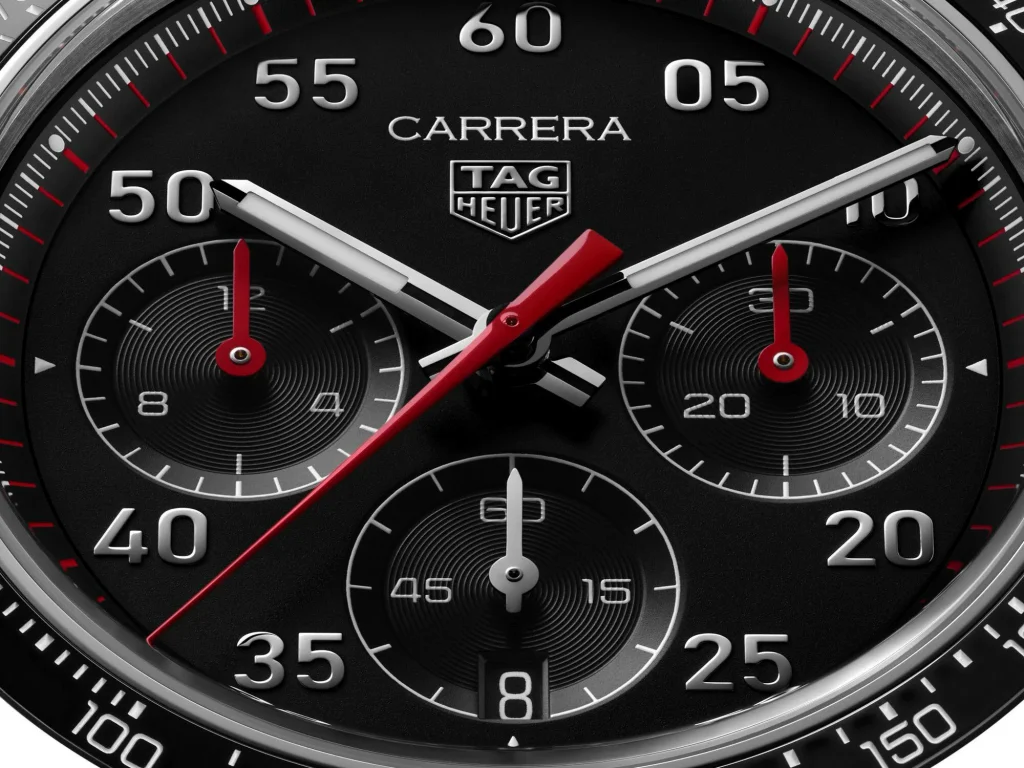
Technical Specs
| Model | Carrera Chronograph Sport, 42mm, 2026 generation |
| References | CDB2110.BA0054 (black opaline), CDB2111.BA0054 and CDB2111.FC8378 (blue), CDB2112.BA0054 (turquoise green) and CDB2113.BA0054 (silver panda) |
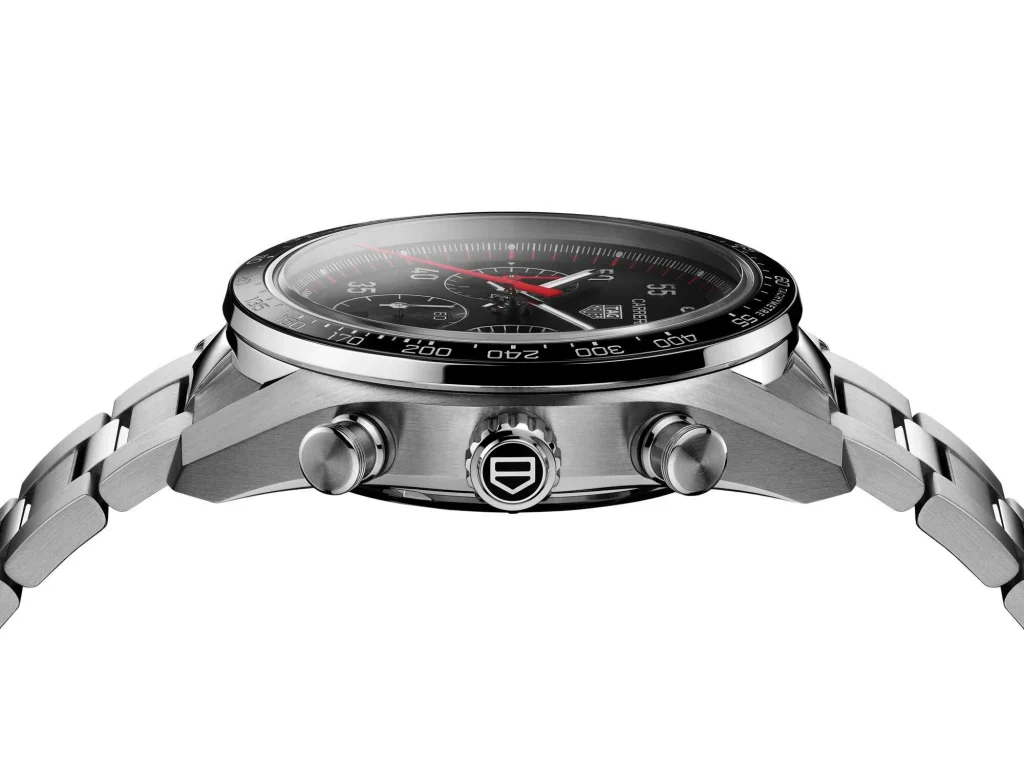
| Case | Stainless steel, 42mm by 14.17mm thick and 48.6mm lug to lug, brushed and polished surfaces; steel bezel with polished ceramic tachymeter insert; engine-piston pushers; domed sapphire with anti-reflective treatment; screw-down sapphire case back engraved with the Victory Laurel Crown; 100m |
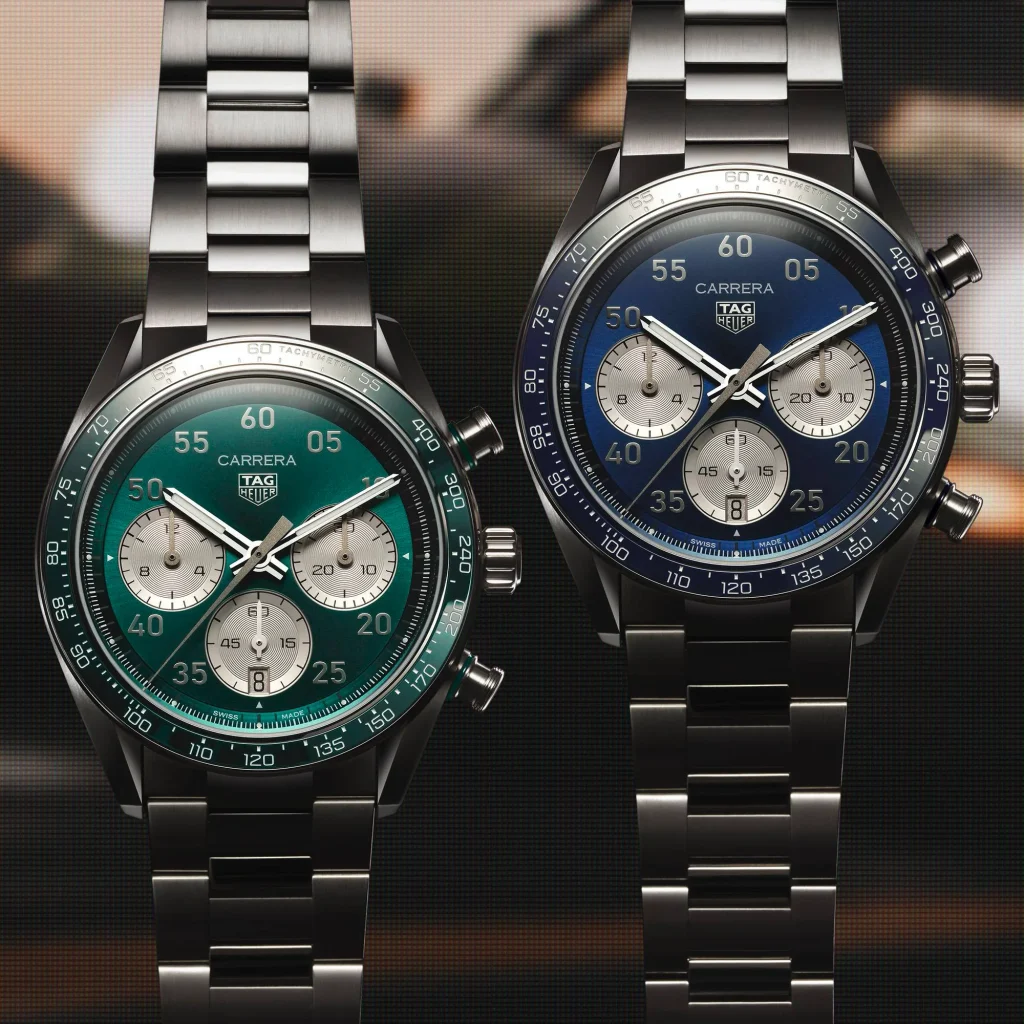
| Dial | Four colours: black opaline with red details, blue and turquoise green in sunray brushing, and silver in panda configuration. Silver Arabic numerals, tricompax layout with 30-minute and 12-hour counters, small seconds and date at 6 o'clock |
| Caliber | In-house Calibre TH20-00, automatic, integrated chronograph with column wheel and vertical clutch, 4Hz (28,800vph), 80-hour power reserve, skeletonised oscillating mass |
| Bracelet and strap | H-shaped steel bracelet with tool-free link adjustment; one reference on perforated brown calfskin |
| Price | USD 6,850 on bracelet and USD 6,650 on leather; MXN 132,100 and MXN 127,800 in Mexico; EUR 6,550 and EUR 6,350 in Spain |
| Availability | From September 2026, except the blue leather version, arriving in October. Five-year warranty |
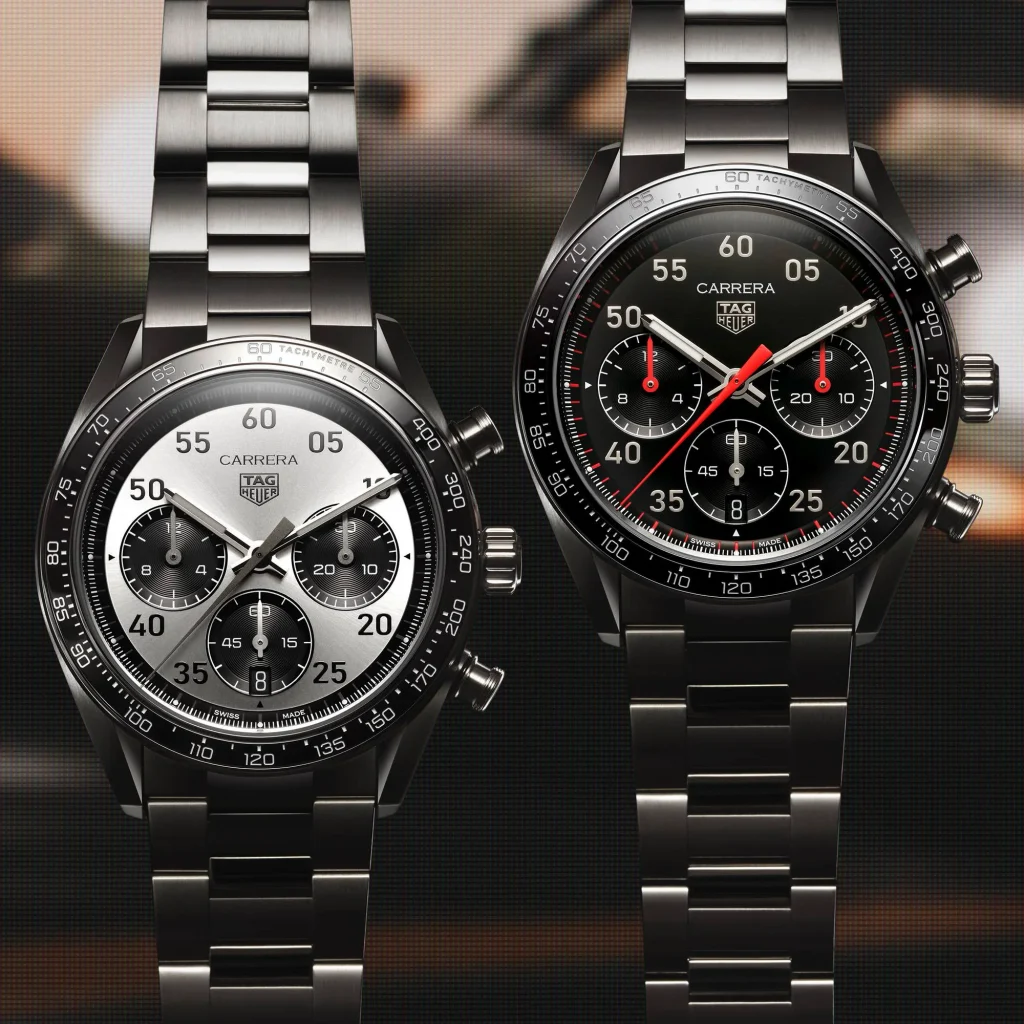
Smaller in all three dimensions
The case was reworked in all three dimensions at once: diameter from 44 to 42mm, lug-to-lug from 49.8 to 48.6mm, and thickness from 15.48 to 14.17mm. It remains a tall chronograph for its diameter, and under a shirt cuff height gets in the way before width does. The 1.31mm it shed came off exactly there, which is where the 2020 generation made itself felt.
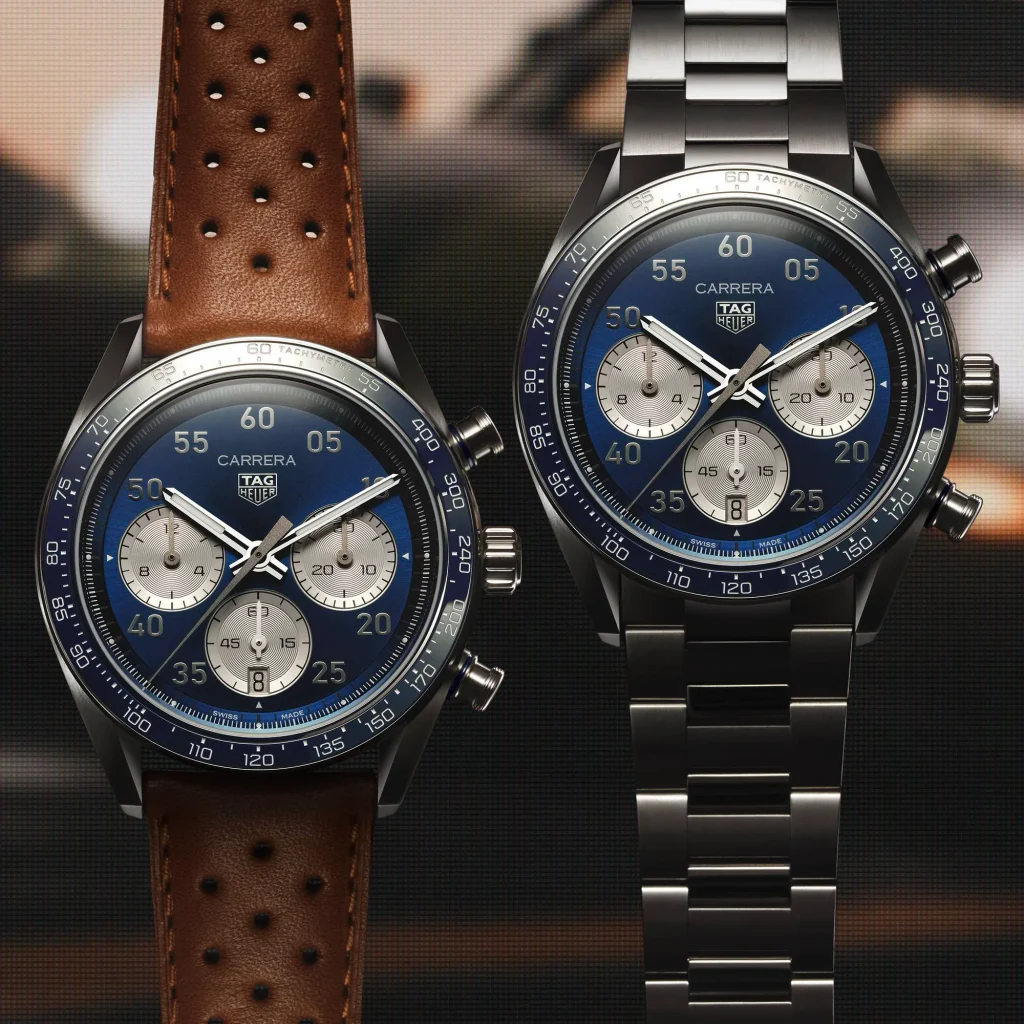
Applied indexes gave way to silver Arabic numerals, on the same read-at-speed argument Jack Heuer used in 1963 to justify the original Carrera: clarity at a glance goes up, and some of the relief that reads as expensive goes away. The bezel carries a polished ceramic insert, which will not fade in the sun or mark with wear, though the polish collects fingerprints. And the H-shaped steel bracelet was redesigned with tool-free link adjustment, but without micro-adjustment at the clasp: adding or removing a link moves the sizing in one jump, so anyone wearing it snug on a warm morning has no way to let it out a notch in the afternoon, when the wrist swells.

The TH20-00 calibre
Inside sits the TH20-00, an in-house automatic chronograph with a column wheel and a vertical clutch. The column wheel is the part that distributes the pusher's command among the levers of the mechanism, and it does so progressively, which is where the short, clean travel on start and stop comes from, as against cam actuation, stiffer and with a point of resistance halfway through. The vertical clutch solves something else: it transmits the drive from below, so the chronograph hand does not give the small initial jump that gives away a horizontal clutch, and the assembly loses less accuracy across successive timings.
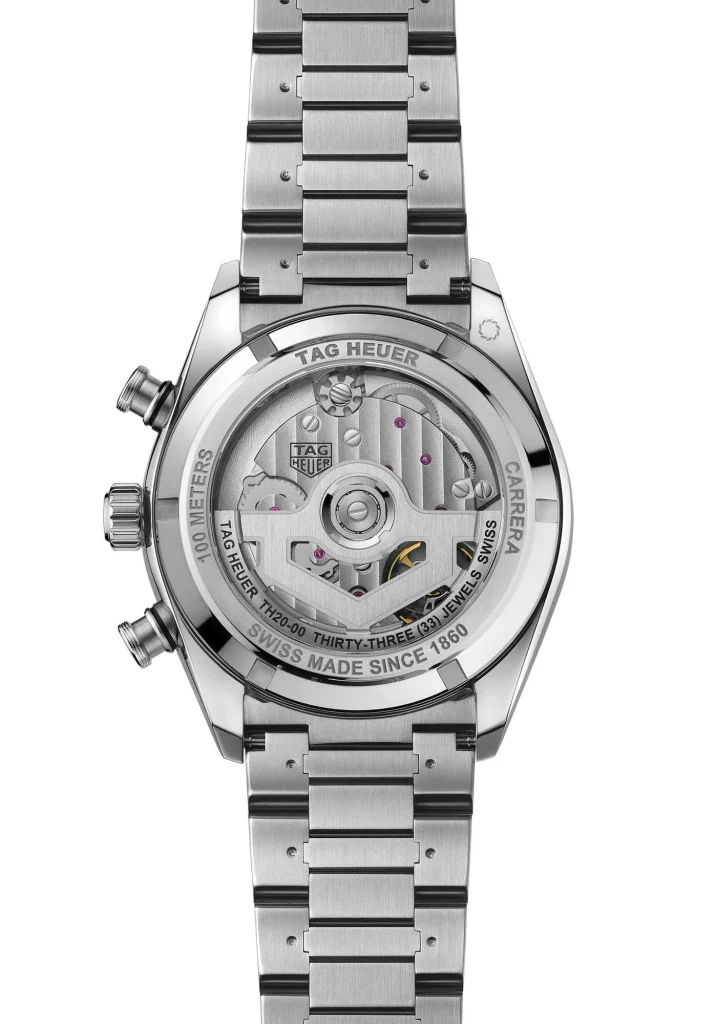
The 80-hour power reserve covers a full weekend: set the watch down on Friday afternoon and on Monday morning it is still running, and still on time. It beats at 4Hz, the skeletonised rotor carries the brand's shield and is visible through the sapphire case back, and the official warranty runs to five years. What appears on no spec sheet is a chronometer certification. The Monza Flyback the brand launched on 1 September does carry one, though the comparison is not clean because that watch costs a little over twice as much; the upshot either way is that TAG Heuer keeps certification for its upper tier, and whoever buys this Carrera is left with the factory's stated accuracy and no third party to confirm it.
Sixty pieces for Spain
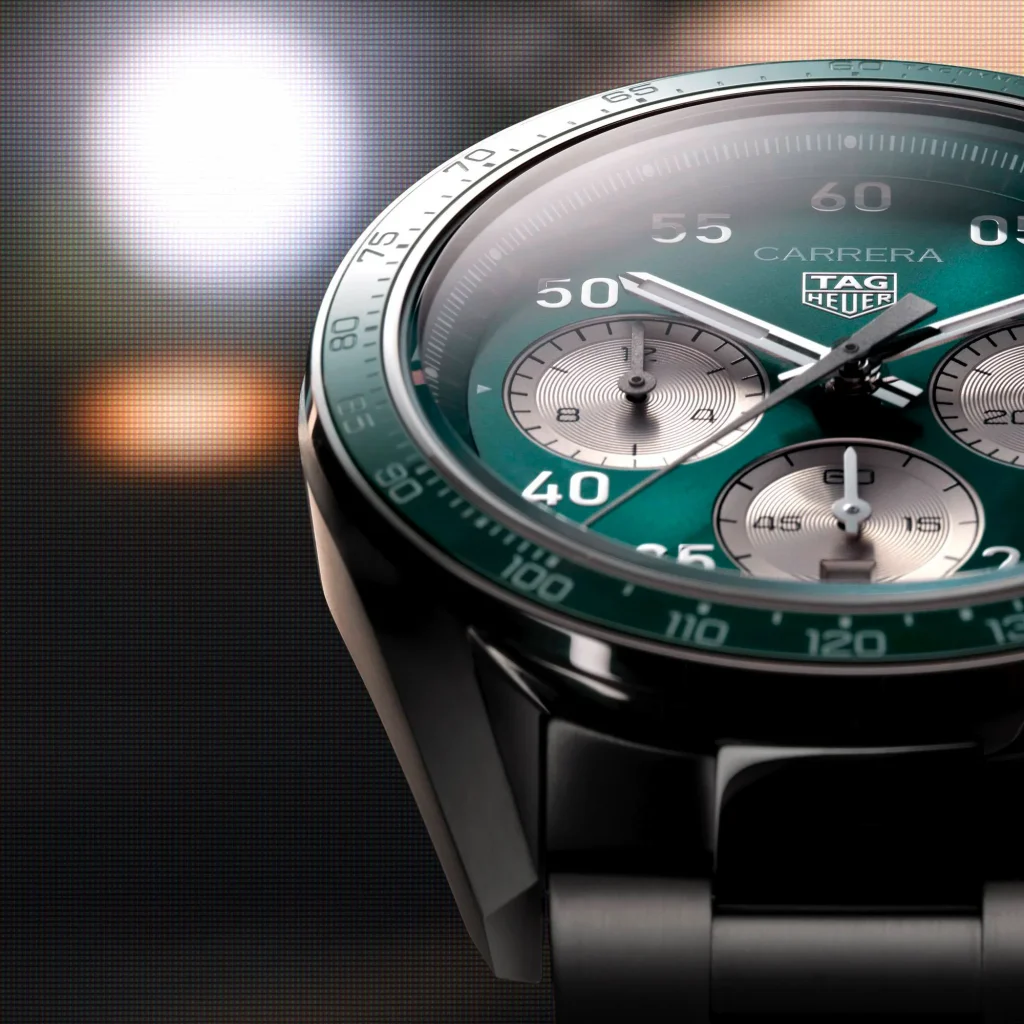
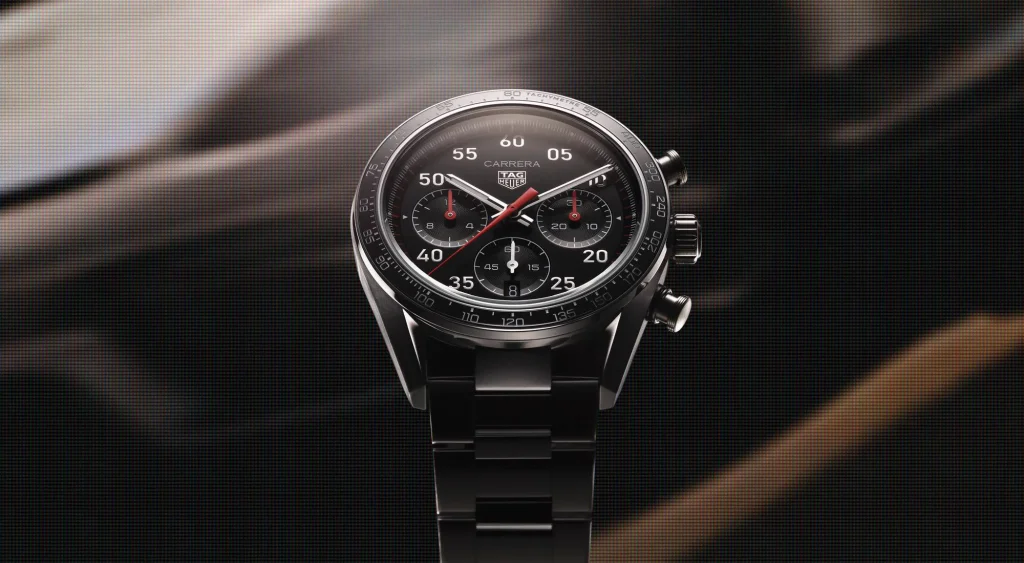
The sixth reference, CDB2110.FC6571, was shown on 8 September at Manu Campa's studio and is sold only in Spain, in a run of 60 units. In case, dial and movement it is the same watch as the black opaline catalogue version. What sets it apart are the yellow and red accents on the chronograph hands and along the edges and lining of a perforated black leather strap, a "Spain Limited Edition" engraving with individual numbering on the sapphire case back, and a presentation box Campa illustrated from the Jarama pit lane, with a numbered and signed print for every buyer. The artist attended the launch alongside Blanca Panzano, the brand's general manager for Iberia and North Africa, and communications director Raquel Díez.
It costs EUR 6,550, the same figure as the catalogue version on the steel bracelet.
Availability in our region
TAG Heuer maintains official distribution and workshops in Mexico, Colombia and Spain, so the watch is bought with a local warranty and serviced without shipping it abroad. Mexican retail is MXN 132,100 on the steel bracelet and MXN 127,800 on leather. Both figures sit above a straight conversion of the US price, USD 6,850 and USD 6,650, and that gap is the one that usually turns up at a Mexican counter once import duty and margin are added. In Spain the watch costs EUR 6,550 on the bracelet and EUR 6,350 on leather, VAT included. Any conversion into another currency in the region should be made at the exchange rate on the date of publication and confirmed in store. The 60-piece edition does not leave Spain: a collector in Bogotá, Buenos Aires or Mexico City can buy the watch, but not the one commemorating the race they will watch on television on Sunday.
The verdict from ORELO
The case for the purchase rests on maintenance and the availability of technical service. It features a column-wheel mechanism with a vertical clutch and an eighty-hour power reserve, as well as an authorized service center in the buyer's own city—factors that justify the $6,850 price tag. However, there are downsides, such as the 14.17 mm thickness—still substantial for a 42 mm diameter, even if an improvement over the past—and the lack of independent certification guaranteeing the caliber's precision. The Spanish edition fittingly commemorates a race that Madrid had awaited for forty-five years.