
La octava selección de The Collectibles reúne relojes LeCoultre de 1933 a 1981; con esa marca, la manufactura se presentó en el mercado estadounidense durante cuatro décadas.
From 6 to 20 November, Jaeger-LeCoultre's boutique at 701 Madison Avenue in New York is showing nine watches the manufacture made for the American market between 1933 and 1981. For most of that time, the manufacture had a distinct identity in the United States, LeCoultre, which it used to sign its watches and dials there. Before reaching the display case, all nine went through the restoration workshop Jaeger-LeCoultre runs in the Vallée de Joux, and they are now for sale as the eighth selection of The Collectibles, the programme through which the brand finds, restores and offers again watches from its own history.
It is the second time the programme has come to New York, and this time it coincides with the 250th anniversary of the Declaration of Independence. For the occasion, Jaeger-LeCoultre opened part of its archive and, according to the brand, brought together for the first time the story of its presence in the country, which goes back to the mid-1930s.
An identity for America
When the manufacture's watches began to arrive in the United States, the brand was already known there as Jaeger. In the late 1920s Jaeger was selling its precision instruments in the country, and in 1926 it had founded Jaeger Inc. in New York. Ten years later, in 1936, LeCoultre S.H. of America opened its office in the same city, an opening recorded in a booklet the brand still keeps in its archive, and from then on the watches and dials sold in the country carried the LeCoultre signature.
Behind that expansion was Jacques-David LeCoultre, who in 1937 sealed the agreement with Edmond Jaeger that created today's company. Under his leadership the manufacture developed some of its best-known pieces, including the Reverso, the Duoplan and the Triple Calendar, and it was he who oversaw the first LeCoultre watches intended for the American market.
What the tariffs left behind
The United States was a heavily protected market at the time. According to the brand, import duties rose with a watch's value and specifications, and to work within that system the manufacture stopped shipping finished watches. Movements crossed the Atlantic with their dials and hands; the cases were made in the United States, where the watches were also assembled, adjusted and finished. The arrangement left signs that still identify an American LeCoultre today: its movement usually had 17 jewels, was marked "unadjusted" and carried the customs code VXN.
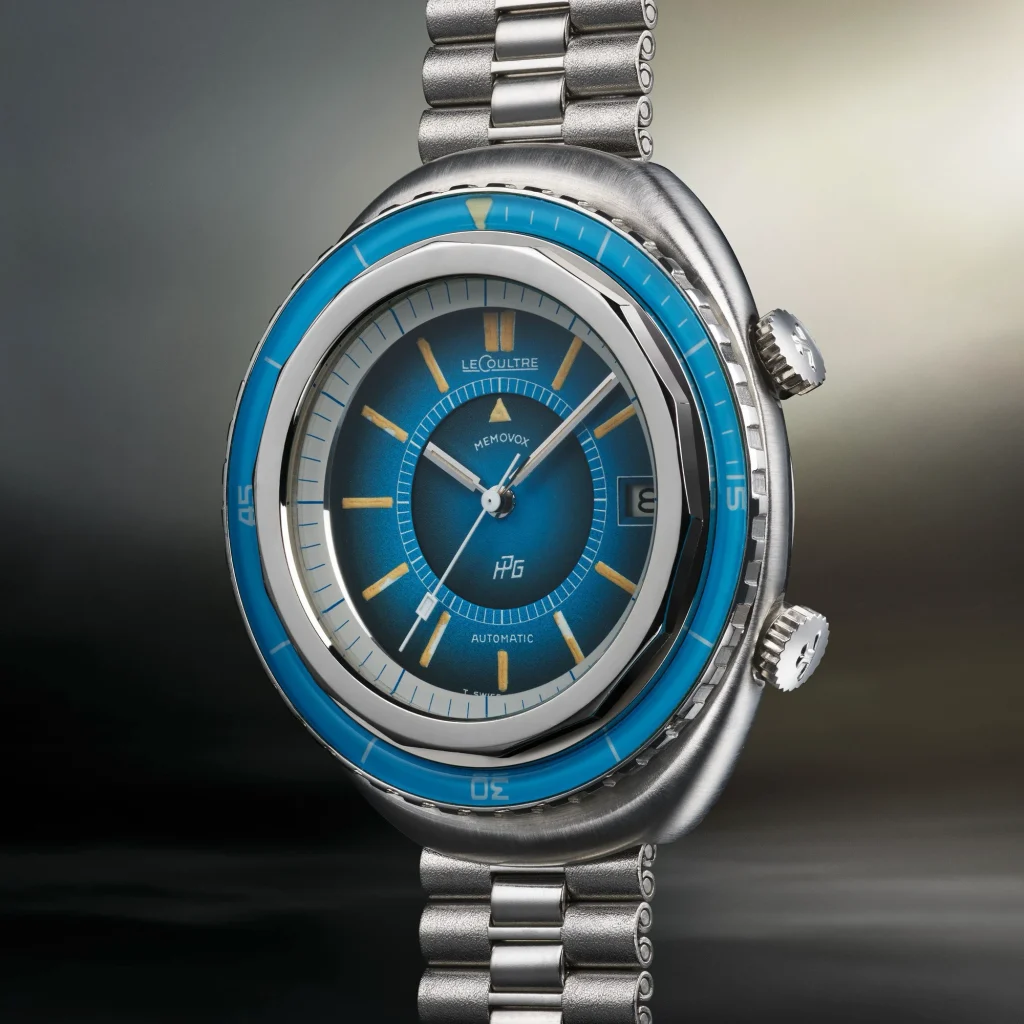
Making the cases locally had consequences beyond customs. American cases, many of them gold-filled or in 14k gold, took on proportions and shapes their European counterparts did not have, and the subsidiary began to relay its customers' requests to Switzerland. That exchange produced references designed for the market, from dress watches to dive models such as the Memovox Deep Sea, the Master Mariner Deep Sea Barracuda and the Memovox Polaris. That distinct identity faded during the 1970s, as Jaeger-LeCoultre, the name that joins the two founding houses, became established as the brand's single identity worldwide; the last LeCoultre dials date from the end of that decade.
Five decades in nine watches
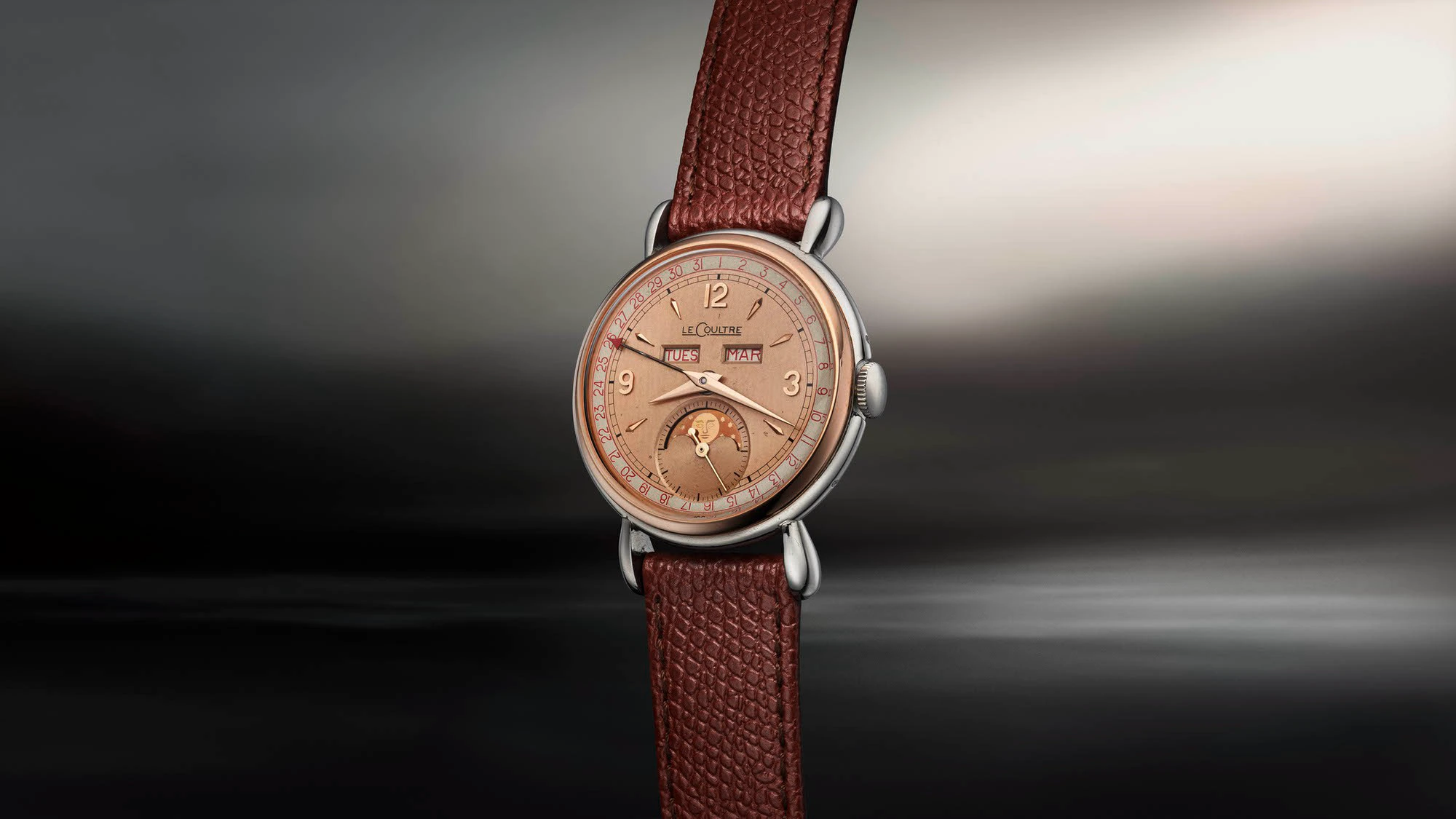
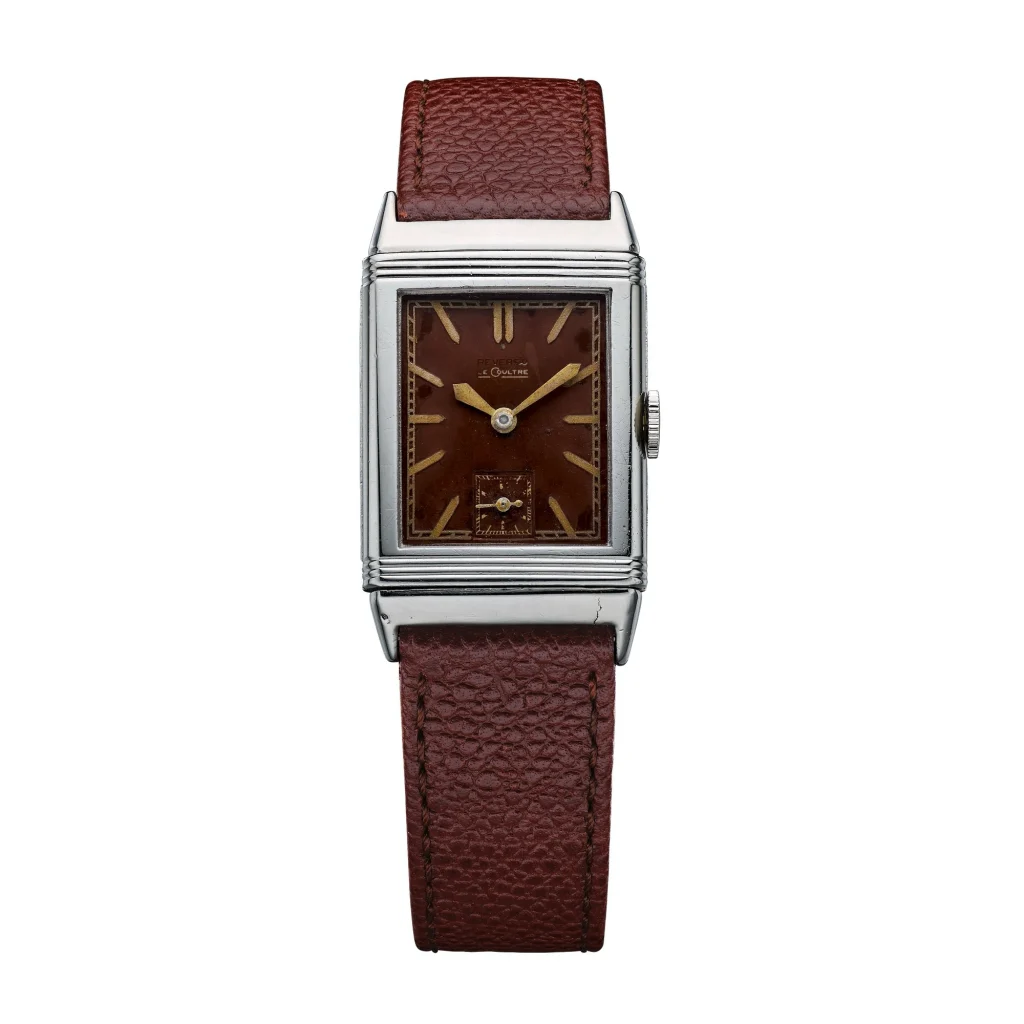
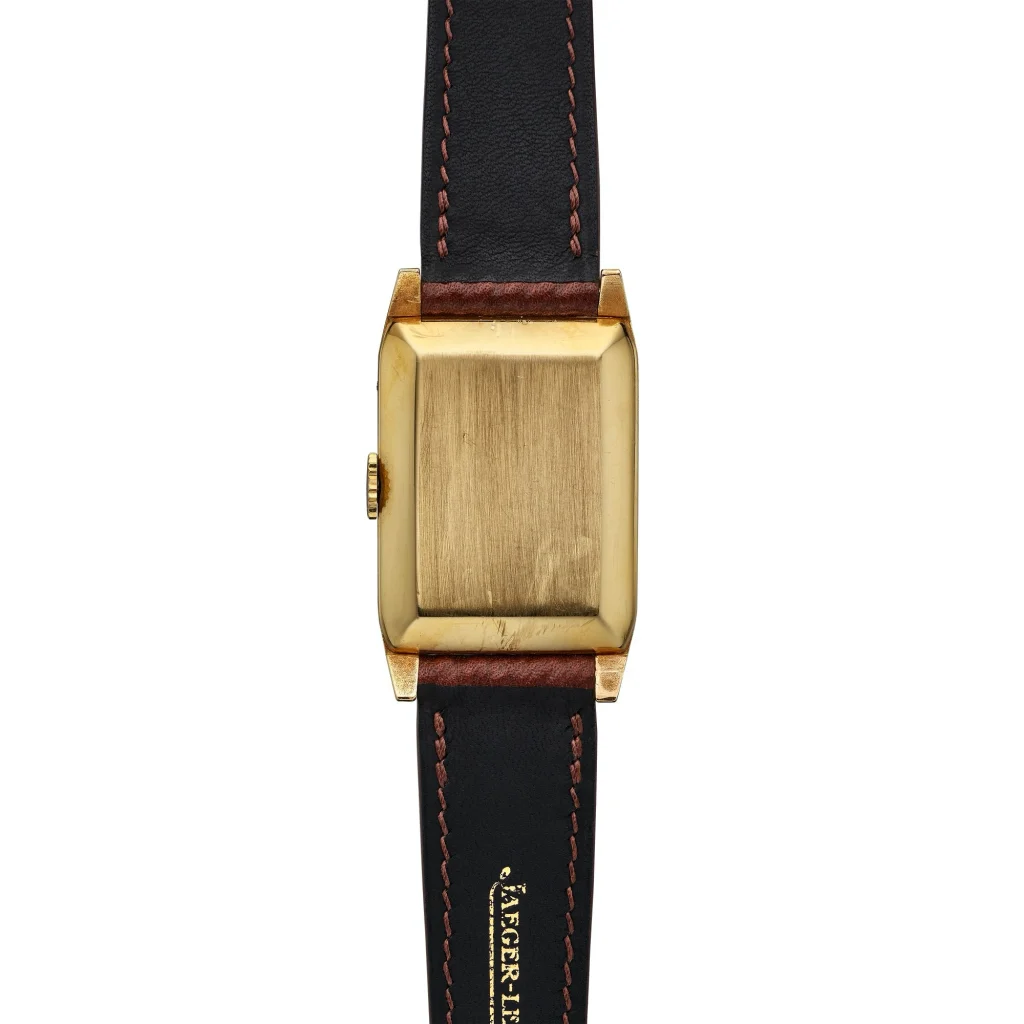
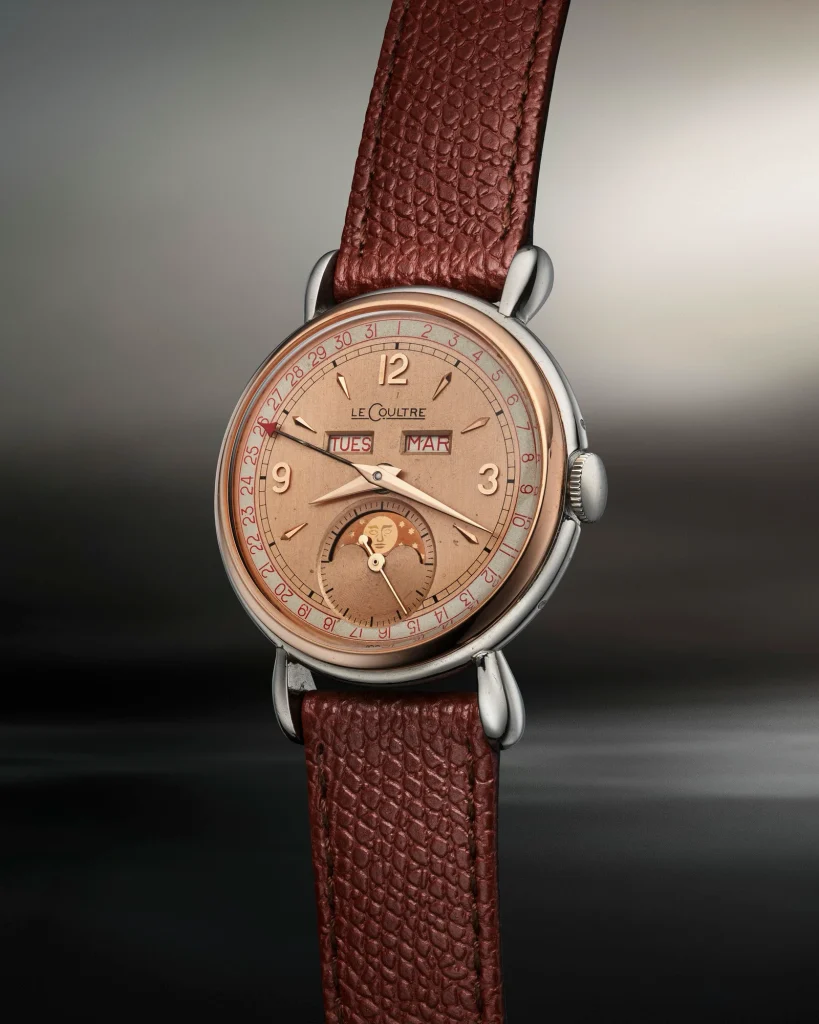
The oldest watches in the selection are dress pieces. The 1933 Reverso has calibre 410, the first the manufacture developed for that model, with small seconds at 6 o'clock, and a chocolate-brown dial that, according to the brand, was available only by special request. The Triple Calendar, a complication the brand introduced in 1942 that shows the date, day and month, appears in two versions: a 1947 model in steel with a pink gold bezel, whose calibre 494 adds a moon phase, and Reference 2726 from around 1952, the first in a rectangular case, which Jaeger-LeCoultre launched in 1949 as a tribute to Jacques-David LeCoultre, who had died the year before.
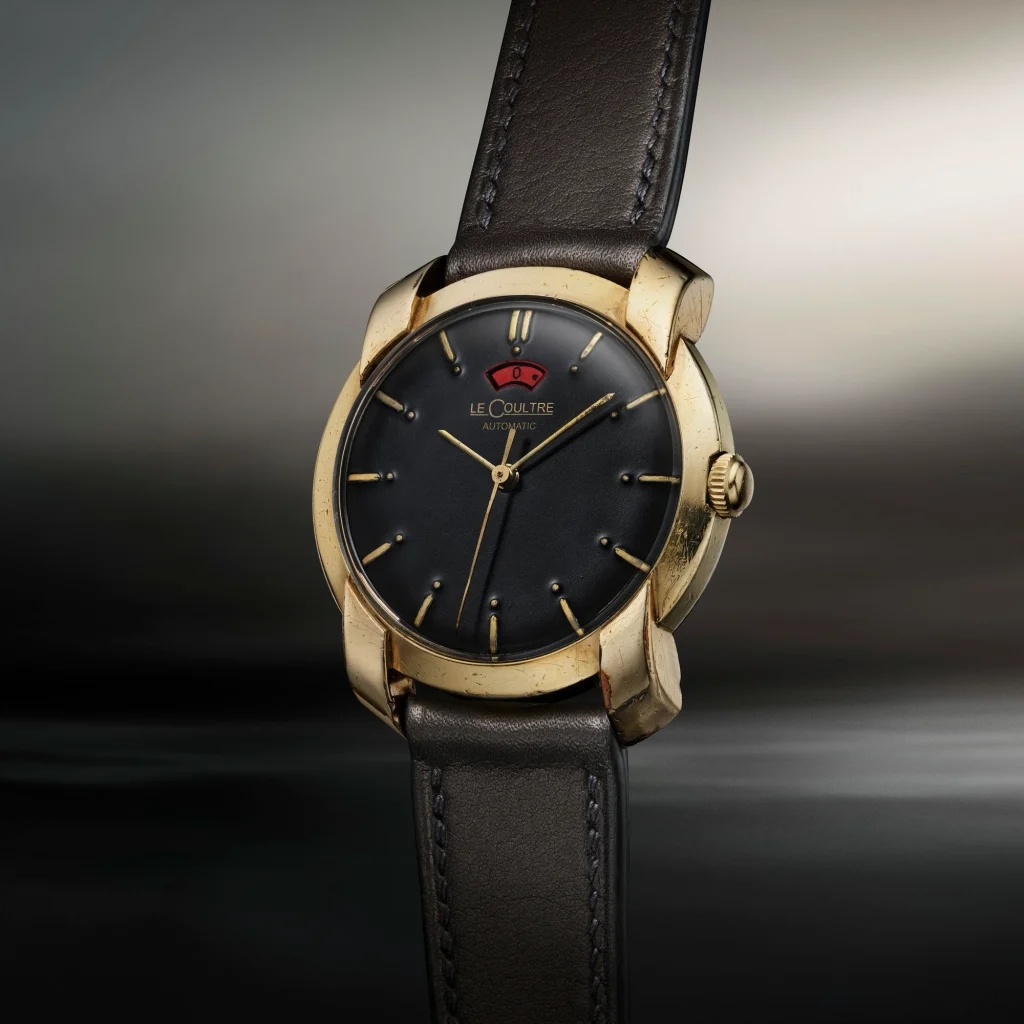
The Powermatic, introduced in 1949, was the brand's flagship through the 1950s and, according to Jaeger-LeCoultre, the first automatic watch with a power reserve indicator on the dial; its name was coined in the United States. The selection includes two: a 1952 example in yellow gold, with a black dial, red indicator and beetle lugs, a flourish carried over from 1940s jewellery, and one from around 1950 whose lugs extend over the bezel. Because of that shape, such watches were already known as the Nautilus in the 1950s, more than two decades before Patek Philippe introduced its own Nautilus in 1976.
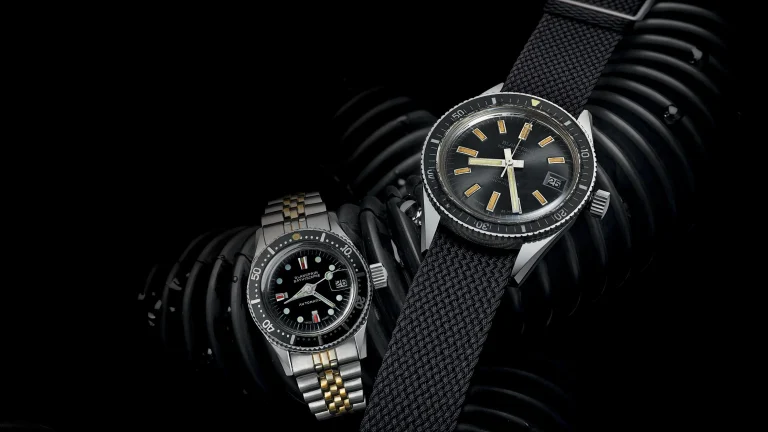
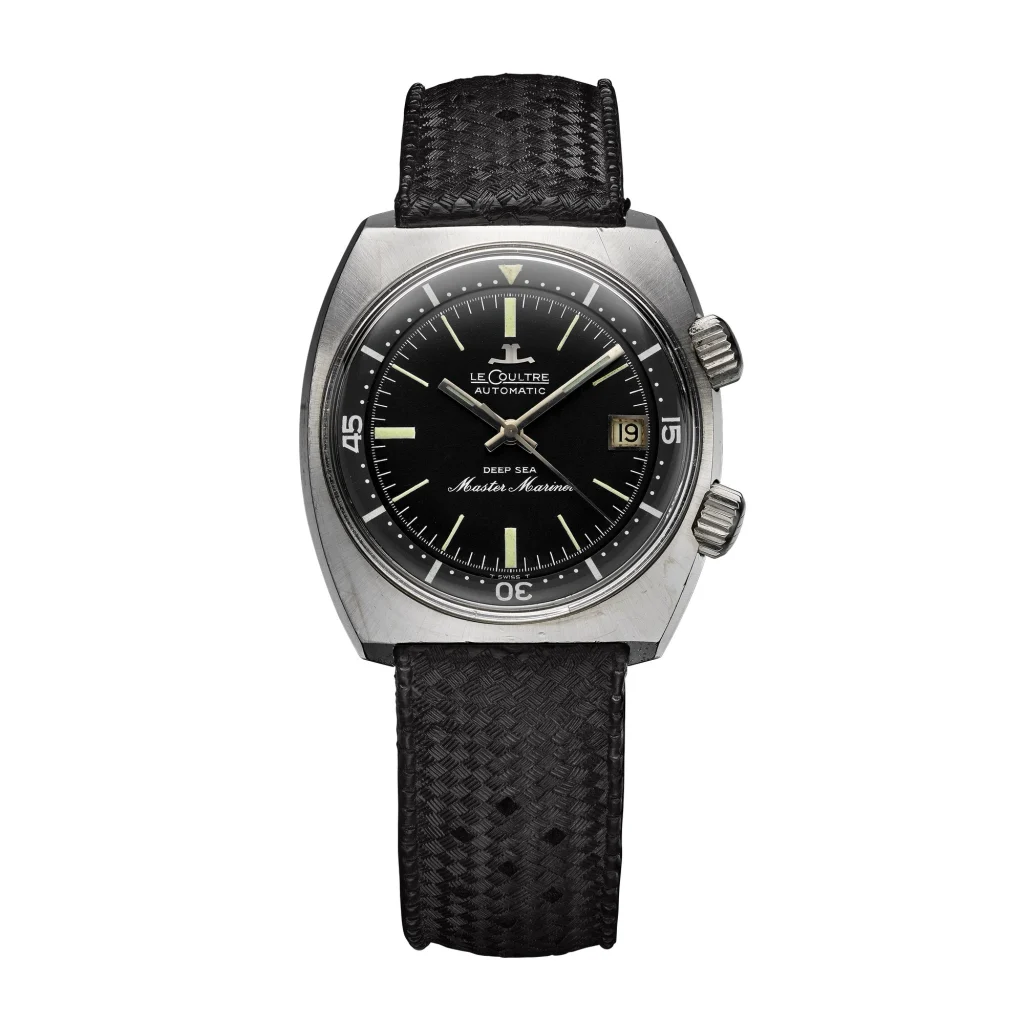
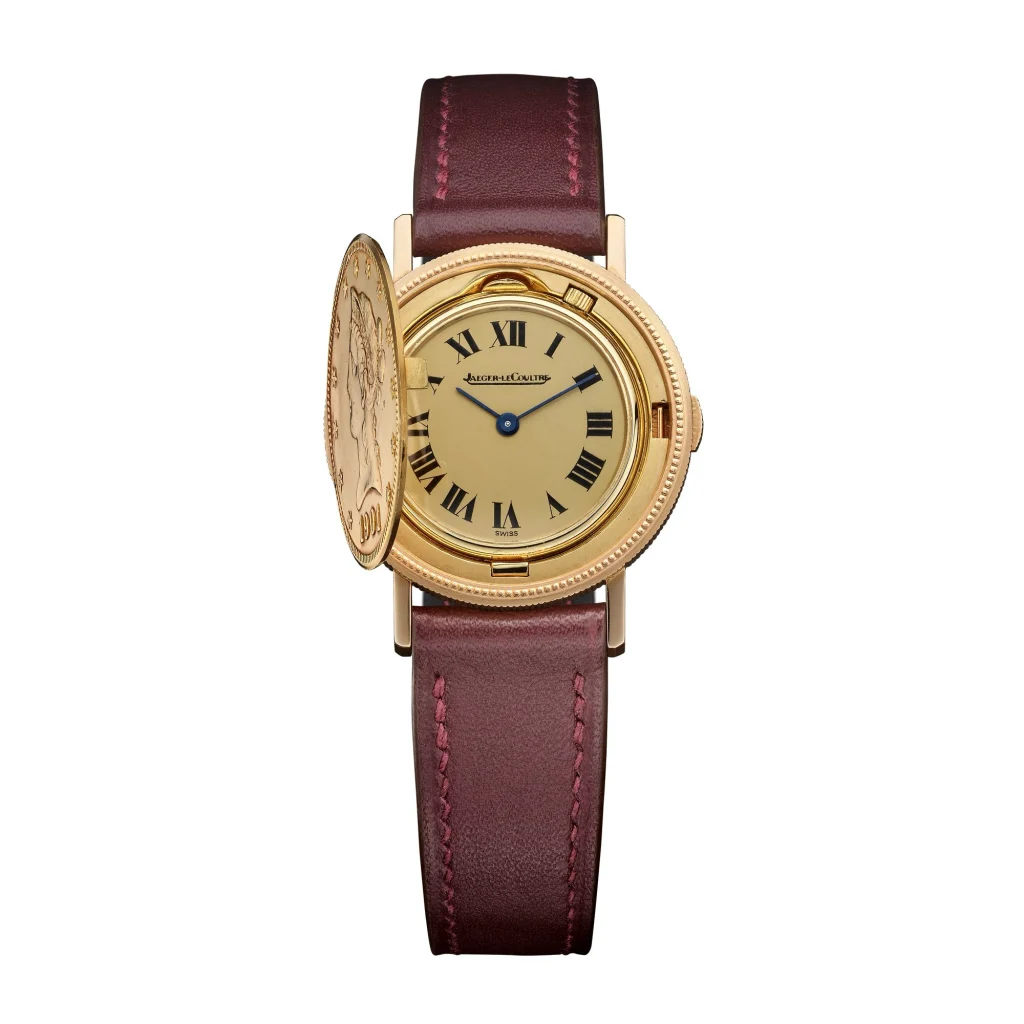
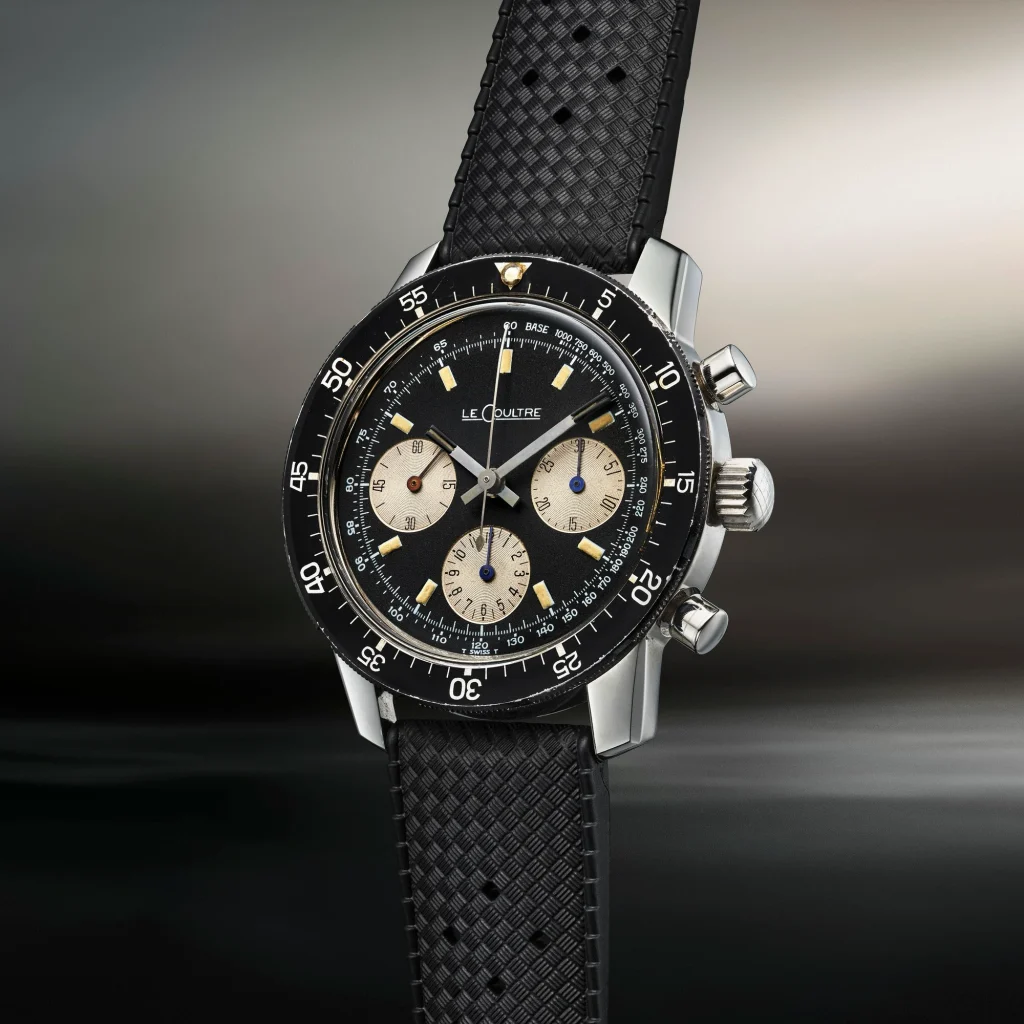
Scuba diving became popular in that same decade, especially in North America, and the manufacture answered with its first dive watches. The 1968 Master Mariner Deep Sea, with a tonneau case and an inner bezel turned by a crown, appeared in the American catalogues as the Barracuda. The Shark Deep Sea, introduced in 1959, was the brand's first dive watch with a chronograph; the one in the selection, from around 1970, houses a Valjoux 72 calibre in a 40 mm case, large for its time. The 1972 Memovox Polaris II keeps the alarm that warned a diver to surface and introduced calibre 916, the brand's first in-house automatic running at 4 Hz. The selection ends with a Coin Watch from around 1981, an ultra-thin calibre hidden inside a US $10 gold coin.
The nine pieces
- Reverso, 1933: steel, 39 × 21 mm. USD 46,500.
- Triple Calendar, 1947: steel and 18k pink gold, 33 mm. USD 30,200.
- Triple Calendar Ref. 2726, circa 1952: 18k yellow gold, 23.8 × 39.1 mm; calibre 484. USD 40,700.
- Powermatic Nautilus, circa 1950: yellow gold-filled, 34.6 mm; calibre 481. USD 17,500.
- Powermatic, 1952: yellow gold; calibre 481. USD 20,900.
- Master Mariner Deep Sea Barracuda, 1968: steel, 40 × 37 mm; calibre 883 with date. USD 29,100.
- Shark Deep Sea, circa 1970: steel, 40 mm, 120 m. USD 34,900.
- Memovox Polaris II, 1972: steel, 50 × 43 mm, original bracelet. USD 29,100.
- Coin Watch, circa 1981: 18k gold, 30 mm and 4.3 mm thick; calibre 839. USD 23,300.
Prices and how to buy
Each watch is a unique piece, with its own page on Jaeger-LeCoultre's website showing the price and options to call a sales associate or book a boutique appointment. The brand lists prices in US dollars, in pesos on its Mexican site and in euros on its European store. On 7 November, the day after the exhibition opened, five of the nine watches were listed as sold: the Reverso, the 1947 Triple Calendar, the Barracuda, the Shark Deep Sea and the Polaris II. Still available were the Powermatic Nautilus, at MXN 343,000 and EUR 18,200; the Powermatic, at MXN 412,000 and EUR 21,800; the Coin Watch, at MXN 457,000 and EUR 24,200; and Reference 2726, at MXN 800,000 and EUR 42,400.
Inside the restoration workshop
The Collectibles focuses on the manufacture's mid-20th-century watches, and its reference catalogue covers 17 models, from the Reverso and Duoplan to the Geophysic, Futurematic and Memovox Polaris. Each piece goes through the restoration workshop in the Vallée de Joux, which the brand describes as one of the very few maintained by a manufacture. There, ten watchmakers service the movement, rebuild missing components by hand and source original parts from the brand's historical stocks, with the aim of preserving the character and patina each watch has gathered over time. Buyers also receive an extract from the Jaeger-LeCoultre archive, a copy of The Collectibles book and a handmade leather strap, as well as the original box, papers and strap or bracelet where they survive.
For four decades, LeCoultre was the identity under which the Vallée de Joux manufacture presented itself to American buyers, until in the 1970s it was folded into the Jaeger-LeCoultre name. Watches from that period, restored in the same valley where their movements were made, are now on show in New York, the city where in 1936 the brand opened the office of LeCoultre S.H. of America.