
For eight years it was the most coveted steel sports watch on the planet. On April 14, 2026, Rolex quietly pulled it. The full story of the GMT-Master II "Pepsi" — from Pan Am cockpits to a secondary market on fire.
On April 14, 2026, a Tuesday in Geneva, Rolex's website woke up with a gap. Where the ref. 126710BLRO — the red-and-blue GMT-Master II known as the "Pepsi" — once appeared, there was nothing. No press release. No editorial farewell. Just absence. Within hours, collector communities around the world confirmed it: the most sought-after steel sports watch of the past decade had been discontinued.
That's how Rolex handles its most significant decisions: without words.
What that silence ended is a story spanning more than seventy years — from a cockpit at 30,000 feet over the Atlantic to authorized dealer waitlists measured in years. From an aluminum bezel that aged with use to a technical achievement in ceramic that took eleven years to arrive.
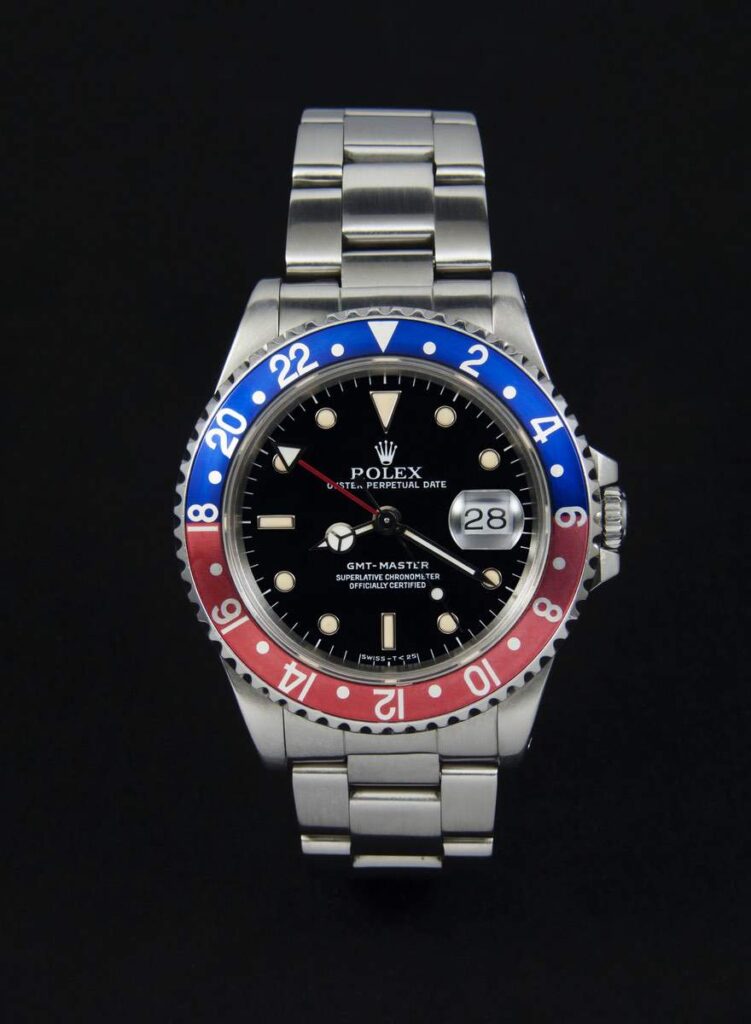
The origin: an airline, a problem, and two time zonesThe origin: an airline, a problem, and two time zones
In the mid-1950s, Pan American World Airways was the world's premier long-haul carrier. Its pilots were opening transoceanic routes that demanded something no watch of the era did well: reading two time zones simultaneously. Home time and destination time. New York and Lisbon.
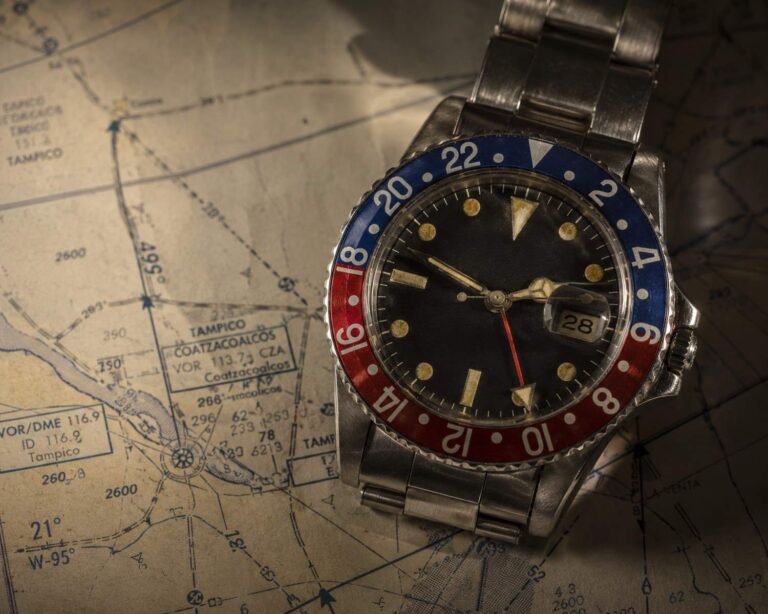
Rolex developed a solution alongside Pan Am: the GMT-Master, introduced as the ref. 6542. A watch with a fourth hand — the GMT hand — pointing across a 24-hour scale on a two-color rotating bezel. Red marked the 12 daytime hours; blue, the 12 hours of night. No decoration: pure function. A pilot could know at a glance whether it was noon or midnight back home.
That this two-tone bezel also happened to recall a popular soft drink's logo was a coincidence that history turned into permanent identity.
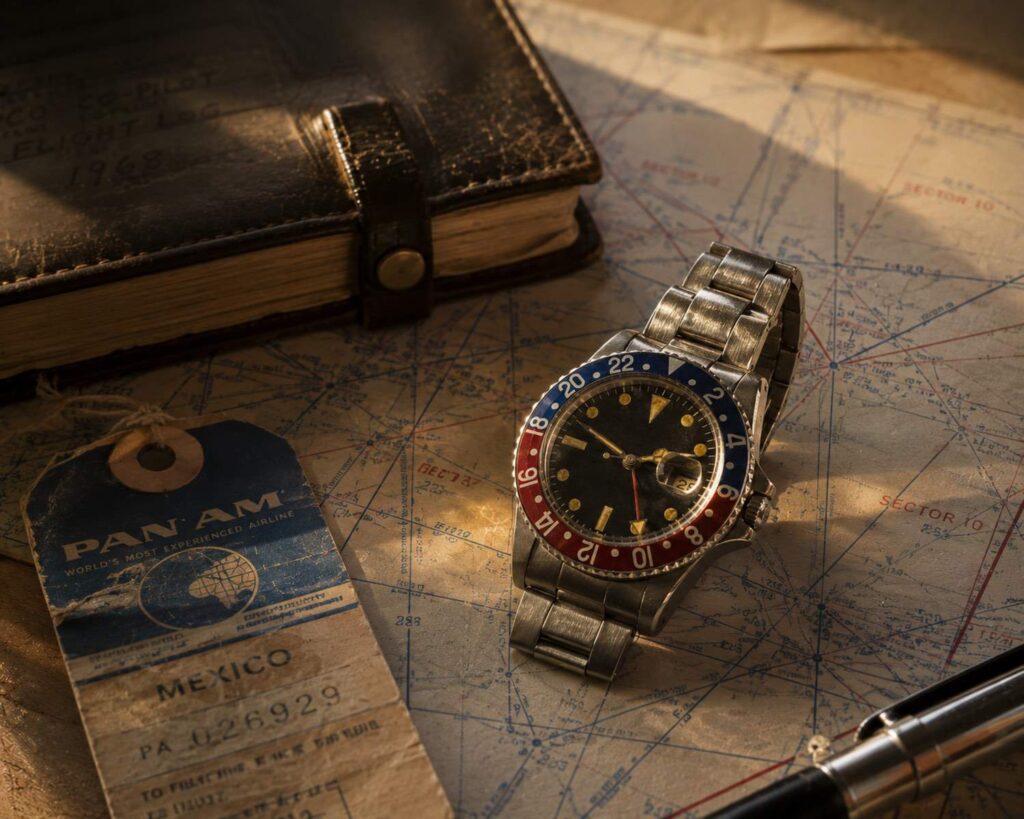
The reference journey: seventy years of evolution
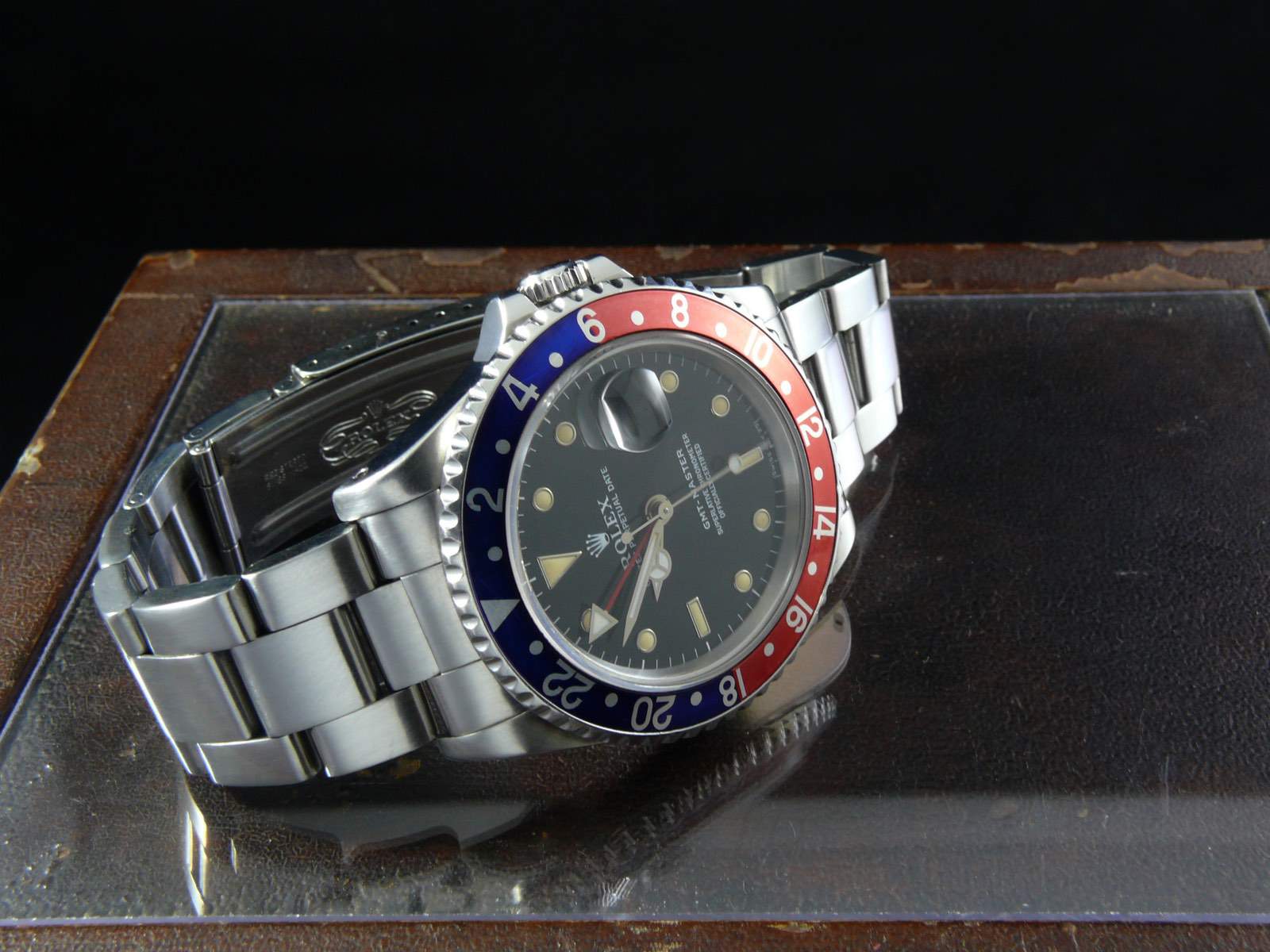
For more than five decades, the "Pepsi" evolved without losing its core. The ref. 1675 remained in the catalog for over twenty years — unusual for any watch, evidence that sustained demand required no forced updates. In 1981, the 16750 added quick-set date. In 1989, the 16710 arrived with sapphire crystal, replacing the aging acrylic.
These were working watches, not ornaments. Their aluminum bezels absorbed use, impact, and sun across multiple continents. Patina wasn't a flaw — it was evidence. Well-preserved original examples of those references now trade between approximately €15,000 and €27,000 on Chrono24 (approximate; verify current prices before making any purchase decisions)..
The problem came in 2007. Rolex migrated the GMT-Master II to Cerachrom bezels — high-hardness ceramic, virtually scratchproof, with colors that don't fade. The technical upgrade was undeniable. The problem: producing the red-and-blue combination in ceramic was technically unsolvable with available manufacturing methods. The "Pepsi" disappeared from steel. Collectors waited, without a date.
The wait lasted eleven years.
In 2013, a partial solution: Rolex cracked the two-tone ceramic — but in blue and black. The "Batman" (ref. 116710BLNR) was born. The following year, in 2014, the ceramic Pepsi arrived — but only in white gold (ref. 116719BLRO), at a price point that reflected the material premium. For steel, red-on-ceramic remained unsolved.
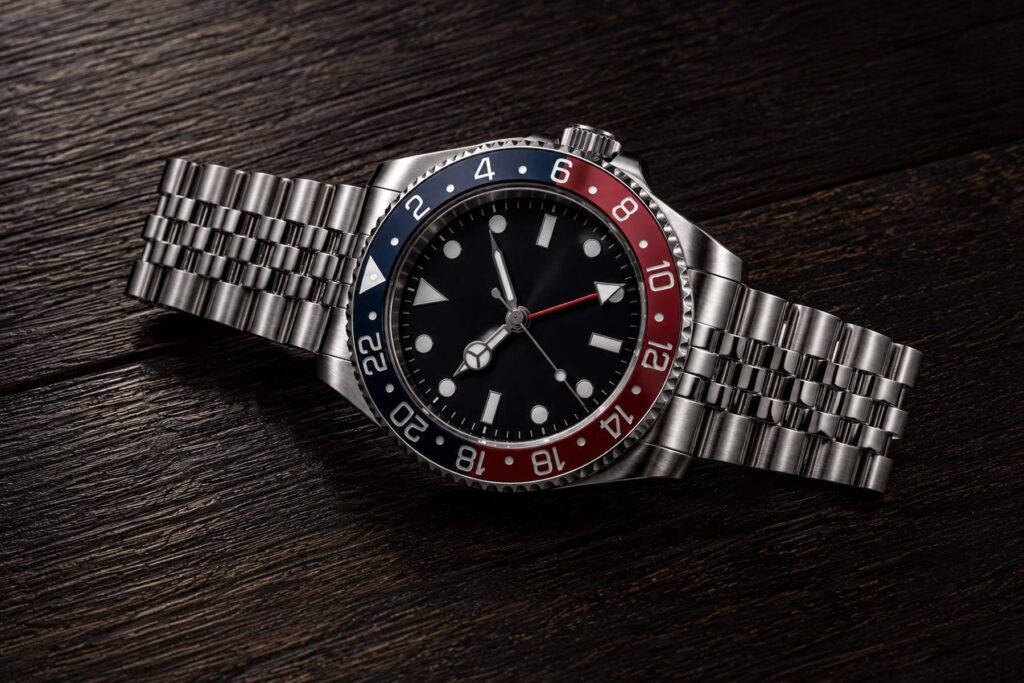
Baselworld 2018: the return of the most anticipated watch
On March 23, 2018, at Baselworld, Rolex unveiled the ref. 126710BLRO: the steel Pepsi with Cerachrom bezel. The first steel Pepsi in eleven years. The market's response was immediate — waitlists at authorized dealers began forming before the first pieces reached boutiques.
What followed was unprecedented in the contemporary sports watch market. Official MSRP sat at approximately $12,400 USD; (esto es aproximado)the secondary market price surpassed $20,000 within the first year and never came back down. For nearly eight consecutive years, the 126710BLRO traded at double — or more — its list price. Not for a few speculative weeks: for years on end, in a sustained and stable premium.
That anomaly said something important about the nature of the watch. And something even more revealing about how Rolex responds to it.
The logic of removal: why Rolex discontinues its own icons
Rolex doesn't issue communications explaining catalog decisions. But there's a recognizable pattern for anyone paying attention. In 2020, the brand discontinued the Submariner "Hulk" (ref. 116610LV) under nearly identical conditions: perpetual waitlists, secondary market prices two to three times retail, and a public conversation that had stopped being about watchmaking and started being about investment.
The logic is consistent: when a watch stops being something to wear and becomes a financial instrument — when it's discussed as an asset before a mechanism — Rolex removes it. Not because the watch is flawed. The 126710BLRO is technically excellent: caliber 3285 movement, COSC-certified, ceramic to 1,250 Vickers hardness. It's removed because the conversation surrounding it no longer belongs to watchmaking.
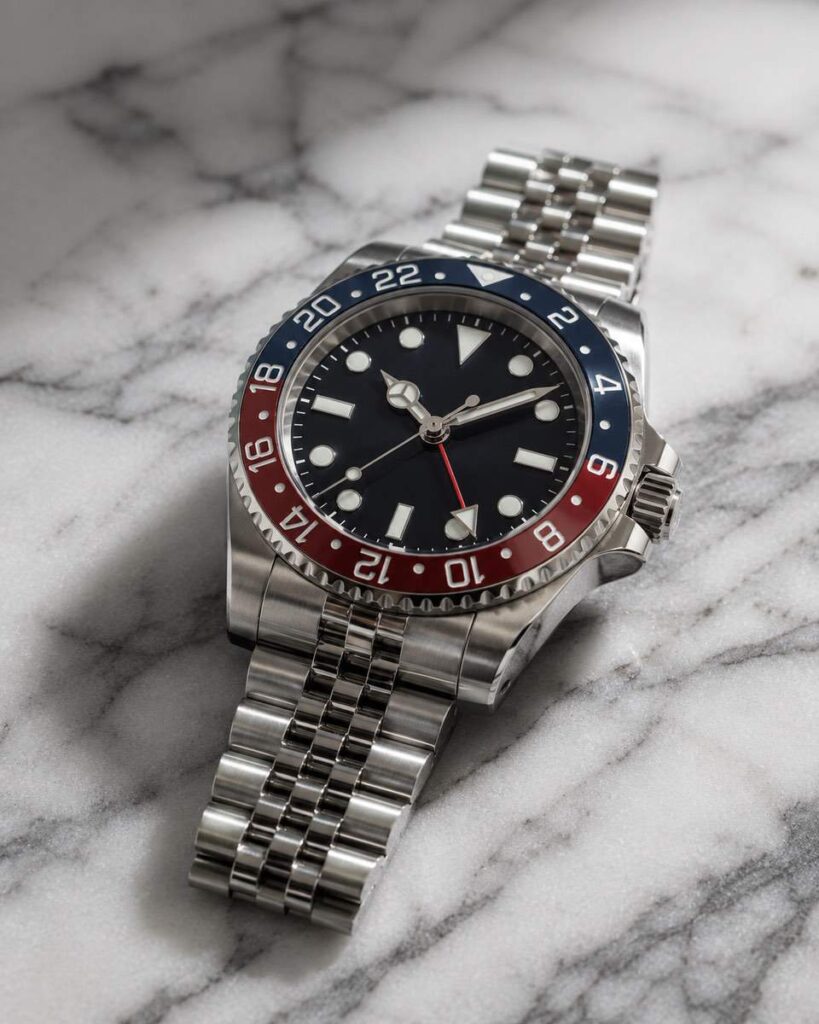
The secondary market in 2026: when the tap runs dry
The market's response was immediate. In the first week after the April 14 announcement, Chrono24 reported a 500% surge in purchase requests for the ref. 126710BLRO. Prices already running at $22,000–$25,000 before the announcement climbed rapidly. By late June 2026, unworn 2026-dated examples are being offered in the $35,000–$42,000 USD range on international platforms (approximate; secondary market prices fluctuate weekly — verify on Chrono24 before making any purchase decision). Vintage references — the 1675, 16750, 16710 — also moved upward in sympathy.
Looking ahead: Rolex filed a patent in 2022 for a ceramic bezel in red and black. The "Coke" — absent from steel since 2007, never produced in ceramic — is the most discussed candidate among collectors worldwide.
Latin America Perspective
For Latin American collectors, the 126710BLRO's discontinuation stings particularly. The watch was never easy to obtain in the region — authorized dealers in Mexico, Colombia, and Argentina maintained waitlists that in practice meant years without access. Official MSRP was approximately $12,400 USD(verify with local dealers; this is an approximate figure); with VAT and import duties in Mexico (16% IVA plus estimated 15–20% tariff), the actual cost through an authorized dealer exceeded $16,000–$17,000 USD. Those who couldn't wait — or couldn't access a waitlist — turned to the grey market, where prices ranged from $22,000 to $28,000 USD depending on year and condition.
Today, with the piece discontinued, access means secondary market only. Chrono24 lists examples from approximately $22,000 USD for used pieces up to over $40,000 for recent unworn examples. The authorized dealer window has permanently closed.
Seventy years after a Pan Am pilot needed to read two time zones over the Atlantic, the watch born of that need is no longer made in steel with a red-and-blue bezel. Time has that irony: objects designed to measure it become, in their absence, the measure of something larger. How much a thing can be worth. How long an obsession can last. And why certain colors on a 40mm dial can still tell us something about who we are.