
Operating profit in its timepiece division nearly tripled in a single quarter. Behind the number sits a branding decision that is already showing up in catalog pricing.
A watch division that keeps 23 cents of operating profit on every dollar it invoices is a rare thing in this industry. That is the margin Casio reported for the first quarter of its 2027 fiscal year, ended in June: 23.1%, with operating profit of ¥11.8 billion against ¥4.2 billion in the same quarter a year earlier.
The headline figure alongside it: timepiece sales rose 29%, to ¥51 billion (roughly $323 million). But the percentage is the least interesting part. What matters is the reason the company itself points to, because it explains what watches will be in the display case next year.
Two Brands That Stopped Competing With Each Other
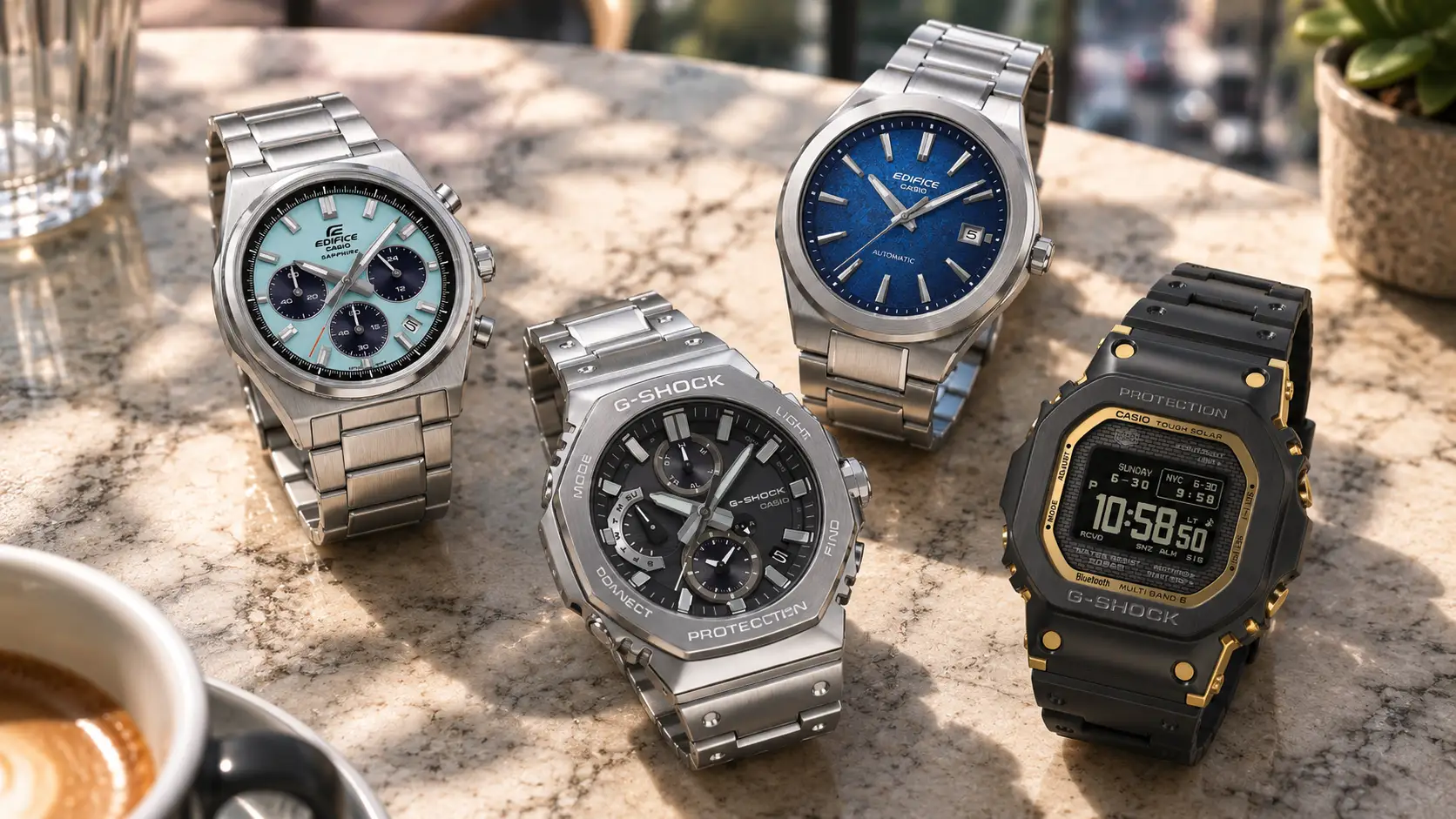
G-Shock has existed since 1983. Casio-branded watches since 1974. They coexisted for four decades inside the same company without a formal strategic split; only in 2025 did Casio begin presenting them as two separate pillars of its timepiece business, each with its own product, pricing, and market plan.
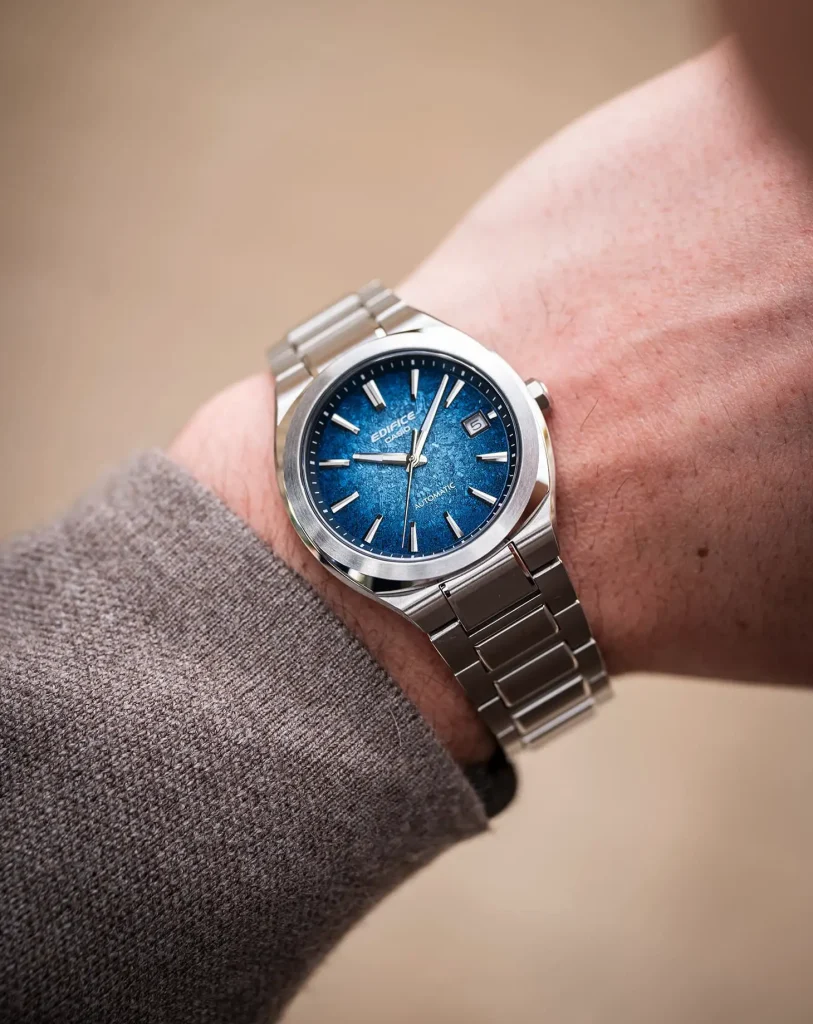
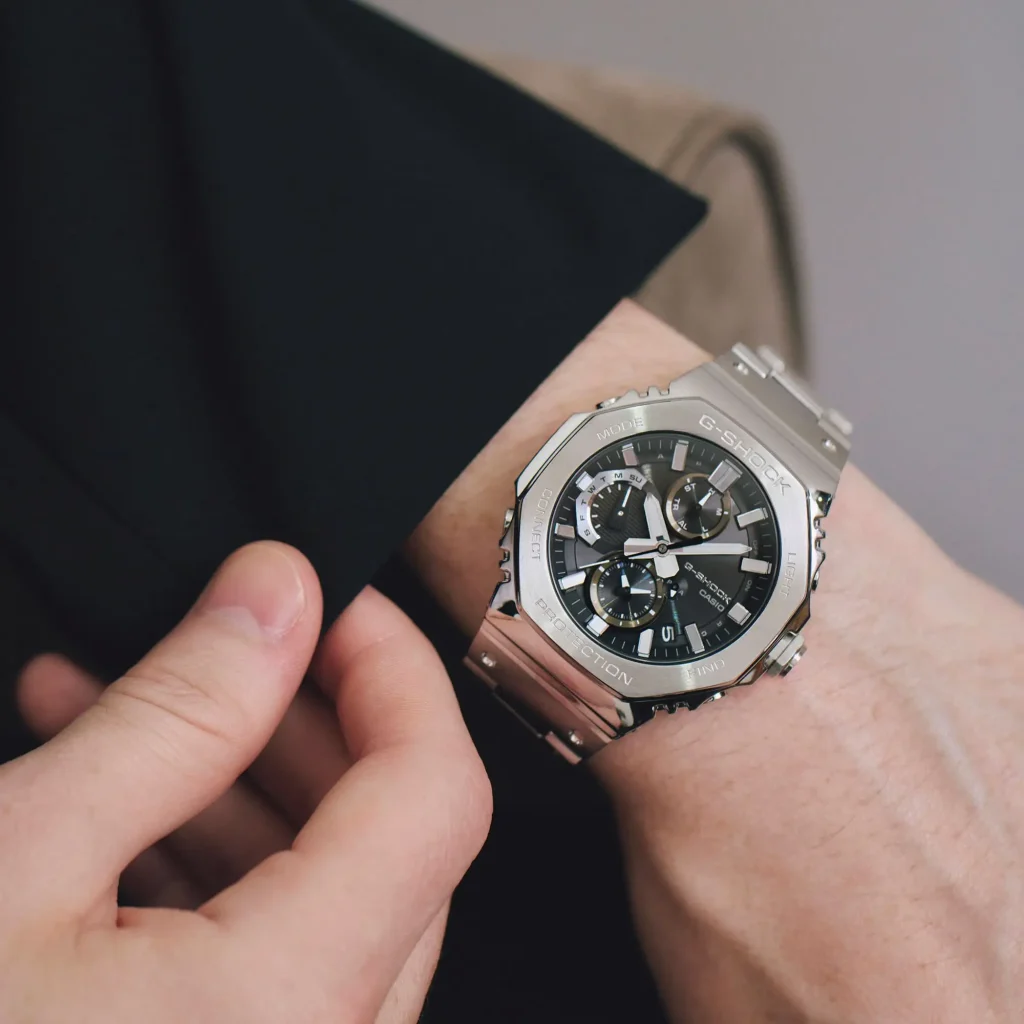
The division of labor breaks down cleanly. Casio Watch moves upmarket: an expanded high-price lineup and what the company calls "pricing optimization," which in practice means lifting the average ticket. G-Shock moves the other way: concentrating marketing spend on iconic models, expanding the entry line, and pushing mid-price metal models.
Up close, this reads as a correction to an old problem. For years, a buyer walking in for a $200 Casio and one shopping a $400 G-Shock received the same message from the same company. Now each brand chases a different buyer without cannibalizing the other.
It would be a mistake to treat 29% as the new baseline. The quarter compares against a weak year-ago figure, and Casio has already signaled it does not expect a repeat: its updated forecast for the full year ending March 2027 projects timepiece revenue between ¥185 billion and ¥202 billion with an operating margin of 18.1%, five points below the quarter just reported. When a company tempers its own expectations right after a strong quarter, that is worth hearing.
The Smartwatch Argument, With Caveats
Casio credits part of the momentum to a demand shift in North America, where it says consumers are moving away from smartwatches for two specific reasons: the nuisance of charging them and the noise of notifications. In Europe, growth comes from a different source, a rising average unit price rather than a larger number of watches sold.
It is a plausible reading and it matches what you hear in enthusiast circles, but the source matters: this is the company's own interpretation in its financial report, not independent market research. One quarter does not confirm a cultural trend.
Latin America and Spain Perspective
Casio maintains established official distribution across the region, with dedicated store locators for Mexico and Colombia and operations through partners such as TITEC in the Colombian market. That network is the difference between a warranty that works and a watch with no backing. Still, precision matters here about what this report says and what it does not: the only two regions Casio mentions explicitly are North America and Europe. There is no statement about Latin America and no regional figures in the document, and we found no Casio communication specific to the region as of this report's date. What can reasonably be inferred from the stated strategy: the entry line and mid-price metal G-Shocks are the part of the catalog the company wants to grow, and that is precisely the price band where most of our readers shop. On the other side, "pricing optimization" at Casio Watch points the opposite direction. If you have a high-end Casio model in your sights, the likelier scenario is that it costs more, not less, in the coming months.
A strong financial quarter does not make a watch better. It does change which watches a company decides to build, and which ones it quietly stops pushing. Worth filing this number away and revisiting it in March, when Casio closes the fiscal year: that is when we will know whether this was a strategy or just a good quarter.