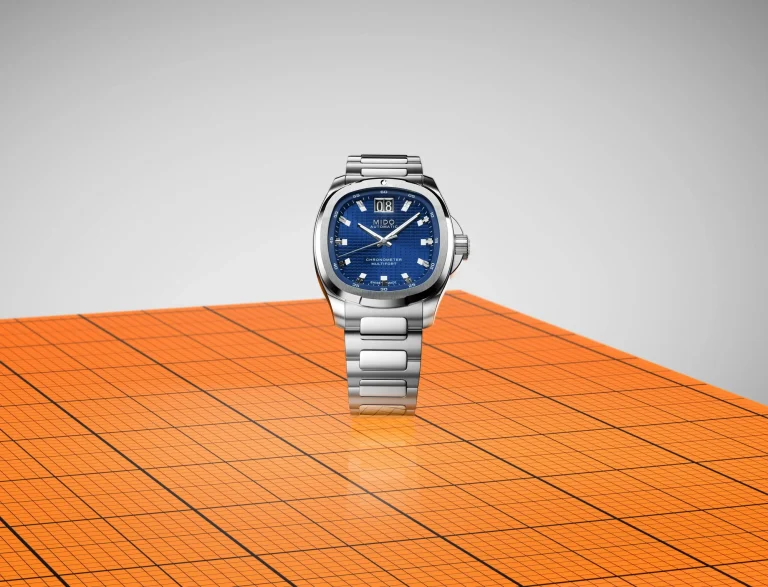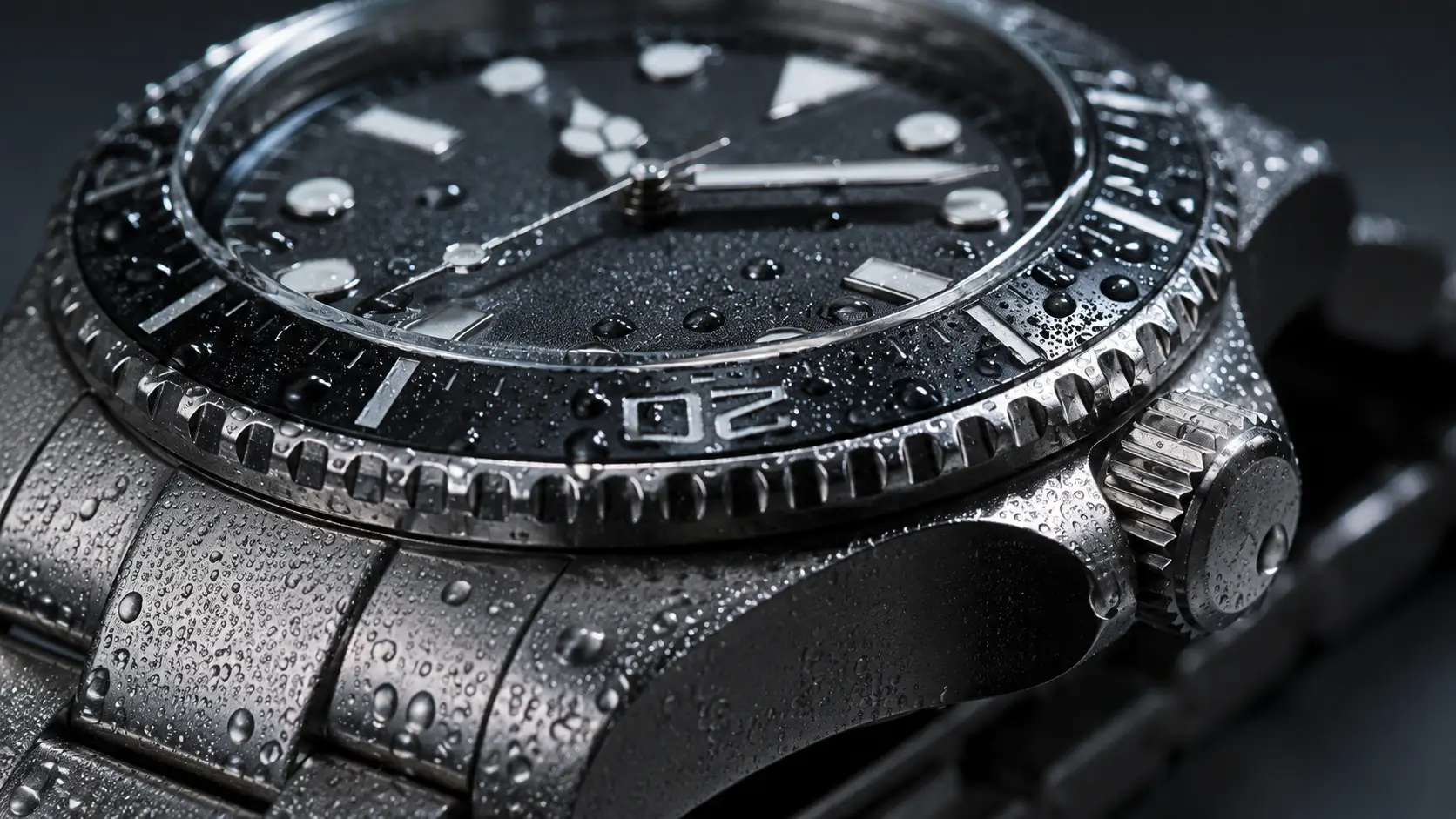

The figure shown on your watch face does not correspond to a depth; it describes a laboratory test performed on the watch while stationary and fresh from the factory. Understanding that difference can change the way you use it.
The real question
“Can I swim with a 100-meter watch?” is one of the most common searches in Spanish, and the answer given is almost always wrong. Some say yes without qualification, while others insist you shouldn't even wear it in the shower. Both answers miss the mark for the same reason: they treat that figure as a measure of how deep you can dive. That is not what it measures.
What is actually being tested
The standard governing this is ISO 22810:2010, which replaced ISO 2281. The equivalence is stated in a footnote to the document: 1 bar is equivalent to a 10-meter water column. A 100-meter watch is, therefore, a watch tested at 10 bar.
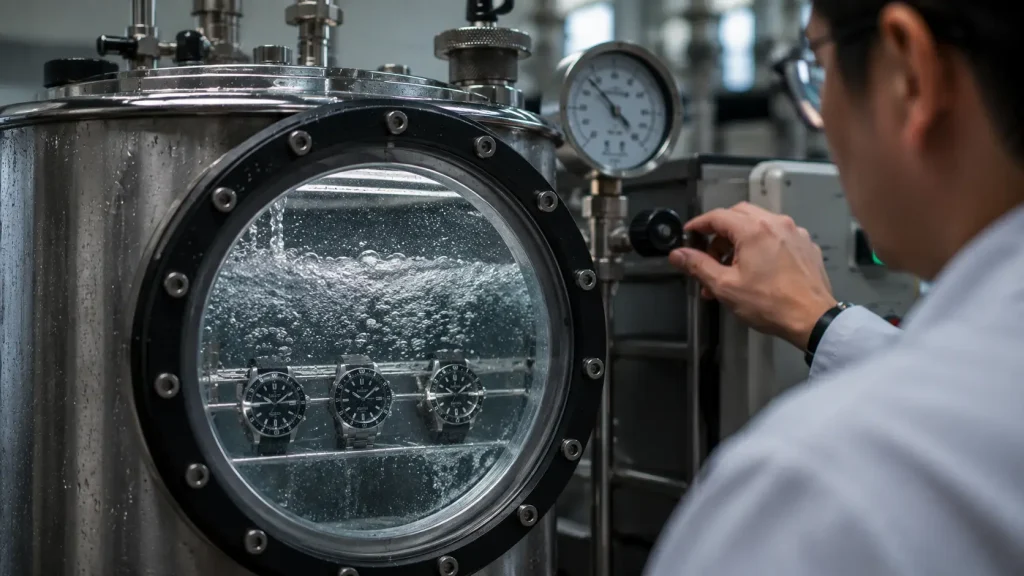
The test works like this: the watch is submerged in a tank, the pressure is raised over the course of a minute, held for ten minutes, and then lowered. Three more tests follow, all at a depth of 10 centimeters: one hour of static immersion; five minutes with 5 newtons of lateral force applied to the crown and pushers—equivalent to half a kilogram of sideways pressure; and a thermal shock test involving water at 40°C, then 20°C, and then 40°C again. After each test, the watch is checked to ensure no condensation appears on the inside of the crystal.
It's useful to think of it as a car's claimed gas mileage. The figure is real, it is measured with a rigorous method and is used to compare models with each other. But it was obtained on a dyno, not in the traffic you face every day.
It is worth dispelling a widely repeated explanation here that is not supported by physics: the idea of "pressure spikes" supposedly generated by swimming. An arm movement at 3 meters per second adds the equivalent of just a few centimeters of water depth. Even at 10 meters per second—faster than any competitive athlete swims—the added pressure is about 0.5 bar, equivalent to five meters of depth. Swimming is not what ruins a watch.
Lo que sí importa está en la introducción de la propia norma, y pocas veces se cita: la protección depende de la construcción de la caja, de la calidad de fabricación y del historial del producto, servicios y golpes incluidos. Las juntas de goma se endurecen; el tubo de la corona se desgasta; una caída deforma lo que no se ve. La cifra indicada en tu reloj se aplica a un reloj nuevo, quieto, en agua limpia y en condiciones controladas de laboratorio. No refleja exactamente las condiciones de tu reloj que compraste hace años y al que tal vez no le has dado mantenimiento. Por ello, es fundamental que, si vas a usar tu reloj en el agua, te asegures de llevarlo a servicio en el plazo indicado por la marca.
How does this translate into purchasing?
A 30 meter clock survives splashes and rain, nothing more. At 100 meters, it starts to make sense to get into the water, but the number alone doesn't say it all. For example, the SRPD series Seiko 5 Sports claims 100 meters with its push-pull, non-threaded crown; Seiko compensates with more robust joints and, therefore, it is suitable for a swimming pool, although the brand itself does not sell it as a diving watch. The Traska Venturer GMT claims 150 meters of water resistance with screw-down crowns – another construction for a similar use.
The serious difference arises with ISO 6425, the specific standard for dive watches. It requires a minimum water resistance of 100 meters and mandates that each watch be tested individually, not a sample from the batch, and at 125% of its nominal pressure. A watch marked at 200 meters under that standard was tested at 250 meters. That margin is what differentiates a Doxa Sub Army 200T of a sports watch with a similar number on the dial.
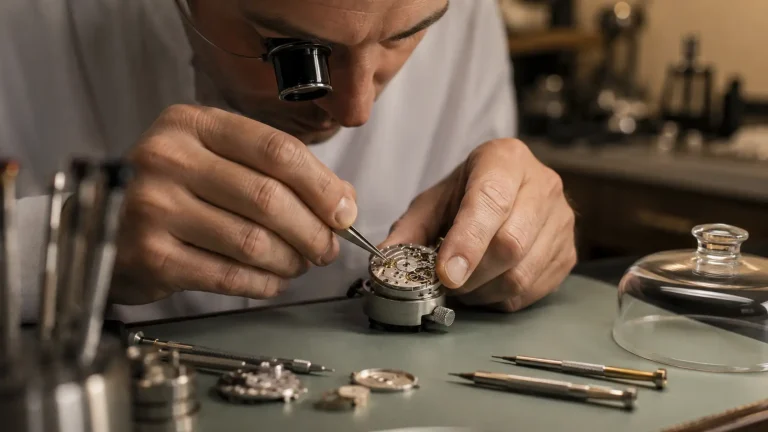
In Mexico, Colombia, and Spain, Seiko and Casio have the strongest official distribution networks in this segment, and 200-meter-rated G-Shocks offer the most affordable way to get genuine water resistance. Microbrands are generally purchased online, which leads to a practical issue: the person replacing your gaskets every five or six years will be a local watchmaker, not an authorized service center for the brand.
The most common mistake
It isn't about swimming. It’s about operating the crown while the watch is wet, or stepping into the shower or sauna. Steam, soap, and water at 50 or 60 degrees attack the seals much faster than a swimming pool does: the standard tests for a thermal shock of 40°C, yet a hot shower exceeds that figure every day. Another mistake is assuming that water resistance is permanent. It isn't; it is a condition that must be maintained through servicing.
La resistencia al agua que aparece grabada en la esfera o en la tapa de un reloj no es una promesa absoluta, sino el resultado de pruebas realizadas en condiciones de laboratorio. Saber interpretar esa cifra es tan importante como entender qué significa realmente la inscripción “Swiss Made”: ambas comunican información valiosa, pero también tienen límites que conviene conocer antes de dar algo por hecho. Si quieres profundizar en ese tema, te recomendamos leer What "Swiss Made" Really Means.