
At $5,875 in the United States, Tudor's centenary Monarch is a compelling argument. But that's not the number buyers in Mexico City, Bogotá, or Madrid see in the display case. We run the full calculation.
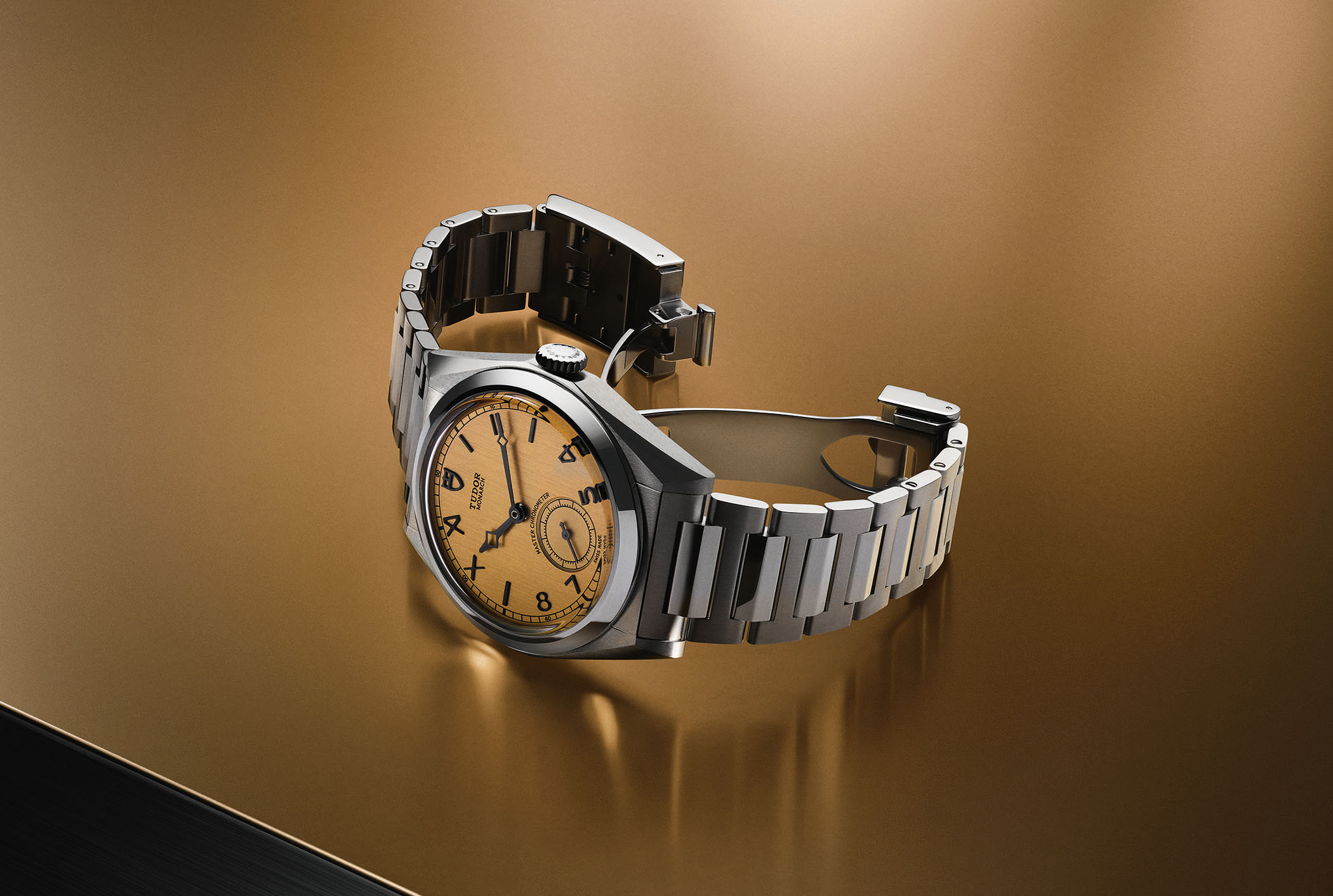
Tudor turned 100 at Watches & Wonders 2026 and chose to mark the occasion by reviving its most historically loaded name: the Monarch. The name dates to the 1950s, when Tudor used it as an umbrella for several sport-dress references from the bubble-back era, but the 2026 edition is something different — a 39mm integrated steel watch with Master Chronometer certification, a California dial mixing Roman numerals and Arabic digits, côtes de Genève movement decoration, and a faceted two-link integrated bracelet that orbits closer to a Royal Oak than to any previous Tudor.
The U.S. retail price is $5,875. On paper, that sounds competitive. The problem is that most readers of this publication aren't buying in the United States.
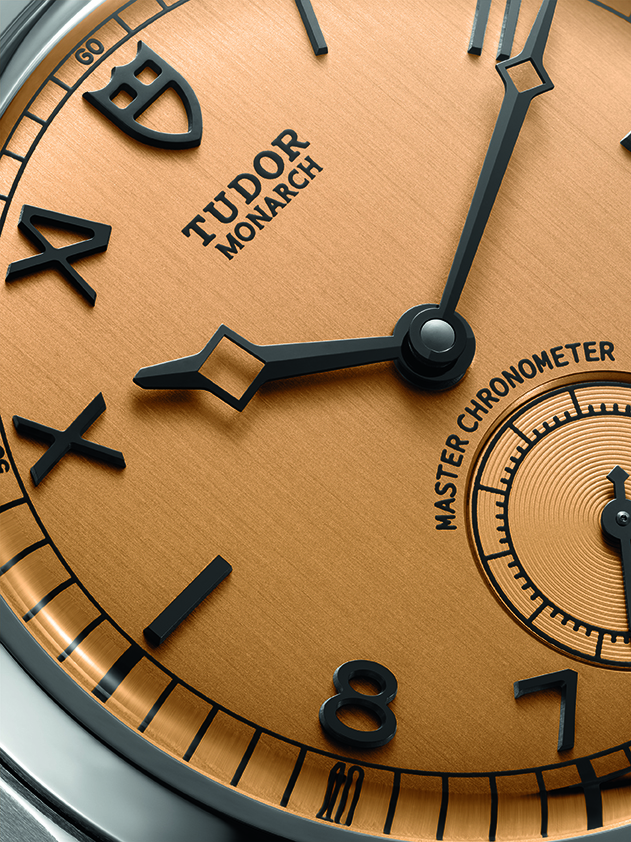
The watch in question
Reference M2639W-1A0U-0001 arrives with the manufacture calibre MT5662-2U: dual COSC + METAS certification, 65-hour power reserve, silicon balance spring, and 15,000 gauss magnetic resistance. METAS is the same standard OMEGA uses for its Master Chronometer collection — one Tudor is now applying progressively up its range. The open caseback reveals the movement with hand-beveled bridge finishing and côtes de Genève decoration: work that normally hides behind solid casebacks in this price tier.
The Monarch costs $2,200 more than the Tudor Royal in the U.S. ($3,675). What that gap buys: METAS certification (the Royal uses the MT5602, COSC but not METAS), finer movement finishing, and a substantially more ambitious case design. In the North American market, the argument holds.
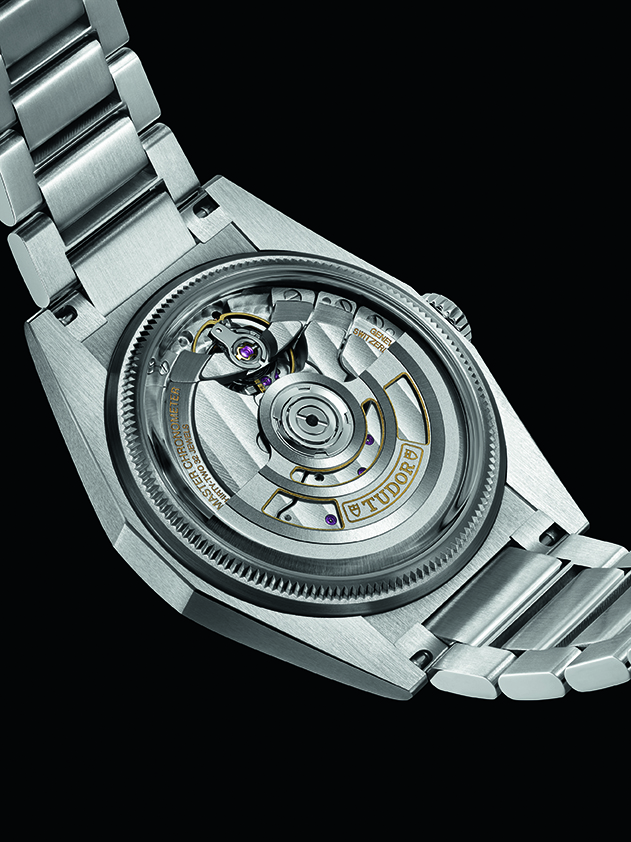
What it offers vs. what it costs in Latin America
These are estimated figures. Verify with your authorized retailer before purchasing.
In Mexico, the price chain works as follows: base in USD converted to pesos, plus 16% VAT, plus authorized distributor margin (typically 12–18% on the final retail price). Swiss watches enter Mexico under the TLCUEM free trade agreement with preferential or zero tariffs, though those savings don't always reach the customer. Likely retail at an authorized Mexican dealer: MXN $119,000, or roughly $6,800 USD at current exchange rates (approximate).
In Colombia, VAT is 19% and Swiss watch tariffs run approximately 5–10%. Estimated retail found at an authorized Bogotá dealer: COP $22,644,000.
In Spain, 21% VAT applies from the European recommended price. Tudor prices the Monarch at approximately €5,500 before tax for the EU market: the in-store price in Spain reaches roughly €6,650 — around $7,200–$7,500 USD at current rates.
The bottom line: the Spanish-speaking buyer pays around $7,500 for a watch that retails at $5,875 in the United States.
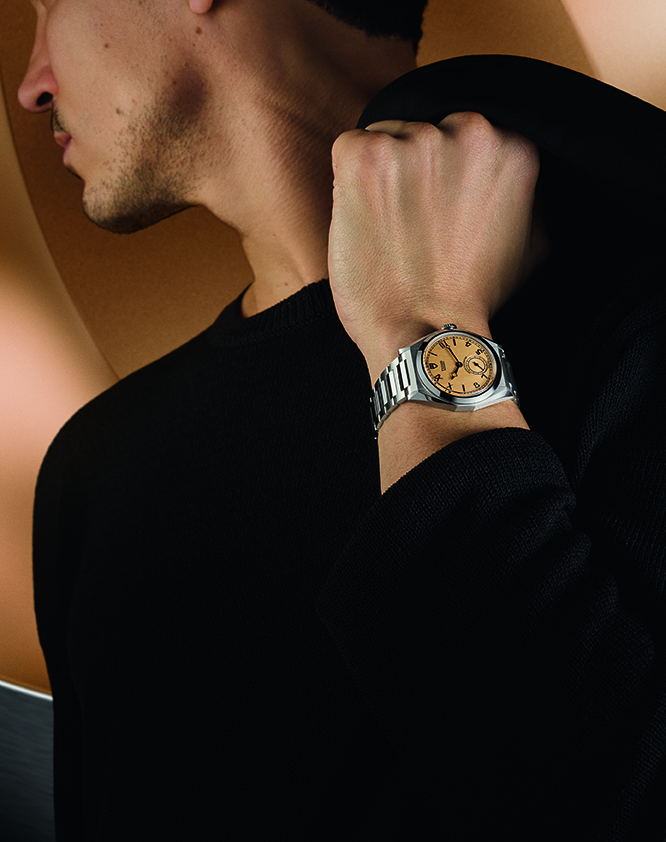
What else your money buys
If we broaden the price range, we find interesting alternatives to the Monarch:
Tudor Royal (same dealer, same service): $3,675 USD in the U.S., MXN $65,000–$90,000 in Mexico. Same steel, same integrated sport-dress aesthetic, COSC movement — but not METAS. The honest question: does Master Chronometer certification and finer movement finishing justify nearly doubling the price in Latin America?
Pre-owned Cartier Santos WSSA0029: $6,500–$7,500 USD on Chrono24, with recent full-set examples available. Immediate brand recognition, real history since 1904, a different kind of social legibility. What it gives up: no proprietary manufacture story, and Cartier service in Latin America carries its own premium.
Longines Record~$2,200–$2,800 USD MSRP in the U.S. Also Master Chronometer certified, composed and well-built, frequently available at Latin American retailers without the same import markup drama. What it loses: display case presence and resale value.
Latin America Perspective
The Tudor Monarch reaches Mexico through authorized distributors including EMWA, with points of sale in Mexico City and Monterrey. In Colombia, Tudor operates through certified retailers in Bogotá and Medellín. In Spain, Joyería RABAT (Barcelona, Madrid, Valencia) and Joyería Marcos are two authorized entry points. Prices at all regional dealers include local VAT. If you're considering a parallel import or personal importation, Tudor's three-year warranty applies exclusively through the authorized network — factor in future service costs before the grey-market math looks too attractive.
The verdict: It depends, and the argument is clear
Buy in the United States or through a verified, trusted grey-market dealer: the Tudor Monarch is one of the best watches you can own under $6,000 today. Master Chronometer at this design level has no direct equivalent at that price.
Buy at an authorized Latin American retailer: the story changes. At $8,000–$9,500, the Monarch enters territory where a pre-owned Cartier Santos offers a different kind of social currency, and the premium over an in-store Tudor Royal — itself already inflated in the region — becomes difficult to defend on anything other than collector conviction.
The watch is excellent. The regional pricing is not.
The Monarch reminds Tudor of who it was before the industry reduced it to "the Rolex for people who can't afford a Rolex." At $5,875 in the U.S., that reminder is convincing. At $7,500 in other Latin American countries, the same watch on the same wrist asks the same question it always has in this market: is the pride of buying authorized worth the difference? Every collector has their own answer. This article just wanted you to have it with the correct numbers in hand.