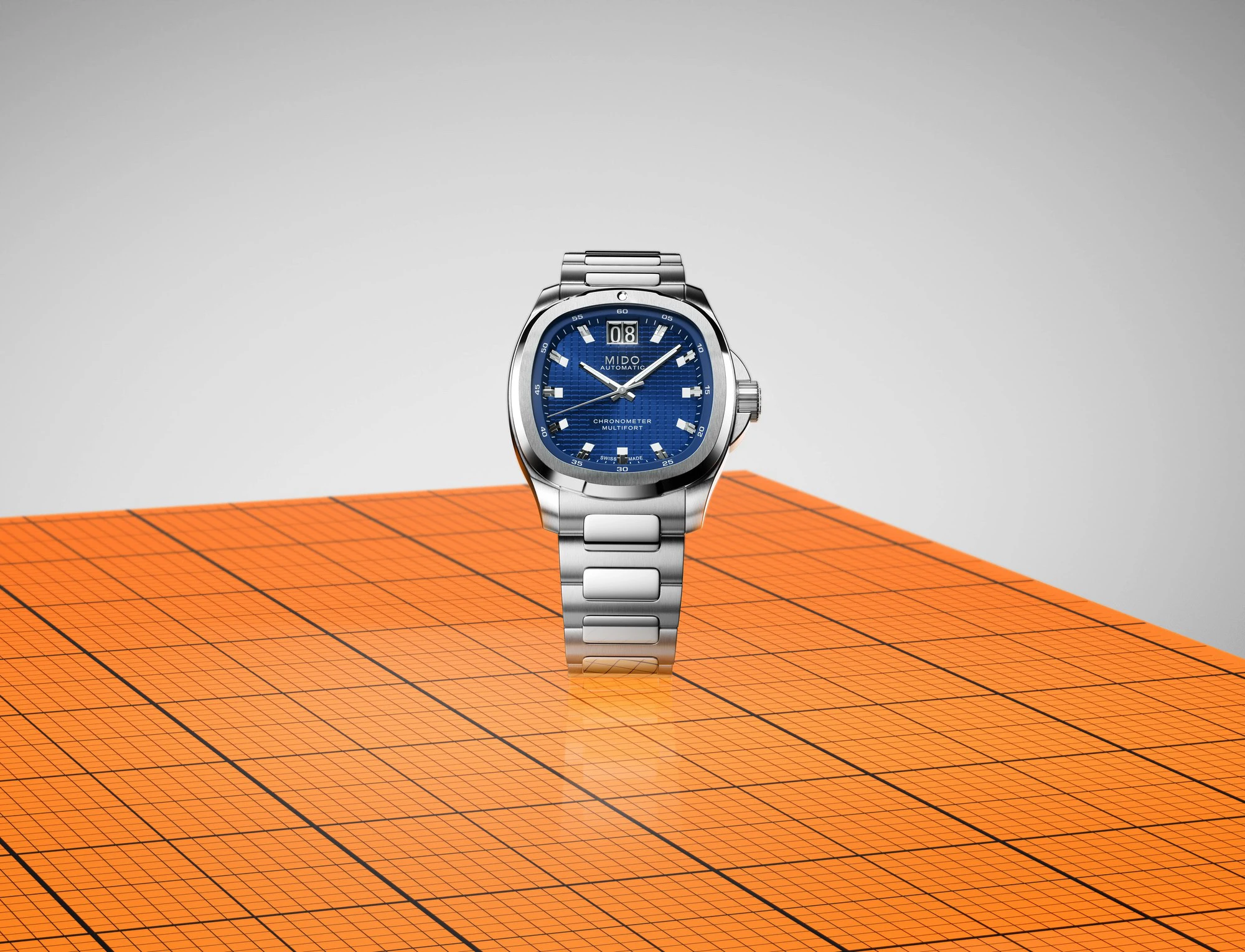

For the first time, Mido has put the Multifort TV Big Date's calibre through COSC testing, a launch that offers a close look at what this Swiss precision certification guarantees.
In October Mido introduced the Multifort TV Big Date Chronometer, the first version of the series whose calibre is certified as a chronometer by COSC. The certification raises a question before purchase: what exactly does it guarantee, and does the precision measured in the laboratory hold up in the finished watch over years of use?
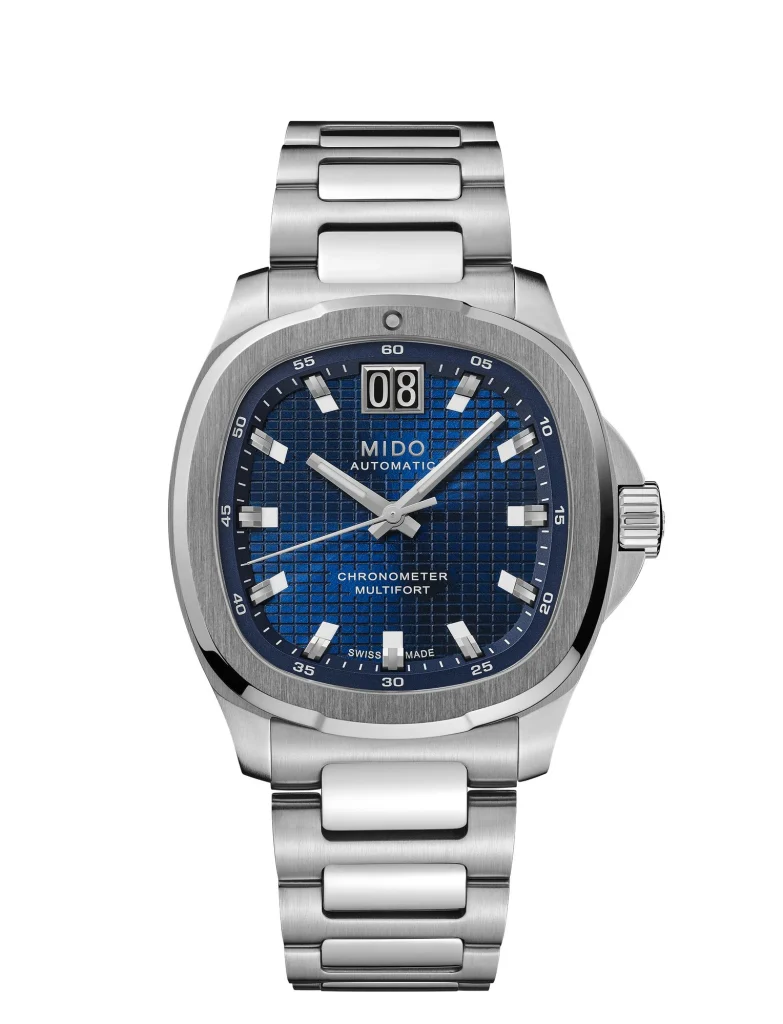
Technical Specs
| References | M049.567.11.041.00 (blue dial) and M049.567.11.051.00 (black and grey dial) |
| Case | Satin-finished and polished stainless steel, three-piece; 40 x 39.2 mm, 11.5 mm thick, 46.85 mm lug to lug |
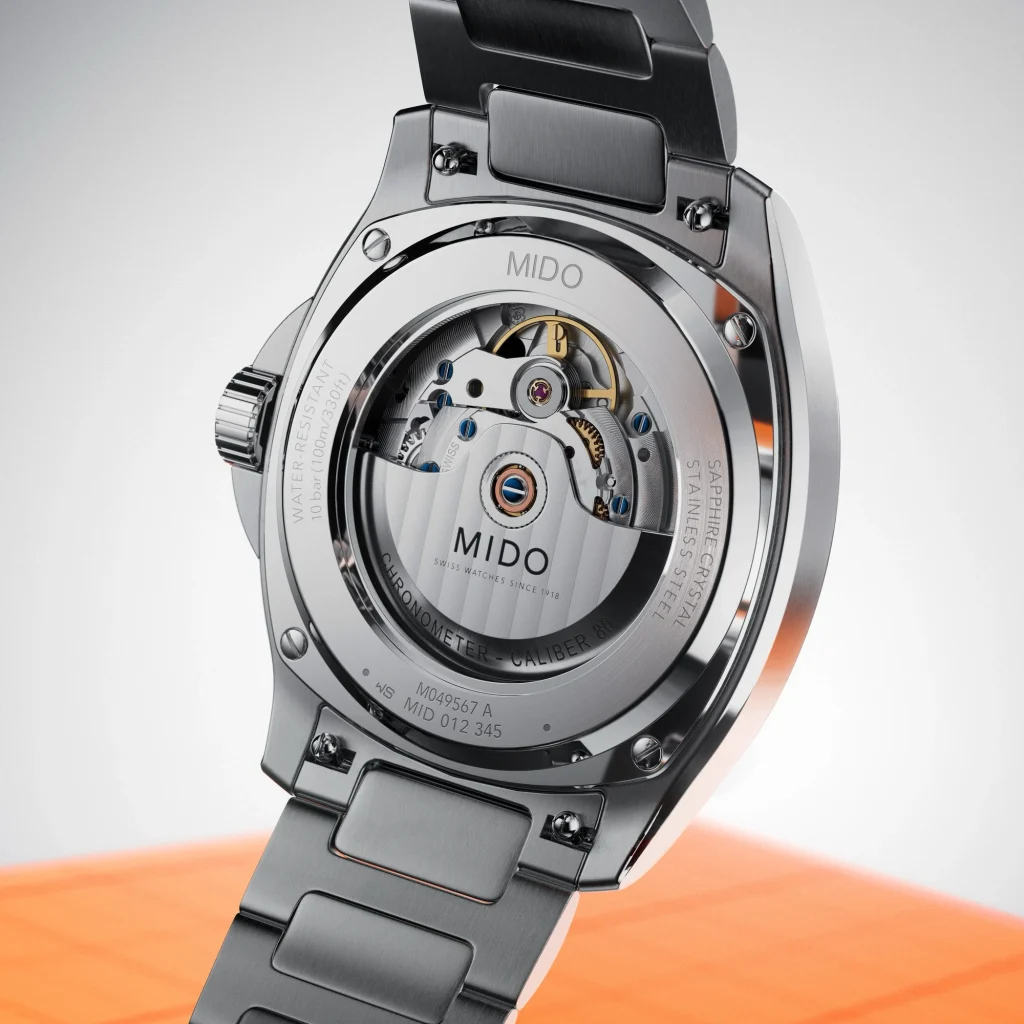
| Crystal and back | Sapphire with anti-reflective treatment on both sides; screw-down sapphire caseback with engraved serial number |
| Water resistance | 10 bar (100m), screw-down crown |
| Dial | Sunray blue with rectangular checkerboard pattern; nickel-plated, polished indexes with Super-LumiNova; framed big date at 12 o'clock |
| Caliber | Calibre 80 COSC (ETA C07.651 base), automatic; 21,600 vph (3 Hz), 25 jewels; up to 80 hours of power reserve; Nivachron balance spring; adjusted in five positions |
| Certification | COSC chronometer: average daily rate of -4 to +6 seconds during testing |
| Functions | Central hours, minutes and seconds; instantaneous big date |
| Bracelet | Satin-finished steel with polished centre links, integrated into the case; folding clasp with push-buttons; quick-release spring bars |
| Price | CHF 1,350; EUR 1,550 |
Fifteen days on the test bench
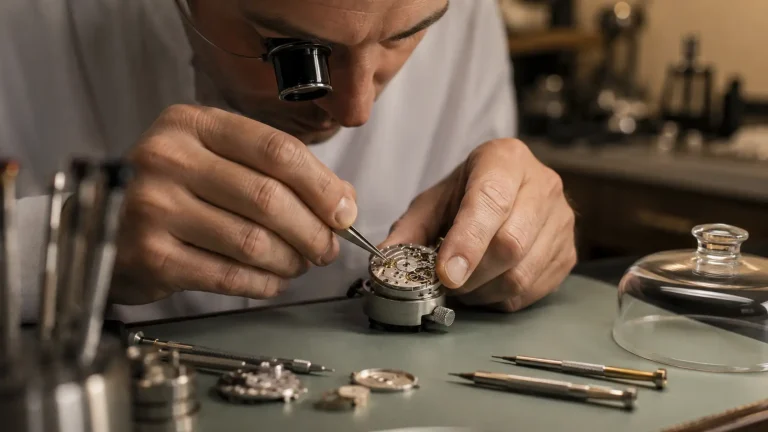
COSC, short for Contrôle Officiel Suisse des Chronomètres, is a Swiss non-profit association founded in 1973 that certifies the precision of movements submitted by watch brands. Testing is carried out on the movement before it is cased. Each calibre spends fifteen days under observation: it stays 24 hours in each position, three vertical (with 3, 6 and 9 o'clock facing down) and two horizontal (dial up and dial down), and it is exposed to three temperatures, 8, 23 and 38 degrees Celsius. The measurements are compared against seven criteria, and a movement that fails any one of them is not certified. The first is the average daily rate, which must stay between 4 seconds slow and 6 seconds fast per day; the others measure how much the rate varies from one day to the next, how much it changes between positions and with temperature, and whether the movement keeps the same rate at the end of the test as at the start.
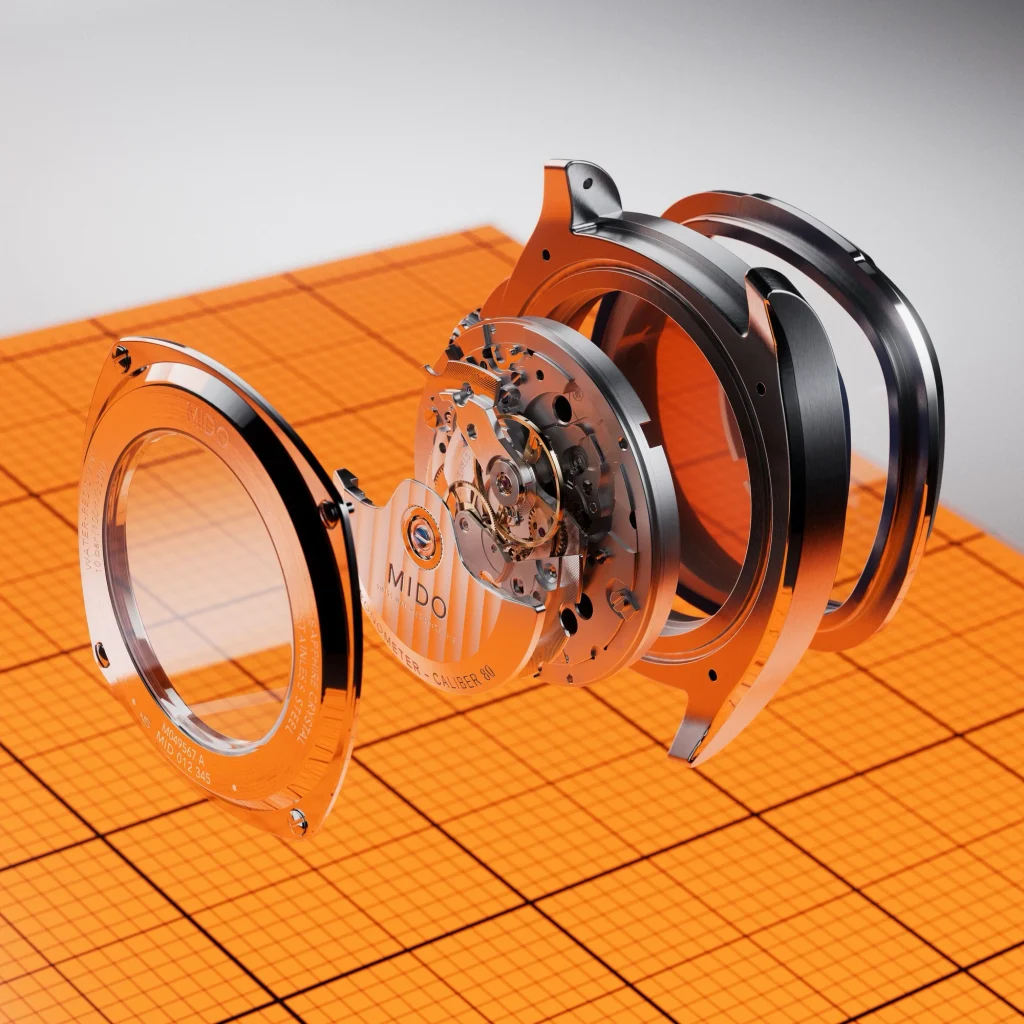
The test resembles measuring a car engine on a dynamometer before it is installed: the result describes the engine precisely under controlled conditions, while the behaviour of the finished car on the road also depends on the rest of the vehicle and on how it is driven. Something similar happens in a watch: casing and daily wear also affect the rate. COSC itself explains that its tests measure the intrinsic precision of the movement and do not simulate how the watch is worn. The certificate is held for life, although, according to the same organisation, a watch's performance can change over time.

Testing the complete watch
Two other certifications measure the precision of the finished watch. The first is awarded by METAS, the Swiss Federal Institute of Metrology, which tests Omega and TUDOR Master Chronometer watches fully assembled for ten days, after their movements have passed COSC. Among other criteria, it requires a rate of 0 to +5 seconds per day for most calibres and resistance to a 15,000-gauss magnetic field. The second is Excellence Chronometer, which COSC introduced in 2026 to complement its own certificate: it tests the cased watch while simulating wrist movements and requires a rate of -2 to +4 seconds per day.
One calibre, two versions
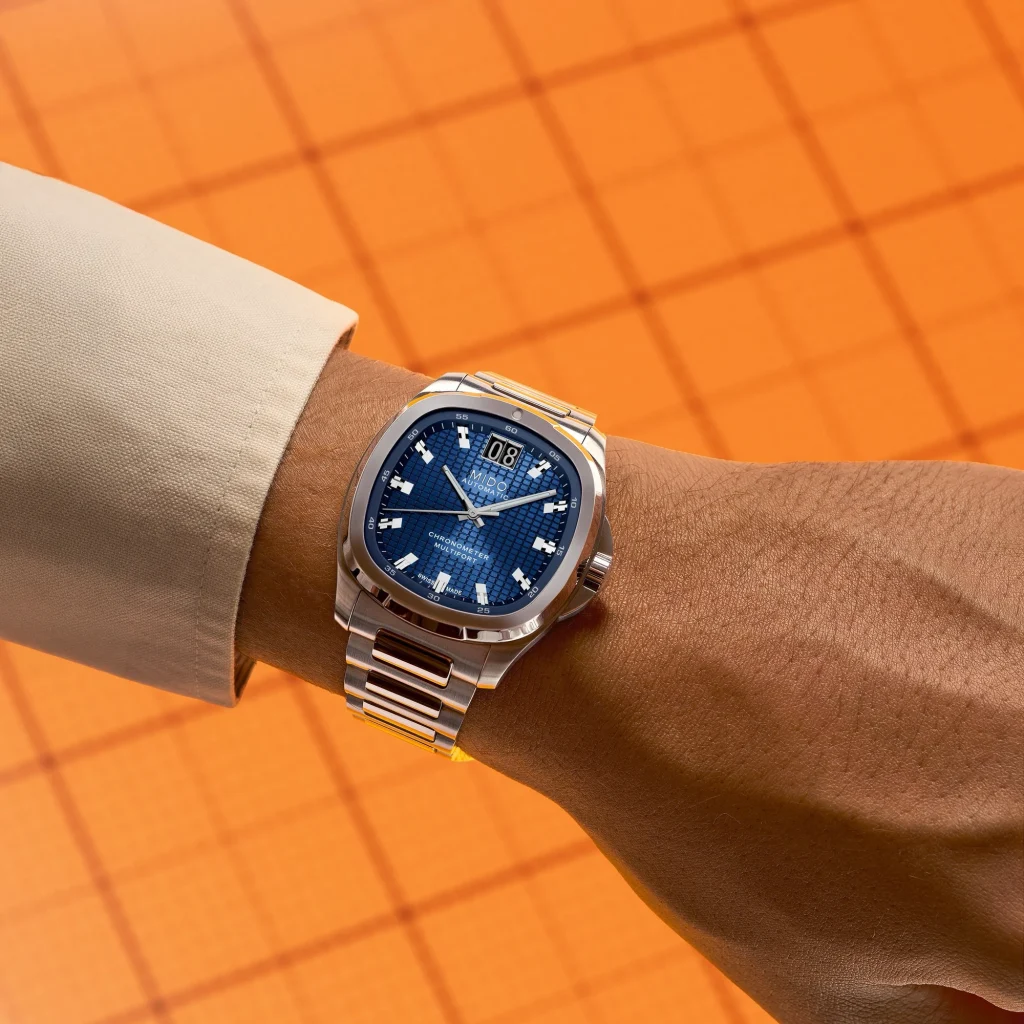
Mido's Calibre 80, based on the ETA C07.651, with a Nivachron balance spring and up to 80 hours of power reserve, powers both the Chronometer and the regular versions of the Multifort TV Big Date, including the Day of the Dead Alebrijes edition that ORELO covered on October 5. In those versions, Mido adjusts the calibre in three positions. In the Chronometer it is adjusted in five positions, and each movement goes through COSC's fifteen days individually, so its rate is measured and recorded before casing. Mido has also added blued screws to the calibre's decoration and added the word Chronometer to the dial and the rotor, which is visible through the transparent caseback.
The Nivachron balance spring, a titanium-based alloy less sensitive to magnetic fields than conventional ones, helps the watch hold that rate in daily wear, although COSC certification does not include a magnetism test. Among the watches ORELO has covered this year, the Longines Spirit Pilot also carries COSC certification, and the TUDOR Northflag and the Omega Seamaster Diver 300M add METAS testing of the complete watch.

Price and where to buy
Mido lists the Multifort TV Big Date Chronometer at CHF 1,350 and EUR 1,550, the same price for both dials. In Mexico, the brand sells its watches through its online store, its boutique in the Perisur shopping centre in Mexico City, and authorised retailers such as the department stores Liverpool and El Palacio de Hierro; it also has points of sale in Spain, Colombia, Chile, Argentina and Peru, which can be found through the store locator on its official website.

Chronometer versus chronograph
A common mistake is to confuse a chronometer with a chronograph, two words that look alike in English as well as in Spanish. A chronograph is a watch with a timing function, with pushers that start, stop and reset a hand; a chronometer is a watch whose movement has earned a precision certificate. The two are independent: the Multifort TV Big Date Chronometer is a chronometer without a chronograph function, and a chronograph may carry no certificate at all. On the dial, the word Chronometer signals the certification, and pushers on the side of the case signal the chronograph.
In the Multifort TV Big Date Chronometer, the COSC certificate records that its Calibre 80 reached the precision set by the standard over fifteen days in the laboratory, before it was cased; for the complete watch, the benchmarks are METAS testing and the new Excellence Chronometer. ORELO has covered Master Chronometer certification in its articles on the TUDOR Northflag and on the James Bond and Spectre editions of the Omega Seamaster Diver 300M.