
The civilian sibling of the military Fifty Fathoms returns in a 300-piece limited edition built around the most iconic version the line ever produced.
On August 26, 1953, in the Tyrrhenian Sea, Jacques Piccard piloted the bathyscaphe Trieste to a depth of 3,150 meters, a record at the time. Ten days later, on September 5, Jean-Jacques Fiechter, then general manager of Blancpain and an avid diver himself, registered a new name for the brand with the Swiss Commercial Office: Bathyscaphe, after that class of deep-sea submersible.
Fiechter didn't build submersibles. He built watches. A year earlier, alongside French officer Bob Maloubier, he had created the Fifty Fathoms, Blancpain's professional dive watch, officially unveiled in 1953. The name Bathyscaphe he registered that same year wouldn't become an actual watch for three more years, until 1956.
The Historical Context
The Fifty Fathoms was built to order. Maloubier led a French Navy combat diving unit, the Nageurs de Combat, and needed a reliable underwater instrument: legible, rugged, with a rotating bezel to track dive time. Fiechter, who dove for pleasure, understood the problem from experience, not just from the drafting table. That watch, the Fifty Fathoms, is widely regarded today as one of the first modern dive watches, arriving months before Rolex's Submariner reached the market. It measured just over 41mm, a hefty case for its era, built to survive military missions, not everyday wear.
That same year, 1953, while Blancpain was finishing the Fifty Fathoms, Auguste Piccard and his son Jacques were pushing the submersible Trieste to depths no one had reached, a trajectory that would culminate in 1960 when Jacques Piccard and American officer Don Walsh touched the bottom of the Mariana Trench. Fiechter borrowed that submersible's name, loaded with exploration and record-breaking, to register Bathyscaphe. It wasn't a watch's name yet. It was a promise of one to come.
The Watch and Its Moment
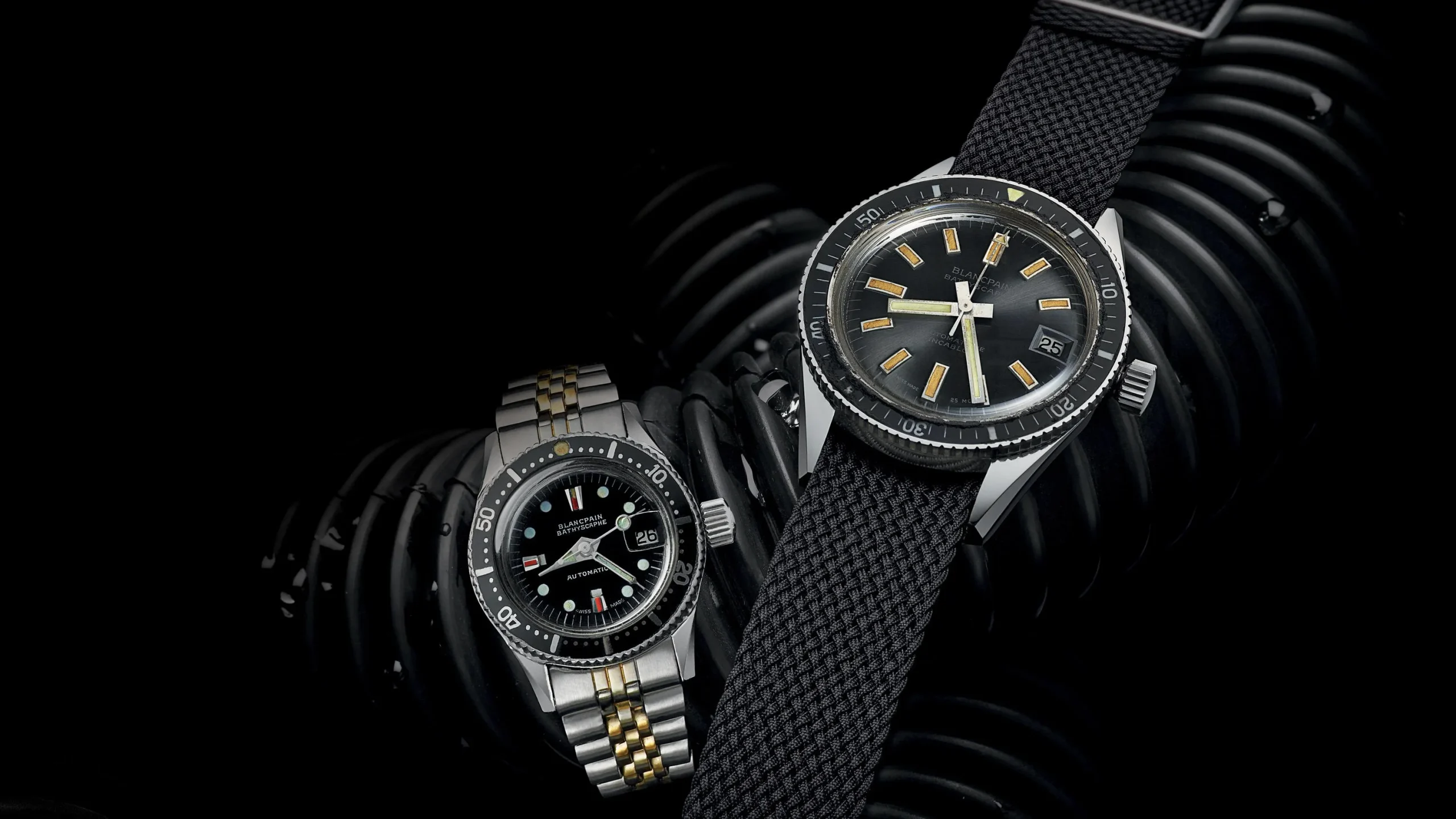
That promise was kept in 1956, when the Bathyscaphe reached the market as the civilian counterpart to the Fifty Fathoms: a slimmer 35mm case, built for what the industry then called "skin diving," recreational diving with a snorkel or light gear, not military operations. Less technical and more understated than the Fifty Fathoms, the Bathyscaphe was a watch you could wear on the street without drawing attention.
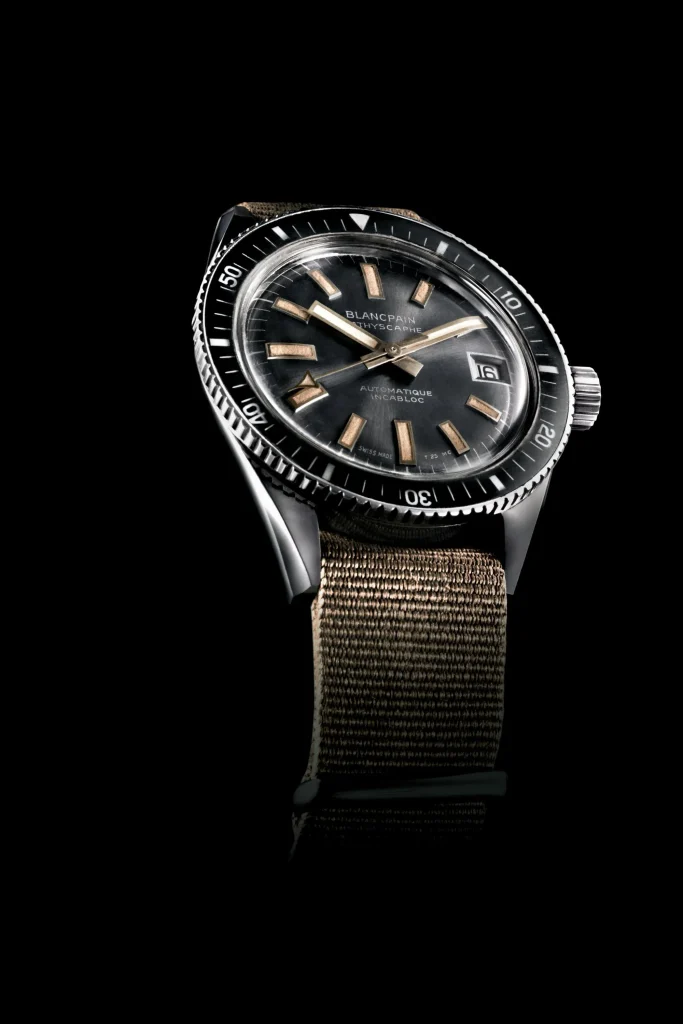
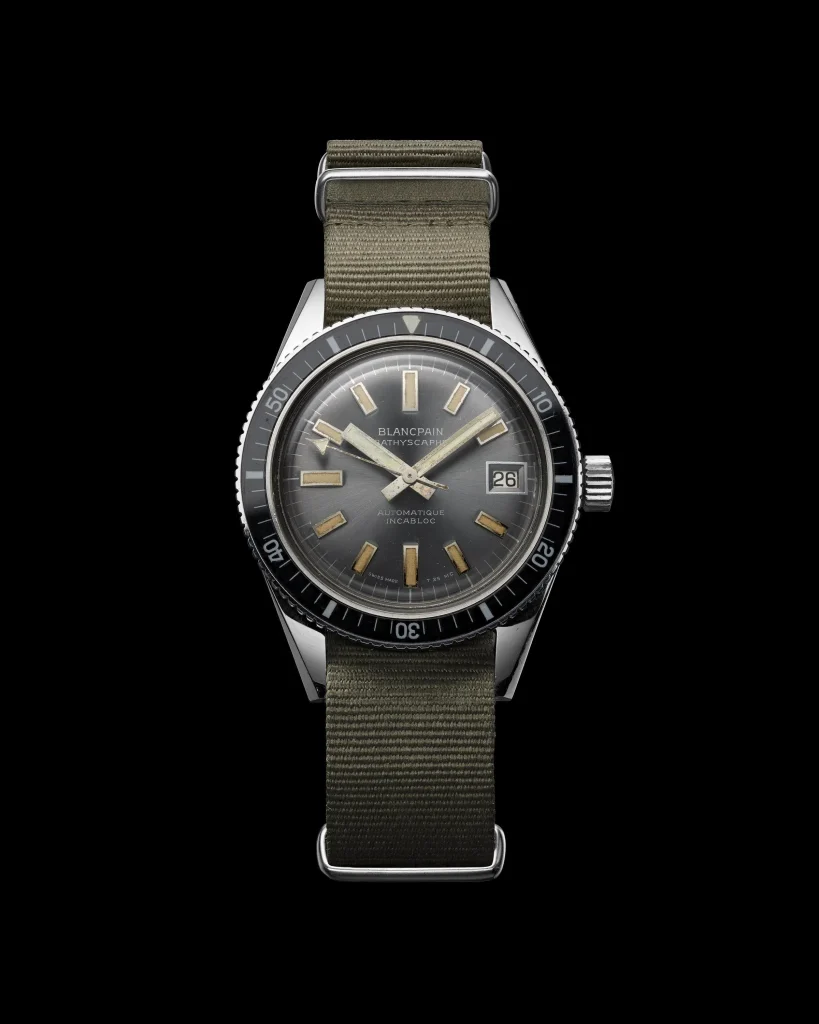
Of every Bathyscaphe iteration produced between the 1950s and 1970s, the 1968 version is the one that stuck. Blancpain describes it today as the model that best captures the balanced proportions and restrained elegance that define the collection: a plexiglass crystal, a bidirectional polished steel bezel, a black hesalite insert, and a sunburst grey dial. Unlike the Fifty Fathoms of the same era, built to survive military pressure, this 1968 Bathyscaphe even had a solid caseback. There was nothing to show off. The watch just had to work.
Over time, the two watches ended up under the same roof. Today Blancpain sells the Bathyscaphe as part of the Fifty Fathoms collection, not as a separate line. "Fifty Fathoms is not a single model, but an entire family. And one of the most important watches in that family is the Bathyscaphe," says Marc A. Hayek, President and CEO of Blancpain, in the press materials for this anniversary edition.
The Watch Today
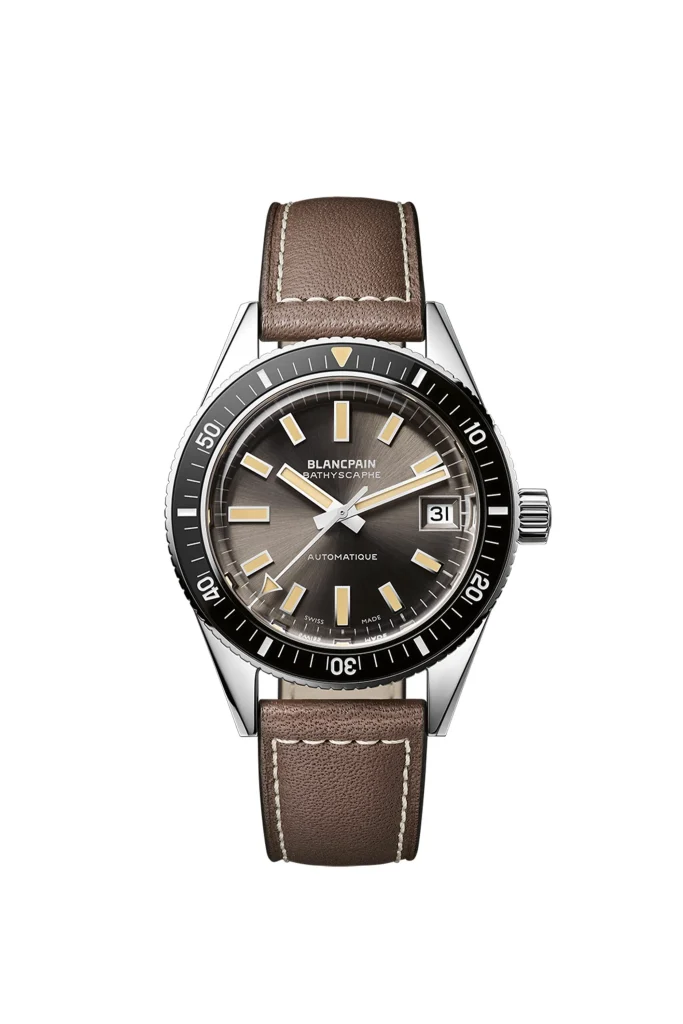
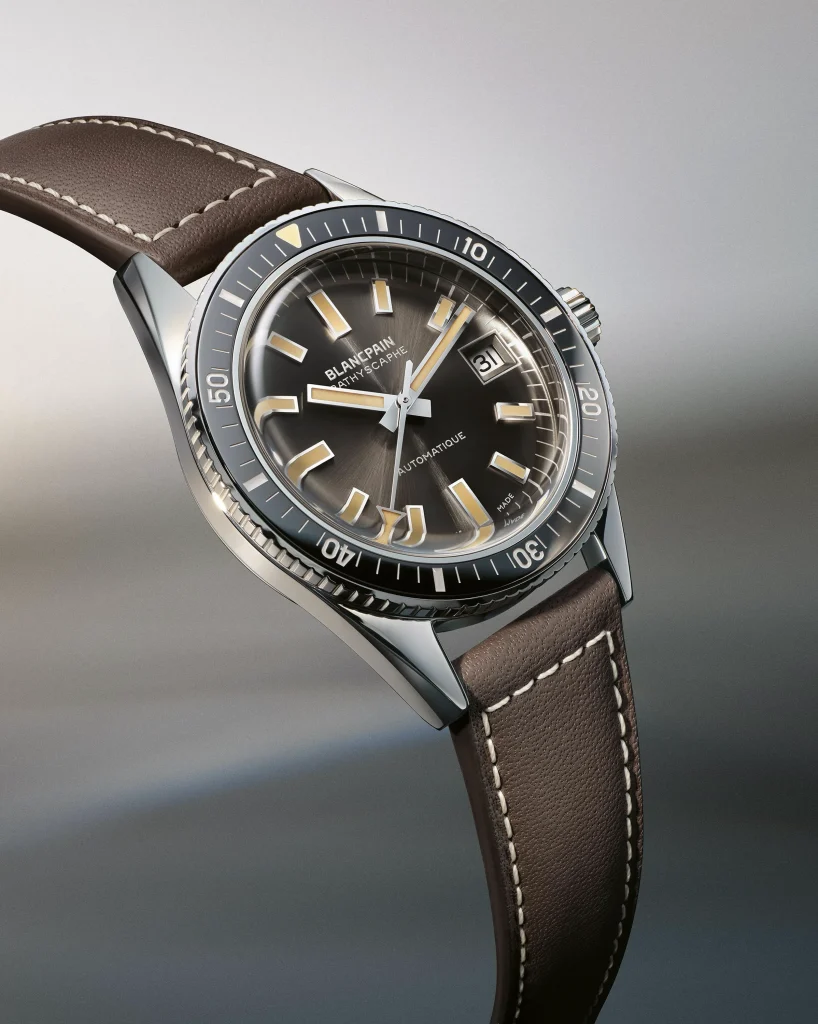
Seventy years after Fiechter registered that name, Blancpain has reproduced the 1968 Bathyscaphe almost to the millimeter. The new reference 5903-1110-63A keeps the original 37.4mm diameter, though thickness grows to 12.3mm to accommodate 300 meters of water resistance (30 bar), well beyond what the 1960s original offered. The bezel is still steel, but now unidirectional, with a ceramic insert and lacquered numerals replacing the original black hesalite for better durability and legibility. The box-shaped sapphire crystal recalls the curve of the vintage plexiglass.
Unlike the 1968 Bathyscaphe, which had a solid caseback, this version uses sapphire to reveal the Caliber 1150: an in-house movement with a double barrel, a silicon hairspring, and a 100-hour power reserve. The openworked 18k gold oscillating weight is inspired by the rotor design of the original Fifty Fathoms, not the Bathyscaphe itself, another point where the two watches in the family cross paths.
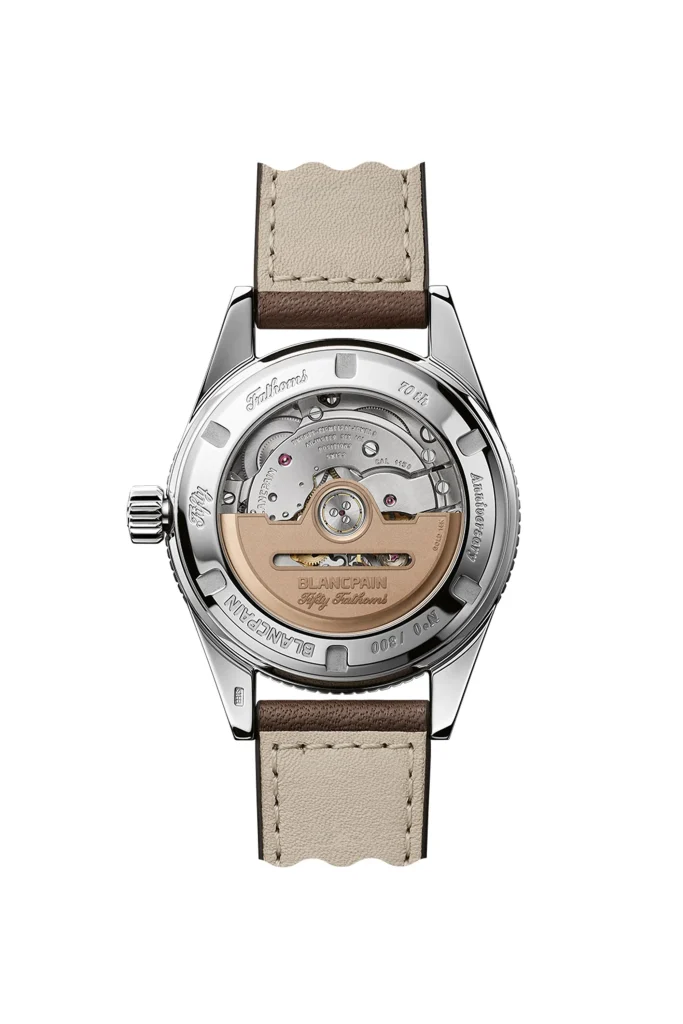
| Reference | 5903-1110-63A |
| Case | Polished steel, 37.4 mm × 12.3 mm, 46.5 mm lug-to-lug |
| Bezel | Unidirectional, ceramic insert with lacquered numerals |
| Crystal | Box-shaped sapphire, inspired by the original plexiglass |
| Caseback | Sapphire (the 1968 original was solid) |
| Water resistance | 300 meters (30 bar) |
| Dial | "Meteor" grey, sunray finish, applied 18k white gold markers with vintage-toned Super-LumiNova |
| Caliber | Caliber 1150, Blancpain manufacture, automatic, double barrel, silicon hairspring |
| Power reserve | 100 hours |
| Frequency | 21,600 vph (3 Hz) |
| Strap | Chocolate brown calfskin, steel buckle |
| Edition | Limited to 300 numbered pieces |
| Price | CHF 13,800 |
Each piece is individually numbered and delivered in a waterproof Peli case with a five-year warranty.
Blancpain doesn't have the boutique footprint that other Swatch Group brands have in the region. Spain has an official boutique in Madrid, plus authorized retailers like Rabat in Barcelona and other cities. No dedicated Blancpain boutique was confirmed in Latin America; with only 300 pieces made worldwide, the most direct route for a regional collector is reaching Blancpain's client service or the Madrid boutique, which can arrange international shipping. This isn't a watch meant to turn up on the counter of just any jeweler. It's for someone who already knows exactly what they're looking for.
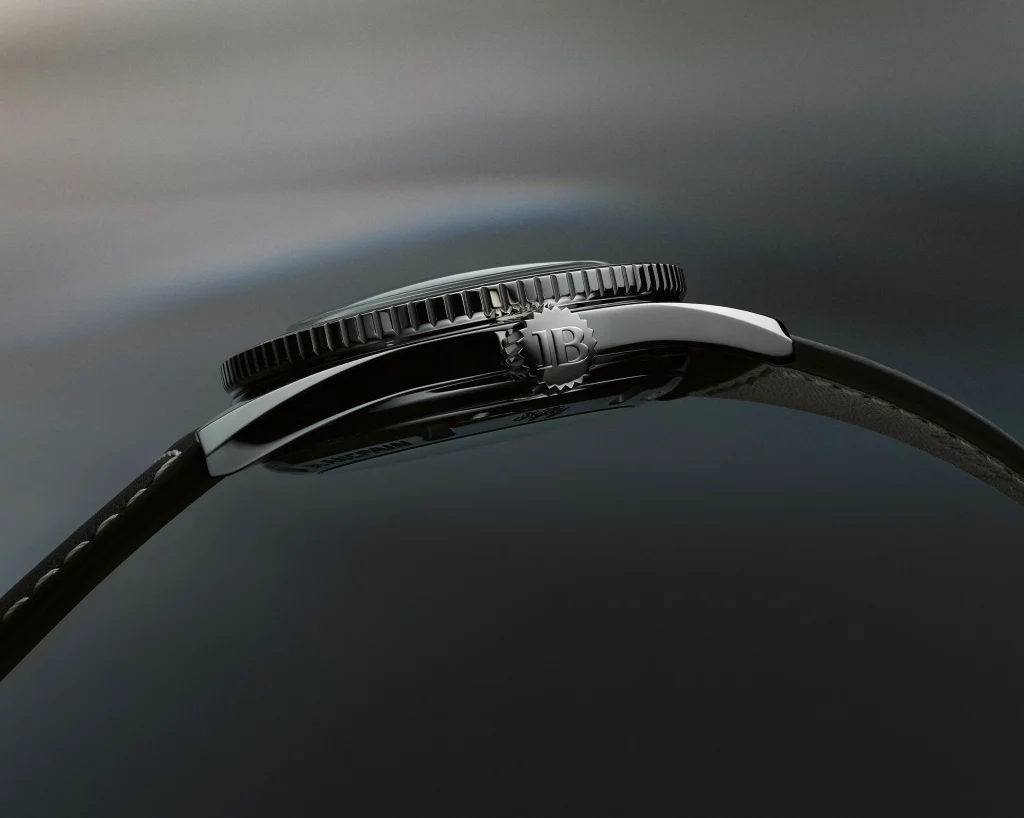
Ten days after a submersible reached a record depth, Blancpain registered the name Bathyscaphe. Seventy years later, that name reappears on a watch reserved for just 300 collectors. There is a vast distance between the *Trieste* and this 37.4 mm polished steel case, yet the same ambition remains: to go deeper.
Perhaps this watch will never venture to those depths. Nor does it need to. It is enough that it reminds us why that name deserved to exist.